
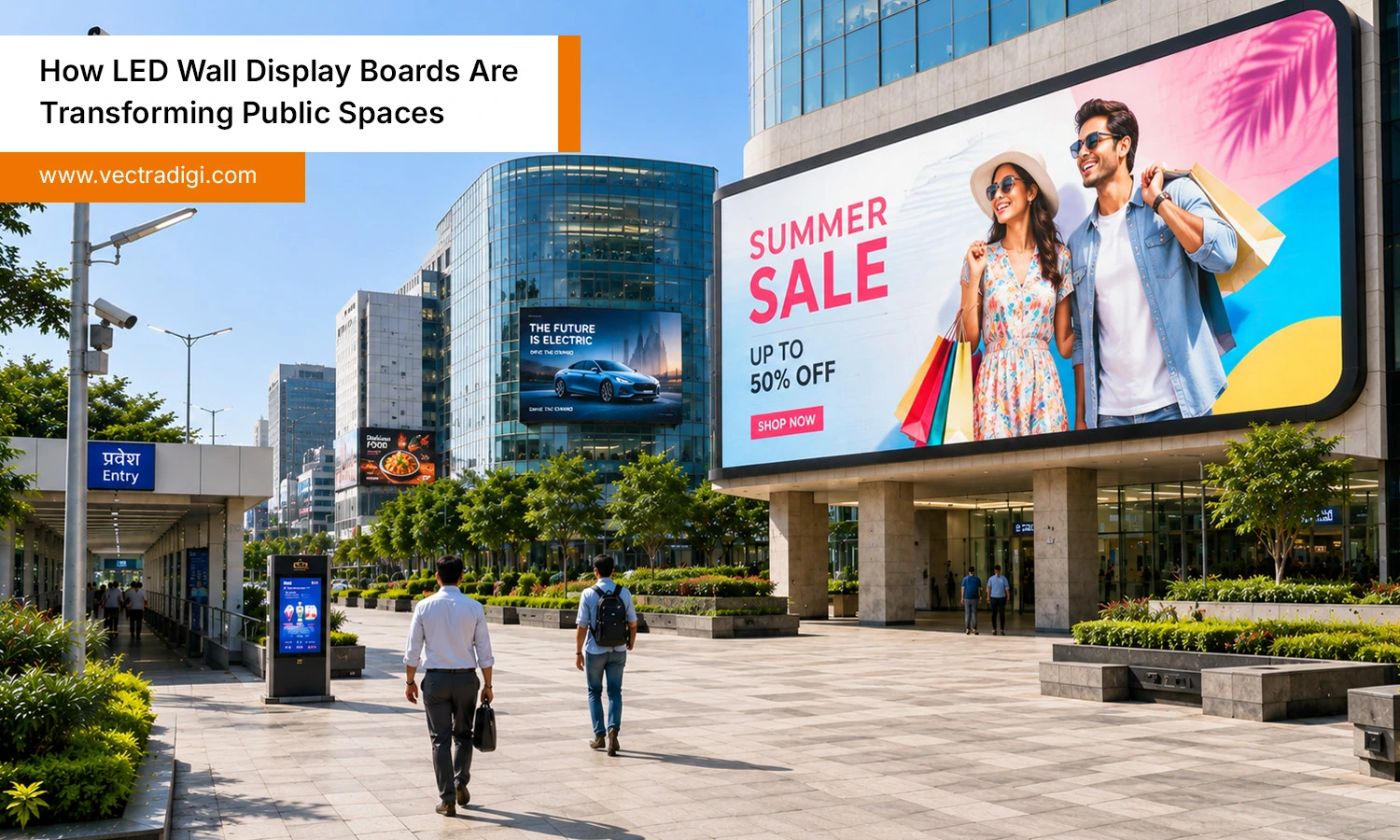
Walk through any busy shopping mall, airport, railway station, or city square today, and bright digital displays are almost impossible to miss. They do much more than grab attention. A led wall display board helps share real-time information, promote businesses, guide visitors, and improve public communication in a visually engaging way. As cities and commercial spaces continue to modernize, these displays have become an important part of everyday life. From advertising and entertainment to safety announcements and event promotions, their applications keep expanding. In this blog, discover their benefits, major applications, essential features, buying tips, and future trends.
Table of Contents
- Why Public Spaces Need Smarter Digital Displays
- Benefits of Using an LED Wall Display Board in Public Spaces
- Where LED Wall Display Boards Are Making the Biggest Impact
- Key Features That Make LED Wall Display Boards Effective
- Things to Consider Before Choosing an LED Wall Display Board
- Future of LED Wall Display Boards in Smart Cities
- Conclusion
- Frequently Asked Questions
Also Read: How to Choose the Right LED Wall Cabinet for Your Display Project
Why Public Spaces Need Smarter Digital Displays
Public spaces are busier than ever, making quick and effective communication essential. Traditional signboards often fail to capture attention or provide timely updates, especially when information changes frequently. Digital displays solve this challenge by delivering clear visuals, dynamic content, and instant updates that people can easily notice. They also help organizations communicate promotions, directions, emergency alerts, and public announcements without replacing printed materials. As businesses and cities focus on creating better visitor experiences, smarter display solutions have become a practical investment for improving engagement and communication.
Why digital displays matter:
- Deliver real-time information instantly.
- Improve visibility in crowded environments.
- Capture attention with dynamic visuals.
- Reduce dependence on printed signage.
- Create a modern and engaging visitor experience.
Benefits of Using an LED Wall Display Board in Public Spaces
High Visibility in Every Environment
A led wall display board delivers bright, vibrant visuals that remain clear even in direct sunlight or crowded locations. This ensures messages, advertisements, and announcements attract attention throughout the day.
Instant Content Updates
Content can be updated within minutes without replacing printed materials. This flexibility allows businesses and public authorities to display promotions, schedules, announcements, and important information whenever required.
Better Public Engagement
Moving visuals, videos, and creative content naturally attract more attention than static signs. Engaging displays encourage people to stop, watch, and interact with messages, improving communication and brand recall.
Supports Emergency Communication
During emergencies, digital displays quickly broadcast safety instructions, evacuation routes, weather alerts, and public announcements. Fast communication helps people respond promptly while improving overall safety in public spaces.
Cost-Effective Over Time
Although the initial investment may be higher, digital displays reduce recurring printing and replacement costs. Long-term savings, easy content updates, and extended durability make them a valuable investment.
Energy-Efficient Technology
Modern LED technology consumes less electricity while producing bright, high-quality visuals. Lower power consumption, longer operating life, and reduced maintenance requirements help organizations minimize operating expenses without compromising performance.
Where LED Wall Display Boards Are Making the Biggest Impact
A led wall display board is transforming communication across a wide range of public spaces. Shopping malls use it to promote offers and guide visitors, while airports and railway stations display live travel updates. Schools and universities share announcements, event details, and important notices with students. Hospitals use digital displays to provide directions and health information. Stadiums keep spectators engaged with live scores, replays, and advertisements. Corporate buildings display company updates and welcome messages for visitors. In smart cities, LED display boards support public awareness campaigns, traffic information, and community announcements, making communication faster, clearer, and more effective.
Key Features That Make LED Wall Display Boards Effective
High-Resolution Display
Sharp images, vibrant colors, and clear text make content easy to read from different distances. High-resolution displays improve viewing experiences and ensure every message leaves a strong visual impact.
Remote Content Management
Modern software allows users to update content remotely from any location. Businesses can schedule advertisements, announcements, and promotional campaigns quickly without visiting the installation site physically.
Weather-Resistant Design
Outdoor LED displays are built to withstand rain, dust, heat, and changing weather conditions. Their durable construction ensures reliable performance and continuous operation throughout the year with minimal interruptions.
Flexible Screen Sizes
LED wall display boards are available in various sizes and configurations to suit different spaces. This flexibility makes them suitable for retail stores, stadiums, offices, educational institutions, and public areas.
Long Lifespan
High-quality LED displays are designed for years of continuous operation. Their long lifespan reduces replacement costs, minimizes downtime, and provides dependable performance for businesses and public organizations alike.
Smart Connectivity
Advanced connectivity options support cloud platforms, Wi-Fi, LAN, HDMI, and multimedia integration. These features simplify content management while enabling seamless communication across single or multiple display locations.
Things to Consider Before Choosing an LED Wall Display Board
Installation Location
Choose an LED display based on where it will be installed. Indoor and outdoor environments require different brightness levels, protection ratings, and display specifications for reliable long-term performance.
Pixel Pitch
Pixel pitch determines image clarity and recommended viewing distance. Smaller pixel pitches produce sharper visuals for close viewing, while larger pixel pitches work well for audiences viewing from farther away.
Brightness Level
Select the appropriate brightness according to ambient lighting conditions. Outdoor installations require higher brightness for sunlight visibility, while indoor displays deliver comfortable viewing with lower brightness levels.
Software Compatibility
Ensure the display supports reliable content management software. Easy scheduling, remote updates, multimedia support, and user-friendly controls simplify daily operations and improve overall content management efficiency.
Maintenance and Technical Support
Choose a manufacturer that provides dependable maintenance services and technical assistance. Quick support reduces downtime, keeps the display operating efficiently, and protects your investment over the long term.
Budget and Future Expansion
Consider both the initial purchase cost and long-term value. Investing in a scalable solution allows future upgrades and expansion without replacing the entire LED display system.
Future of LED Wall Display Boards in Smart Cities
As smart cities continue to evolve, the role of the led wall display board will become even more significant. Future displays will integrate with AI, IoT, and cloud-based platforms to deliver real-time, personalized, and data-driven content. Traffic updates, emergency alerts, weather information, and public service announcements can be managed instantly from a central location. Interactive features will also improve citizen engagement by making information more accessible. With growing demand for energy-efficient and sustainable technology, modern LED displays will consume less power while delivering better performance. These innovations will help create smarter, safer, and better-connected public spaces.
Conclusion
Public spaces are changing rapidly, and digital communication has become essential for keeping people informed and engaged. A led wall display board offers an effective way to deliver advertisements, announcements, directions, and emergency updates with excellent visibility and flexibility. From shopping malls and transportation hubs to schools, hospitals, and smart cities, these displays improve communication while creating more engaging environments. Choosing the right display involves considering factors like brightness, pixel pitch, software, and long-term support. Investing in a high-quality solution today ensures reliable performance, better audience engagement, and lasting value for years to come.
Upgrade your public communication with Vectradigi. Explore advanced led wall display board solutions designed for superior performance, stunning visuals, and dependable support for every commercial and public project.
Frequently Asked Questions
Q1. What is a LED wall display board?
Ans: A led wall display board is a large digital display that uses LED technology to present images, videos, advertisements, announcements, and real-time information in both indoor and outdoor environments.
Q2. Where can a LED wall display board be installed?
Ans: LED wall display boards can be installed in shopping malls, airports, railway stations, schools, universities, hospitals, stadiums, corporate offices, hotels, retail stores, and other public spaces.
Q3. Are LED wall display boards suitable for outdoor use?
Ans: Yes. Outdoor LED wall display boards are designed with weather-resistant materials and high brightness levels, allowing them to perform reliably in sunlight, rain, dust, and varying weather conditions.
Q4. How do I choose the right LED wall display board?
Ans: Consider the installation location, pixel pitch, brightness, screen size, software compatibility, maintenance support, and budget to select a display that best meets your communication and business requirements.

