
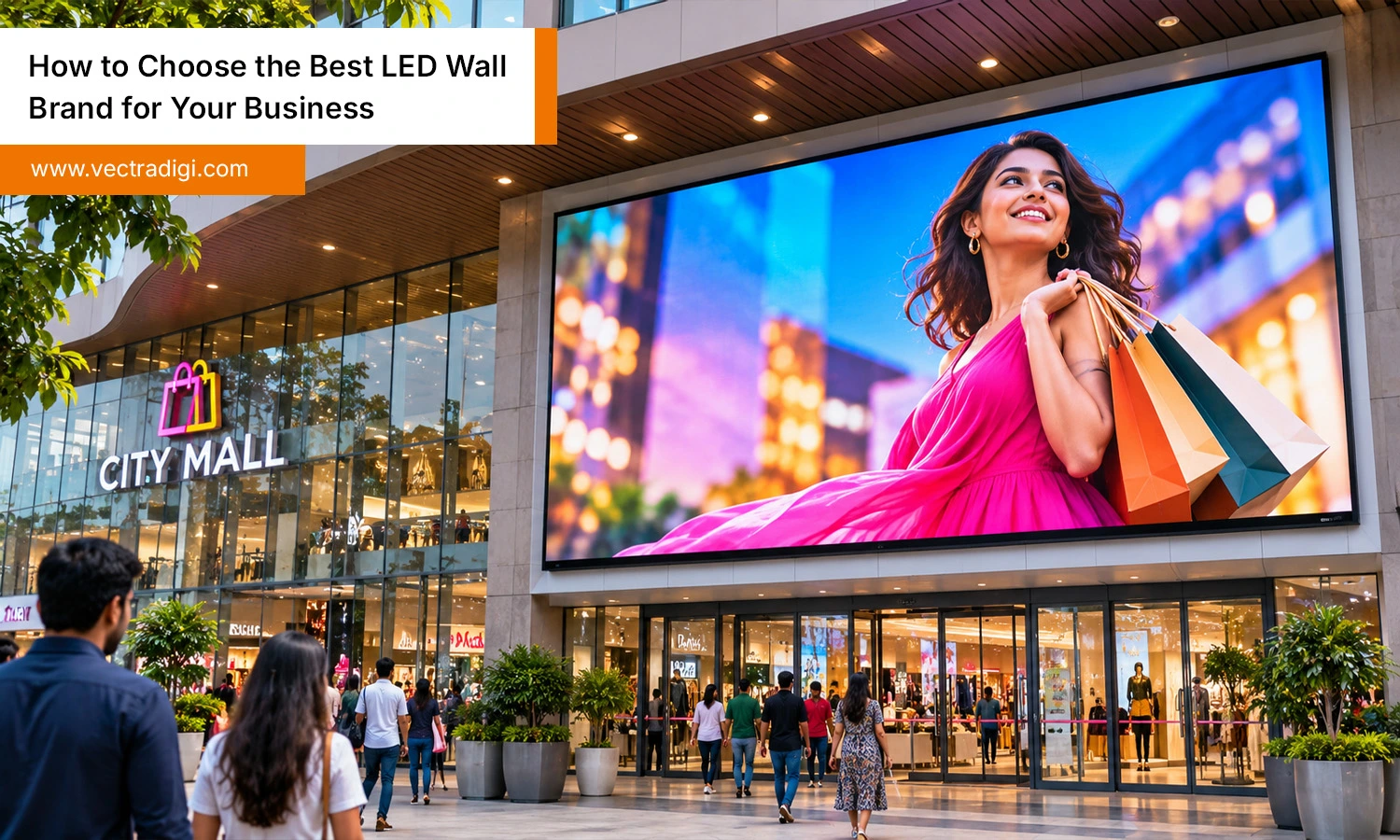
Choosing an active LED wall display involves more than comparing prices or selecting an attractive screen. Businesses must consider viewing distance, display resolution, brightness, installation requirements, and long-term maintenance. Each factor influences how effectively the display performs in its intended environment. A suitable system should meet operational needs while remaining reliable during daily use. Understanding technical specifications helps buyers evaluate different solutions and avoid unnecessary expenses. Supplier experience, warranty coverage, spare parts availability, and after-sales assistance also deserve careful attention. By assessing these factors before purchasing, businesses can make informed decisions and select an LED display solution that supports their communication goals.
Also Read: How Are LED Walls Installed? A Complete Installation Guide
Start With Your Business Goal
Before you compare a single spec sheet, get clear on what the screen has to do. A retail store wants eye-catching promotions. A control room needs sharp, always-on data visibility. A conference hall needs smooth video and clean text from every seat.
Each goal points to a different product. Write down where the wall will sit, how many hours it will run daily, how far viewers will stand, and how much ambient light hits it. A brand that understands these details will ask you about them. If a seller quotes a price without asking a single question, treat that as a warning sign.
Check Display Quality, Not Just the Brochure
Specs look impressive on paper, but quality shows up in person. Focus on these points:
Pixel pitch. This is the distance between pixels. A smaller pitch gives a sharper image at close range. For a lobby where people stand two meters away, you need a tighter pitch than for a stadium-style hall.
Brightness. Indoor walls usually work well between 600 and 1,500 nits, while outdoor installations need much more. Too little brightness washes out the picture, and too much strains the eyes indoors.
Refresh rate. A high refresh rate keeps video smooth and removes the flicker that appears on phone cameras and recordings. This matters a lot if you plan to film events in front of the screen.
Color consistency. Good brands calibrate every module so the whole wall looks uniform. Ask to see a full white and a full gray test pattern. Uneven patches show up immediately.
A well-built active led wall display should look the same from the left edge to the right edge, even after months of daily use.
Look at Build Quality and Durability
A screen is a long-term asset, so what is inside matters as much as the image. Ask about the cabinet material, the cooling design, and the quality of the LED chips and driver ICs. Lightweight aluminum cabinets are easier to install and handle heat better than cheap alternatives. A well-maintained LED display screen of a good brand can typically last up to 100,000 operating hours, which translates to several years of continuous use depending on usage patterns and environmental conditions.
Check the ingress protection rating if the wall will face dust, moisture, or outdoor weather. Ask about the operating temperature range too. A screen that works perfectly in an air-conditioned showroom may struggle in a hot, humid location.
Service access is another detail people forget. Front-serviceable modules let a technician replace a faulty panel without dismantling the entire wall, which saves time and money later.
Evaluate After-Sales Support and Warranty
This is where many buyers get burned. A low price means little if a failure leaves your screen dark for three weeks.
Ask these questions before you commit:
- How long is the warranty, and what does it cover?
- Are spare modules kept in stock locally?
- How quickly will a technician respond to a fault?
- Is remote diagnosis available?
- Does the brand offer training for your staff?
A strong brand treats installation as the beginning of the relationship. They should offer maintenance plans and clear service timelines in writing. If those promises only exist verbally, they are not promises. For reference, a standard 1-year warranty on an active LED wall display should be provided when purchased in India, with the option to extend coverage up to 3 years, offers added protection and long-term reliability, and that is the kind of clear coverage you should expect from any brand.
Compare Real Total Cost, Not Just the Price Tag
The cheapest quote often becomes the most expensive purchase. Look at the full cost of ownership, which includes installation, mounting structure, power consumption, controllers, content software, and future repairs.
Energy efficiency deserves attention, since the screen may run ten or more hours every day. A model with better power management can save a noticeable amount over several years. Likewise, a brand that supplies reliable spare parts keeps downtime low, and downtime costs money when your screen is part of sales or operations.
Ask for a detailed quotation that separates hardware, installation, and service charges. Transparent pricing usually reflects a transparent company.
Ask for Proof of Past Work
Any serious brand can show you completed projects. Request photos, site visits, or contact details of existing clients in a similar industry. Speaking with someone who has used the product for two or three years tells you far more than a sales presentation.
If possible, visit a live installation. Watch how the screen performs in normal conditions, listen for fan noise, and check whether the image still looks clean. A company confident in its quality will welcome this kind of scrutiny.
Consider Content Management and Compatibility
Hardware is only half the picture. Your team needs to update content easily, schedule playlists, and connect different sources like laptops, cameras, and media players. Ask whether the control software is simple enough for non-technical staff.
Check input options, remote management features, and whether the system supports future upgrades. An active led wall display that locks you into complicated software will frustrate your team and waste the investment.
Think About Customization and Scalability
Your needs today may change in two years. Maybe you will expand the screen, move it to a bigger space, or add a second wall in another branch. Good brands offer flexible cabinet sizes, curved or custom shapes, and modular designs that let you grow without starting over.
Ask whether replacement modules will remain available years from now. A brand that keeps its product line consistent protects you from mismatched colors when you need to add or repair panels later.
Common Mistakes to Avoid
Many businesses repeat the same errors. They choose purely on price, ignore viewing distance, skip the site survey, or forget about ventilation and power requirements. Others never read the warranty terms until something breaks.
Take your time, compare at least three suppliers, and insist on demonstrations. A few extra weeks of research can save years of frustration.
Conclusion
Selecting the right LED wall brand requires evaluating display quality, product durability, technical expertise, and after-sales service. Buyers should compare specifications, warranty terms, software usability, and long-term maintenance costs before making a decision. Reviewing previous installations and customer feedback can also help establish a supplier’s credibility. Vectradigi Technologies offers LED display solutions designed to meet different business and installation requirements. When evaluating potential suppliers, consider the company’s product quality, technical guidance, and commitment to customer support. A thorough comparison helps businesses identify a suitable active LED wall display provider that delivers reliable performance and long-term value.
Planning to install an LED wall? Contact our team for expert guidance, customised solutions, and professional installation tailored to your requirements.
Frequently Asked Questions
Q1. How long does a good brand LED wall usually last in daily business use?
Ans: A quality LED wall typically runs 100,000 hours. With regular cleaning, proper ventilation, and stable power, it can serve your business reliably for around ten years.
Q2. What pixel pitch should I choose for a small office reception area?
Ans: For close viewing within two to three meters, choose a fine pixel pitch between 1.2 and 2.5 millimeters. This keeps text and logos sharp without visible pixel gaps.
Q3. Can I install an LED wall myself to save installation costs?
Ans: Self-installation is not recommended. Professionals handle mounting, alignment, wiring, and calibration properly, which prevents uneven panels, electrical faults, and warranty problems that often cost more later.
Q4. How do I know if a supplier will provide good after-sales service & warranty?
Ans: Confirm service timelines, warranty conditions, and spare parts availability in writing. A one-year warranty with optional three-year extensions provides added protection, subject to the brand’s terms.

