
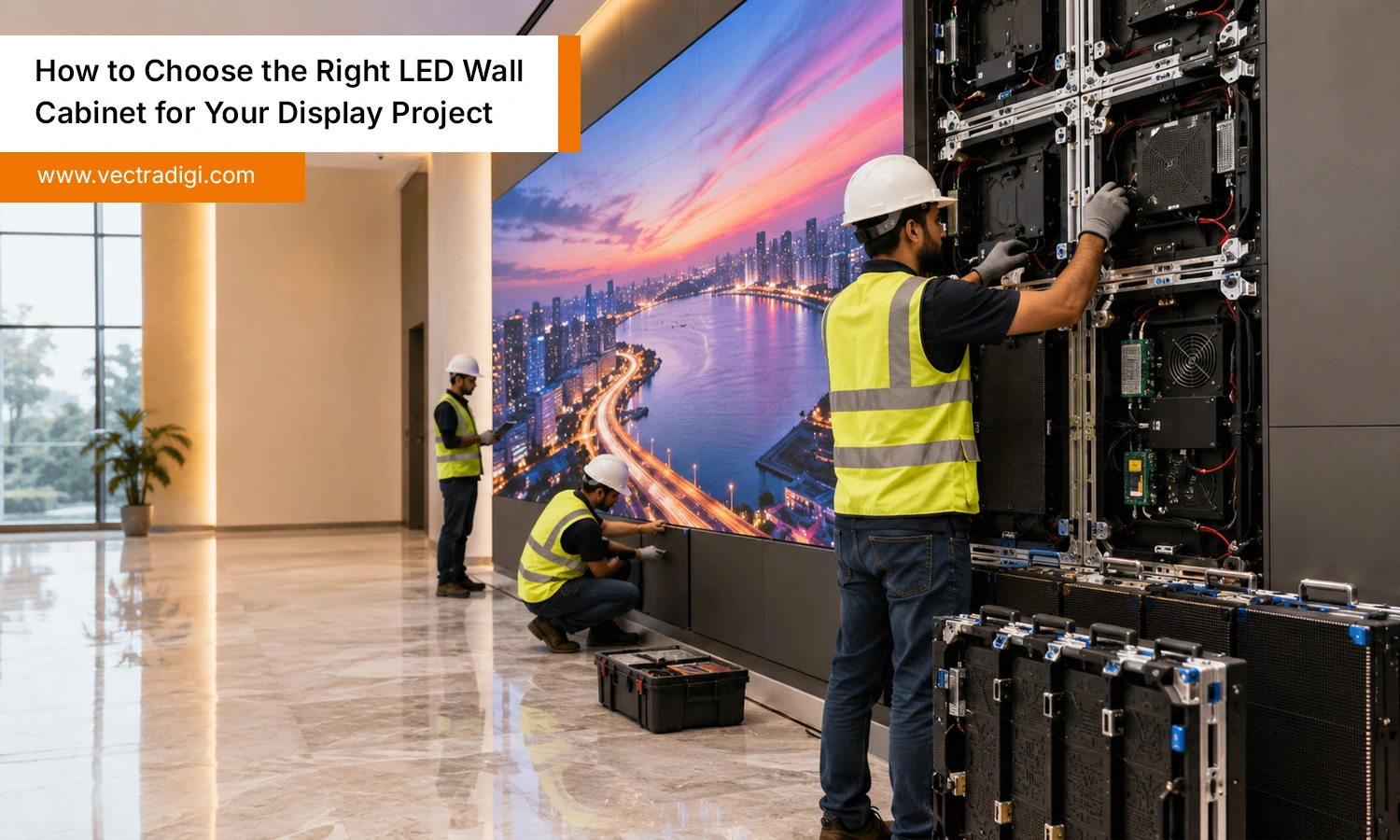
Planning an LED display project involves more than choosing a bright screen or the right pixel pitch. One important component that often gets overlooked is the led wall cabinet. It provides the structural support needed to keep the display stable, durable, and easy to maintain. Choosing the right cabinet can improve installation, protect internal components, and help the display perform reliably for years. A well-matched cabinet also reduces maintenance costs and supports a cleaner overall installation. In this blog, we’ll explore why the right cabinet matters, the key factors to consider, common cabinet types, buying mistakes to avoid, and how to choose a reliable supplier.
Table of Contents
- Why Choosing the Right LED Wall Cabinet Matters
- Key Factors to Consider Before Choosing an LED Wall Cabinet
- LED Wall Cabinet Selection Checklist
- Common Types of LED Wall Cabinets
- Common Mistakes to Avoid When Buying an LED Wall Cabinet
- How to Select a Reliable LED Wall Cabinet Supplier
- Conclusion
- Frequently Asked Questions
Also Read: Top Benefits of LED Signage Displays for Modern Businesses
Why Choosing the Right LED Wall Cabinet Matters
Selecting the right led wall cabinet plays a major role in the overall performance and reliability of an LED display. A well-designed cabinet keeps LED modules securely aligned, helping deliver clear and seamless visuals. It also protects internal components from dust, moisture, and physical damage, depending on the installation environment. The right cabinet simplifies maintenance, reduces installation time, and supports better heat dissipation, which can extend the display’s lifespan. Investing in a quality cabinet from the beginning helps avoid unnecessary repairs and ensures the LED wall continues performing efficiently for years.
Benefits of choosing the right LED wall cabinet:
- Improves display stability
- Enhances picture quality
- Increases product lifespan
- Simplifies maintenance
- Supports easy installation
- Reduces long-term costs
Key Factors to Consider Before Choosing an LED Wall Cabinet
- Installation Location: Choose a cabinet designed for the installation environment. Indoor cabinets prioritize appearance and lightweight construction, while outdoor cabinets require weather resistance, high IP ratings, and protection from dust, moisture, and heat.
- Cabinet Material: Cabinet material affects durability, weight, and heat management. Die-cast aluminum offers strength, precision, and corrosion resistance, while steel cabinets provide an economical option for permanent fixed installations.
- Cabinet Size: Select a cabinet size that matches your display dimensions and installation needs. Proper sizing improves alignment, simplifies maintenance, supports future expansion, and creates a seamless viewing experience.
- Front or Rear Maintenance: Choose front-maintenance cabinets for limited spaces or wall-mounted displays. Rear-maintenance cabinets suit installations with sufficient back access, making servicing convenient while supporting efficient long-term display maintenance.
- Pixel Pitch Compatibility: Ensure the cabinet supports your chosen pixel pitch for accurate module alignment and seamless visuals. Proper compatibility improves image quality, installation precision, and future upgrade flexibility.
- Heat Dissipation: Efficient heat dissipation prevents overheating and maintains stable display performance. Well-ventilated cabinets protect internal components, reduce maintenance needs, and extend the operational lifespan of the LED display.
- Ease of Installation: Lightweight, modular cabinets with quick-lock mechanisms simplify installation and maintenance. Easy-to-install designs reduce labor costs, save time, improve alignment accuracy, and support hassle-free future upgrades.
LED Wall Cabinet Selection Checklist
Before making a final decision, compare the essential features of each led wall cabinet to ensure it meets your project requirements. This quick checklist can help you evaluate the most important factors and choose a cabinet that delivers reliable performance, easy maintenance, and long-term value.
| Factor | Why It Matters |
|---|---|
| Installation Location | Ensures the cabinet is suitable for indoor or outdoor conditions. |
| Cabinet Material | Affects durability, weight, corrosion resistance, and heat dissipation. |
| Cabinet Size | Helps achieve a seamless display and simplifies installation. |
| Maintenance Type | Determines how easily the display can be serviced after installation. |
| Pixel Pitch Compatibility | Ensures perfect module alignment and consistent image quality. |
| Heat Dissipation | Prevents overheating and extends the lifespan of LED components. |
| Ease of Installation | Reduces installation time, labor costs, and future maintenance efforts. |
Common Types of LED Wall Cabinets
- Indoor LED Wall Cabinets: Indoor LED wall cabinets are lightweight, slim, and designed for controlled environments. They deliver seamless visuals, easy installation, and simple maintenance, making them ideal for offices, retail stores, classrooms, and meeting rooms.
- Outdoor LED Wall Cabinets: Outdoor LED wall cabinets feature weather-resistant construction with high IP ratings to withstand rain, dust, heat, and humidity. They are perfect for advertising, stadiums, transportation hubs, and public displays.
- Rental LED Wall Cabinets: Rental LED wall cabinets are lightweight, durable, and built for quick assembly and dismantling. Their portable design makes them suitable for concerts, exhibitions, trade shows, and corporate events.
- Fixed Installation LED Wall Cabinets: Fixed installation LED wall cabinets are designed for permanent setups where stability and long-term performance are priorities. They are commonly used in shopping malls, auditoriums, hotels, and control rooms.
- Curved LED Wall Cabinets: Curved LED wall cabinets create smooth, immersive display designs by supporting concave or convex installations. They are widely used in experience centers, museums, premium retail spaces, and creative digital displays.
Common Mistakes to Avoid When Buying an LED Wall Cabinet
- Choosing Only Based on Price: Selecting the cheapest cabinet may reduce upfront costs but often compromises durability, performance, and maintenance. Focus on overall quality and long-term value instead of price alone.
- Ignoring Maintenance Access: Overlooking maintenance requirements can make future repairs difficult and time-consuming. Always choose front or rear maintenance based on available installation space and servicing convenience.
- Selecting the Wrong Cabinet Material: Choosing an unsuitable cabinet material can affect durability, weight, and heat management. Select a material that matches the installation environment and project requirements for reliable performance.
- Overlooking Pixel Pitch Compatibility: Using a cabinet that is incompatible with the chosen pixel pitch can cause alignment issues and poor visuals. Always verify compatibility before purchasing the cabinet.
How to Select a Reliable LED Wall Cabinet Supplier
- Review Manufacturing Standards: A reliable supplier follows strict manufacturing standards and quality control processes. Certified products are more likely to deliver consistent performance, durability, safety, and dependable operation in different environments.
- Compare Warranty Coverage: Always review the warranty before purchasing. A comprehensive warranty reflects the supplier’s confidence in product quality and provides peace of mind against unexpected manufacturing defects or performance issues.
- Evaluate Technical Support: Reliable technical support is essential for smooth installation, troubleshooting, and maintenance. Choose a supplier that offers prompt assistance to minimize downtime and keep your LED display operating efficiently.
- Check Installation Assistance: Professional installation guidance helps ensure accurate cabinet alignment and proper setup. Suppliers offering installation support can reduce errors, improve display performance, and simplify the entire deployment process.
- Read Customer Reviews: Customer reviews provide valuable insights into product quality, service experience, and after-sales support. Consistently positive feedback is a strong indicator of a trustworthy and dependable LED display supplier.
Conclusion
Choosing the right led wall cabinet is an important step in building a reliable and high-performing LED display. From selecting the right material and cabinet size to considering maintenance access, heat dissipation, and pixel pitch compatibility, every factor contributes to long-term performance and durability. Avoiding common buying mistakes and partnering with a trusted supplier can also help reduce maintenance costs and improve overall value. By carefully evaluating your project requirements before making a decision, you can invest in a cabinet that delivers seamless visuals, dependable operation, and lasting performance for a wide range of commercial and professional applications.
Looking for a premium led wall cabinet? Vectradigi offers durable, high-performance LED display solutions backed by expert guidance and reliable support to help every display project succeed.
Frequently Asked Questions
Q1. What is a LED wall cabinet?
Ans: An LED wall cabinet is the structural frame that holds LED modules, power supplies, cables, and control components together. It provides stability, protects internal parts, and ensures proper alignment for seamless display performance.
Q2. Which material is best for a LED wall cabinet?
Ans: Die-cast aluminum is often considered the best choice because it is lightweight, durable, corrosion-resistant, and offers excellent heat dissipation. Steel cabinets are also suitable for fixed installations with tighter budgets.
Q3. How do I choose the right LED wall cabinet size?
Ans: Choose a cabinet size based on your display dimensions, installation space, aspect ratio, and future expansion plans. Modular cabinet sizes offer greater flexibility and simplify installation and maintenance.

