
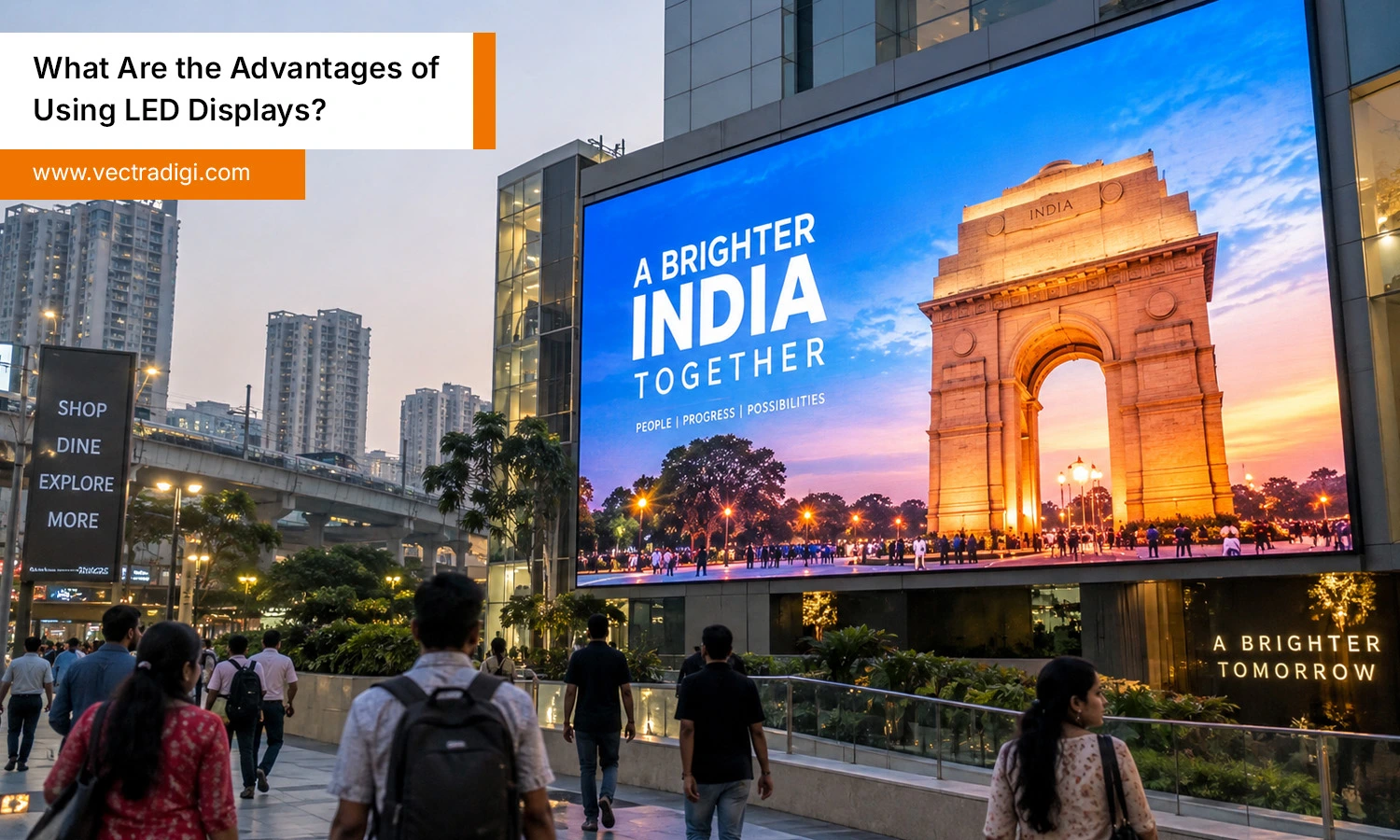
If you’ve walked through a busy city street, a mall, or a stadium recently, chances are you’ve been looking at an active LED display without even realizing it. These are the bright, high-resolution screens used for digital billboards, retail signage, event backdrops, and video walls. Unlike a regular screen, an active LED display is built specifically to grab attention outdoors, indoors, in daylight, and under stage lighting, all without losing clarity.
Businesses today aren’t just competing for attention, they’re competing for attention in crowded, fast-moving environments where a dull or hard-to-read screen simply gets ignored. If you’re considering one for your business, event space, or advertising campaign, it helps to understand exactly why so many brands are switching from traditional signage to active LED technology, and what actually makes it worth the investment.
Table of Contents
Also Read: LED Wall Unit Buying Guide 2026: Specs, Pricing, and How to Choose the Right Display
Key Advantages of Using Active LED Displays
Here’s a closer look at why active LED displays have become the standard choice for advertising, events, and public-facing screens.
1. Exceptional Brightness and Visibility
Active LED displays are built to stay clear and readable even in direct sunlight, which is something most traditional screens struggle with. This makes them ideal for outdoor billboards, storefronts, and stadium screens where visibility can’t be compromised, no matter the time of day.
2. High-Resolution, Sharp Image Quality
Because each pixel is individually controlled, active LED displays deliver crisp detail and accurate colors, even at large sizes. Whether it’s a product advertisement or a live event feed, the image stays clear from a distance and up close.
3. Energy Efficiency for Large-Scale Use
Despite their brightness, active LED displays are relatively energy-efficient compared to older display technologies of similar size. This matters a lot for businesses running screens for hours every day, since it keeps long-term operating costs manageable even when the screen is left on for extended periods without a break.
4. Long Lifespan and Reliable Performance
Active LED displays are designed for continuous, heavy-duty use, often rated for tens of thousands of hours of operation. This makes them a practical investment for businesses that need screens running daily without frequent replacements or repairs, which matters a great deal when a display is mounted somewhere hard to access, like the side of a building or a stadium roof.
5. Weather Resistance and Durability
Outdoor-rated active LED displays are built to handle rain, heat, dust, and temperature swings without affecting performance. This durability is a major reason they’re used for billboards, transit stations, and stadium displays that operate in all conditions year-round.
6. Flexible, Modular Design
Active LED panels are modular, meaning screens can be built in almost any size or shape, from small indoor signage to massive outdoor video walls. This flexibility makes it easier to fit a display into unusual spaces or scale it up for larger venues.
7. Remote Content Management
Most active LED display systems allow content to be updated remotely through software, meaning businesses can change ads, schedules, or messages without physically accessing the screen. This is especially useful for multi-location campaigns or time-sensitive promotions.
8. Strong Return on Investment Over Time
While the upfront cost of an active LED display is higher than traditional signage, the combination of durability, low maintenance, and energy efficiency means businesses often see strong long-term value, especially when the screen is used for years without major issues.
Who Benefits Most from Active LED Displays?
Active LED displays serve a wide range of industries, not just retail or advertising. Here’s a quick breakdown of who gets the most value from them, and why.
- Retail and Advertising Brands: Storefronts and outdoor advertisers benefit from high-visibility screens that grab attention and allow content to be updated instantly for promotions, sales, or seasonal campaigns, without the cost or delay of reprinting physical signage every time something changes.
- Event Organizers: Concerts, conferences, and sporting events rely on active LED displays for large-scale visuals, live feeds, and stage backdrops that remain clear even from far distances, helping keep audiences engaged no matter where they’re seated.
- Corporate and Public Spaces: Offices, transit hubs, and airports use active LED screens for wayfinding, announcements, and information displays that need to stay legible in busy, high-traffic environments where people are often moving quickly and only glancing at the screen for a second or two.
- Municipalities and Outdoor Venues: Cities and stadiums benefit from the weather resistance and durability of outdoor-rated active LED displays, which hold up well through changing seasons with minimal maintenance, keeping public information and advertising running smoothly year-round.
Conclusion
Active LED displays have become the go-to choice for businesses and venues that need bright, reliable, and eye-catching screens. From outdoor billboards to event backdrops, their combination of sharp visuals, durability, and remote content control makes them far more practical than traditional signage in most real-world settings. The upfront cost is higher, but the long-term performance, low maintenance, and flexibility usually make up for it over time. If your goal is visibility that actually holds up outdoors, indoors, day or night, active LED technology is genuinely worth serious consideration for your next screen or signage project, whatever industry you’re in.
Looking for the right active LED display for your business or event? Vectradigi helps you choose, install, and manage displays built for real-world performance and lasting results.
Frequently Asked Questions
Q1. What makes an active LED display different from a regular LED screen?
Ans: Active LED displays drive each pixel individually with its own transistor, giving sharper image quality, better brightness control, and more reliable performance, especially at larger sizes.
Q2. Can active LED displays be used outdoors?
Ans: Yes. Outdoor-rated active LED displays are built to handle direct sunlight, rain, heat, and temperature changes, making them a common choice for billboards and stadium screens.
Q3. How long do active LED displays typically last?
Ans: Most active LED displays are rated for tens of thousands of hours of continuous use, often translating to several years of daily operation before major maintenance is needed.
Q4. Is it possible to update content on an active LED display remotely?
Ans: Yes. Most systems support remote content management, allowing businesses to change advertisements, schedules, or messages without physically accessing the screen.

