
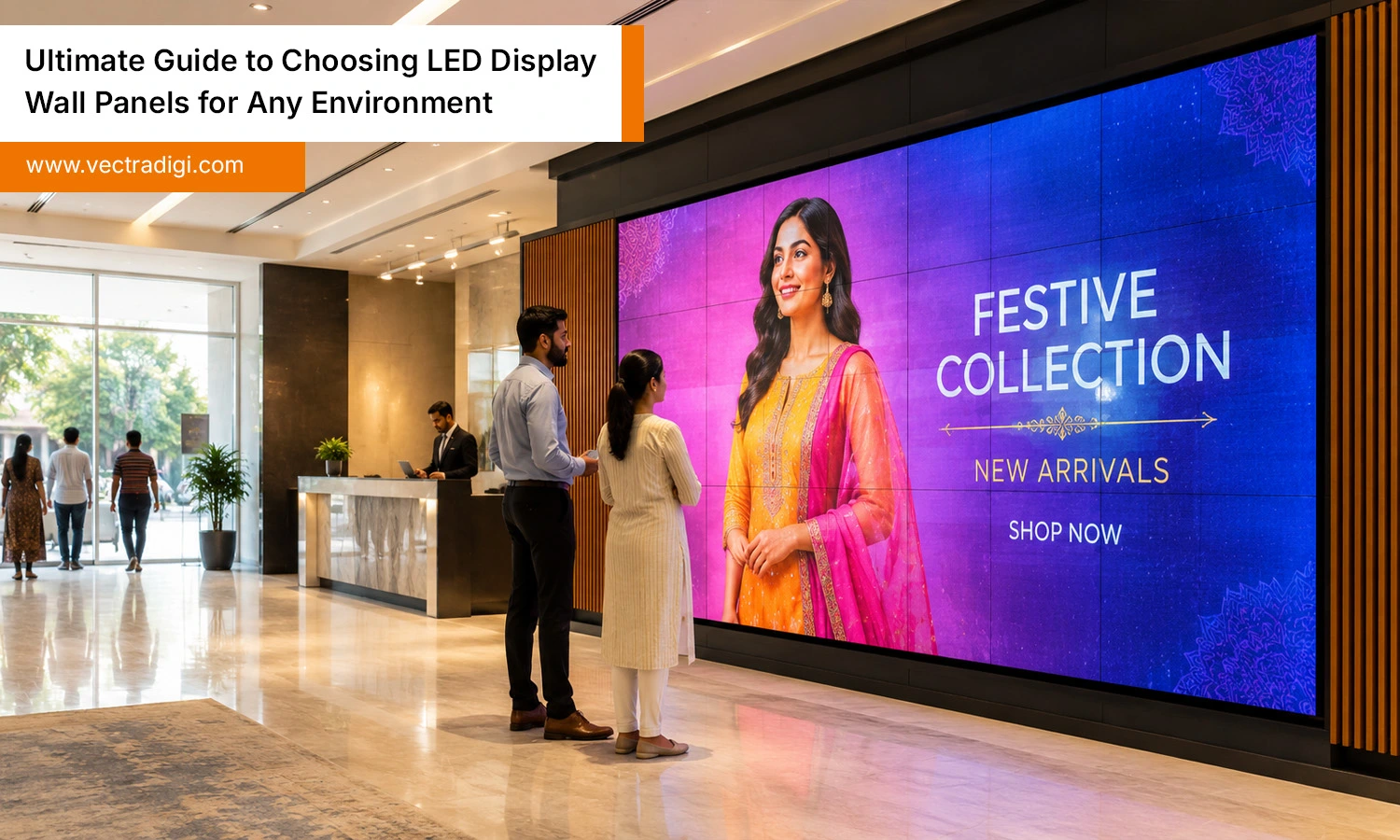
Digital screens are now a familiar sight in everyday life, helping businesses share information, promote products, and connect with audiences more effectively than ever before. From retail stores and corporate offices to event venues and outdoor advertising spaces, businesses are increasingly using LED display wall panels to attract attention and deliver engaging visual experiences. Unlike traditional signage, LED displays provide enhanced flexibility, improved visibility, and the convenience of updating content in real time. Choosing the most suitable display solution involves evaluating several important factors, such as display features, installation conditions, and its ability to deliver reliable performance over time. In this guide, we will explore the benefits of LED technology, different types of LED displays, key buying considerations, common mistakes to avoid, and future industry trends.
Table of Contents
Also Read: Indoor LED Wall Displays: How to Choose the Right One for Your Business
Why LED Display Technology Is Growing So Fast
It’s hard to ignore how quickly digital screens have become part of everyday life. Whether you’re visiting a shopping centre, exploring a trade show, or waiting at a transport hub, LED displays are often the key technology capturing attention and delivering important information. Businesses like them because they are practical. Need to change an offer? Done in minutes. Running a seasonal promotion? No need to print new materials every week. Over the years, LED display technology has become much more affordable, allowing businesses of all sizes to invest in digital signage that was once seen as a costly option rather than a practical communication solution.
Key Benefits
- Bright and easy-to-see displays
- Clear visuals with strong color quality
- Lower energy consumption
- Flexible installation options
- Long operational life
- Fast content updates
- Better audience engagement
Different Types of LED Display Wall Panels
Indoor LED Display Panels
For many businesses, indoor LED displays have become the go-to option for sharing information and promotions. You will see them in retail stores, offices, hotels, and even reception areas. Because viewers are often positioned close to the screen, maintaining excellent image quality is essential. Even slight blurriness can be easily noticed and may create a poor impression. That is why indoor screens are designed to produce sharp visuals and balanced colors, making content easier to read and more appealing to look at.
Outdoor LED Display Panels
You have probably seen outdoor LED displays without paying much attention to them. They are the giant screens showing advertisements along busy roads, the displays inside stadiums, and the digital boards found at transport stations. Outdoor displays do not get the luxury of controlled conditions. They are expected to perform through intense sunlight, dusty environments, unexpected rain, and continuous daily use without compromising visibility. They also need to stay visible when sunlight is at its brightest. That combination of durability and visibility is one of the main reasons businesses continue to invest in them.
Rental LED Display Panels
Walk into a trade show or product launch and there is a good chance the large screen on stage is a rental LED display. These displays are designed for temporary use, making portability an important feature. Event teams prefer them because they can be set up quickly, dismantled with minimal effort, and configured to suit a wide range of venue layouts.
Key Factors to Consider Before Choosing LED Display Wall Panels
Pixel Pitch
Not every LED display needs the same level of detail. 10.A screen viewed from a few feet away has very different requirements than one mounted above a busy roadway. That is where pixel pitch comes into the conversation. Smaller spacing between pixels creates a cleaner and sharper image, which is useful for indoor settings where people are close to the display. As viewing distances become greater, businesses can often choose a wider pixel pitch while still maintaining a clear and effective visual experience for their audience.
Screen Size
While it may seem that a larger screen will always produce better outcomes, effectiveness depends on several factors, and bigger is not necessarily the best option in every situation. A display that looks impressive in one location might feel completely out of place in another. Factors such as available space, viewing distance, and the type of content being displayed should all be considered when choosing a screen size. A display that is too small may fail to capture attention, while one that is excessively large can feel out of place and overwhelm the surrounding environment. Finding the right balance usually delivers the best viewing experience.
Brightness Levels
Brightness is one of those things people rarely think about until a display is installed in the wrong location. A display that appears bright and clear in an indoor office environment may struggle to maintain the same visibility when placed in direct sunlight, making brightness levels an important consideration. That is why brightness requirements vary from one environment to another. Indoor spaces usually do not demand extremely bright screens, but outdoor installations are a different story. Businesses investing in led display wall panels should always consider lighting conditions first because even great content can lose its impact if people struggle to see it.
Resolution Requirements
Most people do not walk up to a display and ask about its resolution. They simply notice whether the content looks sharp or not. A blurry product image, unclear text, or grainy video can make even professional content feel less impressive. That is why resolution deserves attention during the buying process. Businesses using led display wall panels for advertising, presentations, or visual displays often benefit from higher resolution screens. The best option depends on how the display will be used, who will be viewing it, and how far away they will be standing.
Maintenance Accessibility
It is easy to focus on things like screen quality, brightness, and resolution when comparing displays. Maintenance rarely gets the same attention. The funny thing is that it often becomes important only after the installation is complete. If a display needs servicing and reaching the components turns into a complicated job, costs and downtime can increase quickly. That is why many businesses look beyond the display itself and consider how easy it will be to access later. A little planning at the beginning can save plenty of frustration in the years ahead.
Choosing the Right LED Display for Different Environments
Retail Stores: Retail stores use LED displays to showcase promotions, highlight products, and create engaging shopping experiences that attract customers and encourage purchasing decisions.
Corporate Offices: Corporate environments use LED displays to enhance presentations, streamline internal communication, support meetings, share important company updates, and reinforce brand identity across the workplace.
Educational Institutions: Schools and universities use LED screens for announcements, educational content, event updates, and interactive learning experiences across campus facilities.
Event Venues: Event venues rely on LED displays to provide clear visuals, live content, sponsor messaging, and audience engagement during conferences and performances.
Outdoor Advertising: Outdoor advertisers use high-brightness LED displays to increase visibility, reach large audiences, and deliver impactful promotional messages throughout the day.
Conclusion
LED technology continues to transform how businesses deliver messages and interact with customers, employees, and target audiences across various environments. From retail stores and educational institutions to event venues and outdoor advertising spaces, LED displays offer a flexible and highly effective communication solution. Choosing the right display involves evaluating factors such as pixel pitch, brightness, resolution, durability, and maintenance accessibility. Understanding these requirements helps ensure that the selected display performs effectively within its intended environment. By making an informed decision, businesses can improve visibility, enhance engagement, and maximize the long-term value of their investment in digital display technology.
Looking for reliable LED display solutions tailored to your business needs? Contact Vectradigi today and discover innovative display technologies designed to maximize visibility, engagement, and long-term performance.
Frequently Asked Questions
Q1: How long do LED display wall panels last?
Ans: Most quality LED displays can operate for many years when properly maintained. Lifespan varies depending on usage patterns, environmental conditions, and component quality.
Q2: What is the best pixel pitch for indoor displays?
Ans: The ideal pixel pitch depends on viewing distance. Smaller pixel pitch is generally recommended when viewers are positioned closer to the screen.
Q3: Are LED display wall panels energy efficient?
Ans: Yes, Modern LED technology is designed to deliver high brightness while maintaining relatively efficient power consumption.
Q4: Which industries benefit most from LED displays?
Ans: Retail, education, hospitality, corporate environments, entertainment venues, transportation hubs, and advertising companies all benefit from LED display technology.

