
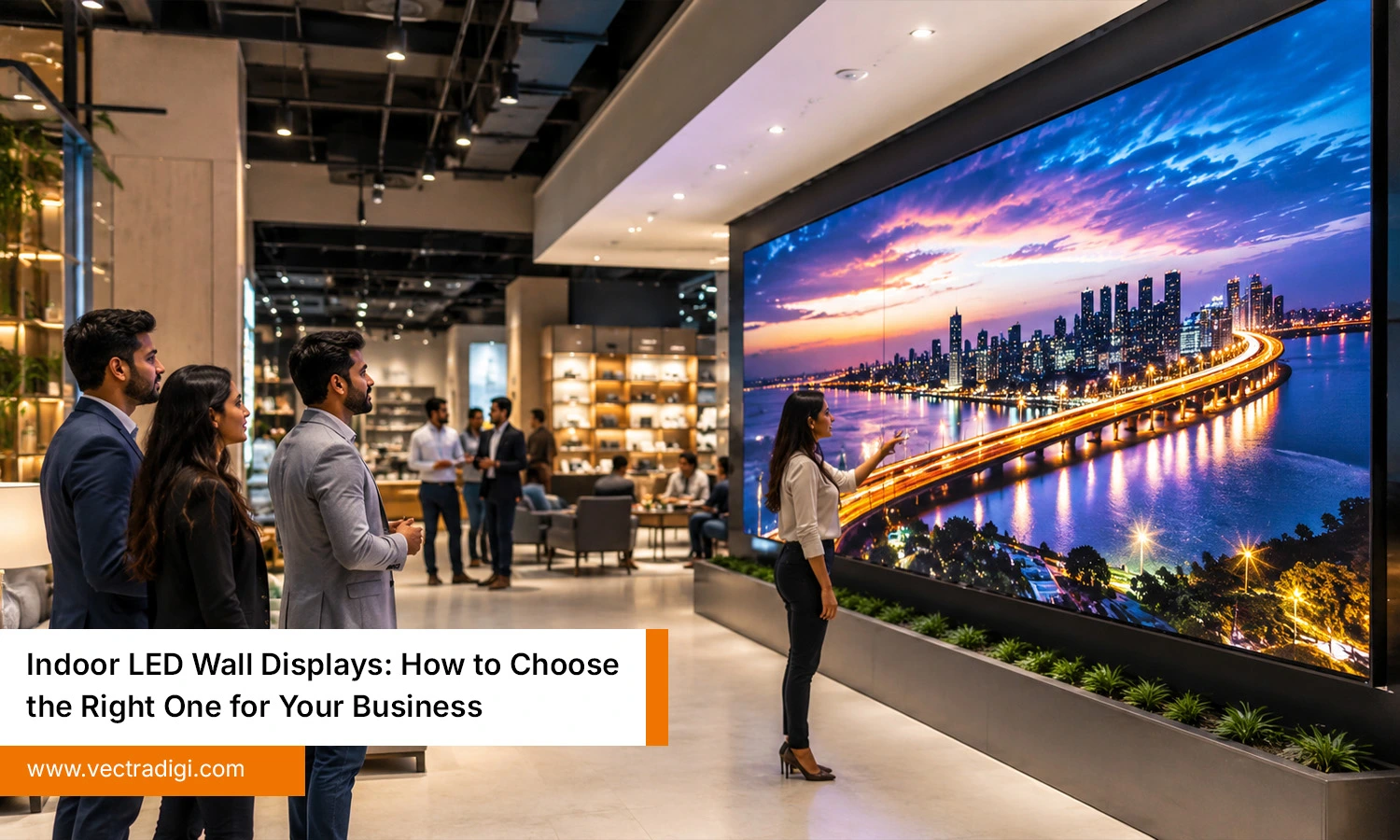
Businesses today want display solutions that look modern, attract attention quickly, and improve communication with customers. Traditional posters and printed banners no longer create the same impact in retail stores, offices, hotels, or commercial spaces. This is why the demand for a led wall indoor display is increasing rapidly across different industries. These digital screens offer better visibility, dynamic content management, and long-term value for businesses looking to improve branding and customer engagement. However, choosing the right display is not always easy because factors like screen size, pixel pitch, brightness, and installation all matter. In this blog, we will discuss how businesses can choose the right indoor LED wall display successfully.
Table of Contents
Also Read: How Brands Are Winning Audiences Through Smart Digital Billboard Advertising
Why Businesses Are Investing in Indoor LED Displays
Businesses are slowly moving away from traditional signboards and printed posters because people respond more to moving visuals now. A bright indoor display naturally catches attention faster, especially in busy commercial spaces where customers see hundreds of advertisements every day. That is one big reason why many brands are investing in a led wall indoor solution for their stores, offices, and showrooms. These displays make presentations, promotions, and announcements look more professional and visually appealing. Another advantage is flexibility. Businesses can update offers, branding content, or product information instantly without spending money repeatedly on printing materials or replacements.
Key Benefits:
- Better customer engagement
- Improved brand visibility
- Easy content updates anytime
- Modern and professional appearance
- Long-term marketing value for businesses
Important Factors to Consider Before Choosing a Led Wall Indoor Display
1. Screen Size and Viewing Distance
A lot of businesses get confused while choosing screen size. Many people assume that a larger screen will always deliver better performance, but that is not necessarily true. The display should actually fit the space where it will be installed. For instance, a medium-sized conference room does not require a massive screen that covers the entire wall. At the same time, a very small display may not look effective inside large commercial spaces. Viewing distance also matters because people standing too close to a huge screen may feel uncomfortable. A well-planned led wall indoor display simply feels easier to watch, read, and engage with throughout the day.
2. Pixel Pitch and Resolution
Pixel pitch is one of those technical terms many businesses ignore in the beginning and regret later. Simply put, it refers to the distance between the small LED pixels displayed on the screen. Smaller spacing usually means the visuals look sharper and cleaner, especially when people view the screen from nearby. This becomes really important in offices, retail stores, showrooms, or conference rooms where viewers stand close to the display most of the time. People generally prefer presentations and advertisements with sharp text and clear visuals rather than blurry or difficult-to-see content. While selecting a led wall indoor display, businesses should always think about viewing distance first because better resolution naturally creates a more professional and comfortable viewing experience.
3. Brightness and Indoor Lighting Conditions
People usually get impressed by very bright screens in showrooms, so many businesses think maximum brightness is always the right choice. But indoors, too much brightness can start feeling harsh after some time. In offices or meeting spaces especially, overly bright displays may even make presentations uncomfortable to watch. The better approach is choosing brightness according to the environment. A brightly lit retail store may need stronger display settings, while smaller indoor spaces often look better with softer brightness levels. Before finalizing a led wall indoor display, it helps to observe how much natural and artificial light the space already gets during the day.
4. Installation Space and Mounting Options
Installation is something many businesses do not think much about in the beginning, and later it becomes stressful. Sometimes the wall is not strong enough, sometimes the wiring looks messy, and in some cases maintenance becomes difficult because enough space was never planned around the screen. These small things matter more than people expect. Some businesses prefer displays fixed directly on walls for a neat appearance, while others choose hanging or freestanding setups depending on the space. A properly installed led wall indoor display usually looks cleaner, works better, and stays easier to manage in the long run. Good planning early saves a lot of future trouble.
5. Budget and Long-Term Maintenance
Many businesses get tempted by lower prices, especially when multiple display options look almost similar at first glance. But after a few months, the difference usually starts showing. Cheap displays may need frequent repairs, the colors may not look consistent, or technical support becomes difficult to get when problems appear. That is why experienced buyers often focus more on long-term value instead of only the upfront cost. A reliable led wall indoor display generally lasts longer, performs more smoothly, and creates fewer maintenance headaches over time. Before making a decision, businesses should also check warranty support, spare parts, and service availability because those things matter later more than people expect.
Common Mistakes Businesses Should Avoid
Choosing Only Based on Price: A lot of businesses simply go for the cheapest option thinking all displays work the same way. But after some time, issues like poor picture quality, frequent repairs, or weak support start becoming frustrating. Saving money initially does not always save money later.
Ignoring Pixel Pitch: Pixel pitch is something many buyers skip because it sounds too technical. Later, when the screen looks blurry from close distances, they realize why it actually mattered. Indoor displays usually need sharper visuals for comfortable viewing.
Selecting the Wrong Screen Size: Sometimes businesses choose very large screens just because they look impressive. In smaller indoor spaces, though, oversized displays can feel uncomfortable. On the other hand, very small screens may fail to attract enough attention from visitors.
Poor Installation Planning: Installation problems usually appear after everything is already set up. Messy wiring, poor ventilation, or weak mounting structures can slowly create technical and maintenance issues that become difficult and expensive to manage later.
Choosing Unreliable Suppliers: Working with the wrong supplier can turn a simple project into a stressful experience. Delayed service, installation mistakes, or missing support after purchase are honestly more common than most businesses expect.
Conclusion
Indoor LED displays have become an important part of modern business communication and branding strategies. Whether used in retail stores, offices, hotels, or commercial spaces, these displays help businesses create stronger visual experiences and better customer engagement. However, selecting the right system requires careful planning because factors like screen size, pixel pitch, brightness, installation quality, and maintenance all influence long-term performance. A properly selected led wall indoor display not only improves visibility but also enhances professionalism and brand value. Businesses that focus on quality, durability, and future requirements usually achieve better results and stronger returns from their investment over time.
Looking for reliable indoor LED display solutions? Vectradigi offers high-quality LED systems designed to improve business visibility, customer engagement, and long-term performance for modern commercial spaces.
Frequently Asked Questions
Q1. What is the ideal pixel pitch for indoor LED displays?
Ans: Indoor LED displays usually require smaller pixel pitch because viewers stand closer to the screen. Fine pixel pitch provides sharper visuals and better readability indoors.
Q2. How long does an indoor LED wall display last?
Ans: A high-quality indoor LED display can last many years with proper maintenance, regular servicing, and suitable operating conditions inside commercial environments.
Q3. Are indoor LED displays energy efficient?
Ans: Yes, modern indoor LED displays are designed to consume less power while delivering bright visuals, making them energy-efficient for long-term business usage.

