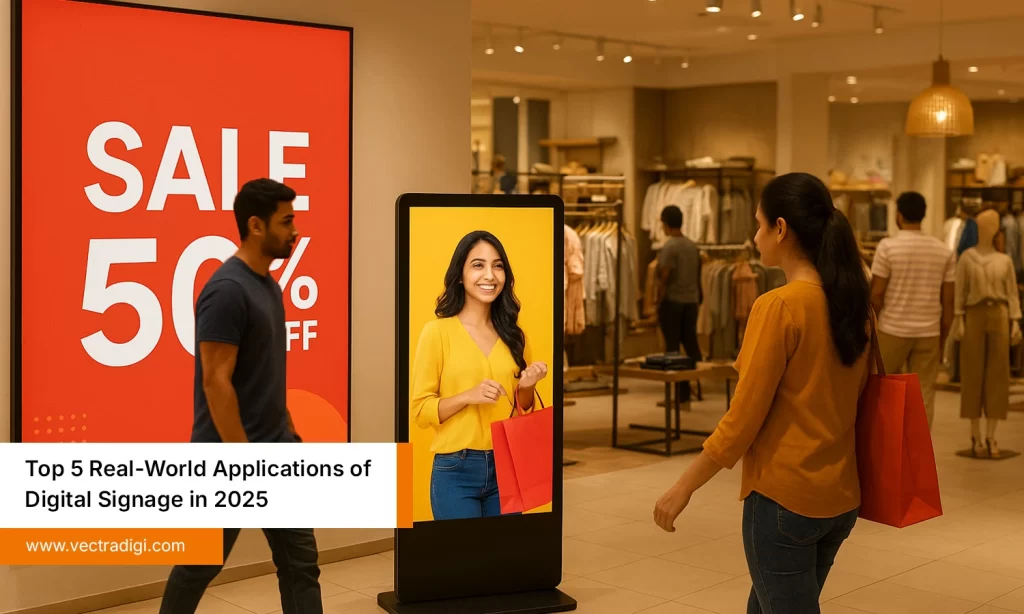
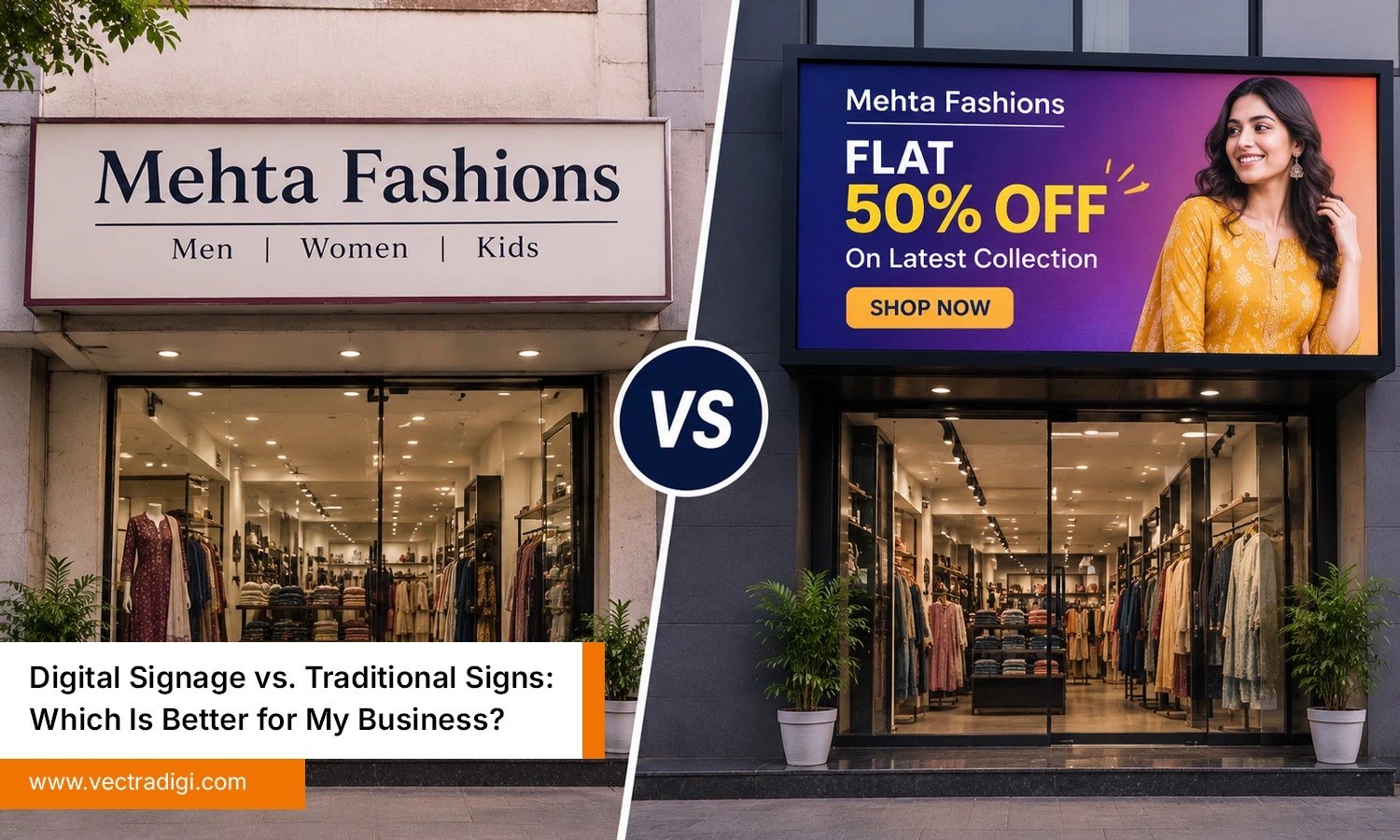
Picture two shop owners on the same street. One just spent a small fortune on a printed banner that’ll need replacing the moment the season changes. The other flips a switch, and their storefront screen updates instantly with a new promotion. Which one’s making the smarter move? That’s the exact question a lot of business owners find themselves stuck on when it’s time to update their signage. Do you stick with something tried and true, like a painted board or a vinyl banner? Or do you make the jump to a digital screen that costs more upfront but promises a lot more flexibility? This isn’t a one-size-fits-all answer. The right choice in the digital signage vs traditional signs debate depends on your budget, your foot traffic, and honestly, how often your message needs to change. Let’s break down both options so you can figure out what actually makes sense for your business.
Table of Contents
Also Read: The Power of Signage in Retail: Boosting Sales with Visual Displays
What Is Traditional Signage?
Traditional signage covers all the classic stuff you’ve seen for decades like banners, vinyl storefront signs, wooden boards, painted windows, billboards, and yard signs. It’s static. Once it’s printed or painted, that’s the message until you physically swap it out.
There’s something reassuring about traditional signs. They don’t need power, they don’t crash, and they don’t require anyone on staff to know how to use software. You put it up, and it does its job.
Where Traditional Signs Work Best
Traditional signage tends to shine for small local businesses that don’t change their offers often — think a neighborhood bakery, a barbershop, or a one-time event like a garage sale or grand opening. If your message stays the same for months or years, there’s little reason to pay for flexibility you won’t use.
What Is Digital Signage?
Digital signage refers to any electronic display used for advertising or communication — LED screens, LCD panels, digital menu boards, and interactive kiosks all fall under this umbrella. Most systems come with content management software, so you can update what’s on screen from a laptop or even your phone, often in seconds.
Unlike a printed sign, digital signage can rotate through multiple messages, show video, and react to the time of day. A coffee shop might display breakfast specials in the morning and switch to lunch deals by noon, all without anyone touching the hardware.
Where Digital Signage Works Best
Digital signage tends to earn its keep in high-traffic environments such as retail chains, restaurants, corporate lobbies, airports, and gyms. Anywhere the message needs to change often, or where you’re trying to grab attention in a busy space, digital screens usually outperform static signs.
Digital Signage vs. Traditional Signs: Key Differences
Now for the part most business owners actually care about — how these two options stack up against each other in practical terms.
- Upfront cost vs. long-term cost. Traditional signs almost always win on initial price. Traditional signs usually require a lower upfront investment, while digital signage involves a higher initial cost because it includes display screens, hardware, and content management software. But that gap narrows over time. Every time you need to update a traditional sign, you’re paying for new printing, materials, and possibly installation. Digital signage, once installed, lets you make unlimited changes for little more than a subscription fee.
- Flexibility and content updates. This is where digital pulls ahead by a wide margin. Need to promote a flash sale by tomorrow morning? With digital signage, that’s a five-minute job. With a printed sign, you’re calling a print shop and hoping they can turn it around fast enough and that’s assuming you don’t mind paying rush fees.
- Audience engagement and visual impact. Movement catches the eye. That’s just how human attention works. Digital displays with video or animation tend to draw more glances than a static sign, especially in busy areas where people are used to tuning out background clutter. That said, a well-designed traditional sign with sharp branding can still stop people in their tracks — good design matters more than the medium in some cases.
- Durability and maintenance. Outdoor traditional signs deal with sun fading, rain damage, and general wear over time, which usually means a refresh every year or two. Digital screens hold up well against the elements if they’re rated for outdoor use, but they come with their own upkeep like software updates, occasional hardware repairs, and the very real risk of a screen glitch mid-display.
- Environmental impact. If sustainability matters to your brand, digital signage produces less ongoing waste since you’re not printing new materials every time your promotion changes. Traditional signage, especially for businesses that update frequently, can generate a fair amount of discarded vinyl and paper over the years.
Which Option Fits Your Business?
There’s no universal winner here, it really comes down to what your business needs.
Best for Small, Budget-Conscious Businesses
If you’re running a small operation with a tight marketing budget and a message that doesn’t change much, traditional signage is probably your best bet. You get a professional look without ongoing software costs or the learning curve of managing digital content.
Best for High-Traffic or Multi-Location Businesses
If you’ve got multiple locations, frequent promotions, or a business in a high-foot-traffic area, digital signage tends to pay for itself. Being able to update pricing, menus, or offers across every location from one dashboard saves time and keeps your messaging consistent without printing costs piling up.
Hybrid Approach — Using Both
Plenty of businesses don’t have to pick just one. A restaurant might use a digital menu board inside while keeping a traditional sign out front for branding and visibility. This hybrid approach lets you get the best of both — the reliability of static signage where it makes sense, and the flexibility of digital where it actually adds value.
Conclusion
There’s no single right answer to the digital signage vs traditional signs question. It genuinely depends on your budget, foot traffic, and how often your message changes. Traditional signage stays a smart, low-maintenance pick for small businesses with steady offerings. Digital signage earns its cost when you’re updating often, running multiple locations, or competing for attention in a busy space. Some businesses even land on a hybrid setup, blending both for the best of each world. Think about how frequently your messaging shifts over the coming year that one question usually points you toward the right choice.
Ready to upgrade your storefront? Vectradigi helps businesses design and install signage solutions tailored to their budget and business goals. Get in touch today.
Frequently Asked Questions
Q1: Is digital signage more expensive than traditional signs?
Ans: Upfront, yes — digital signage typically costs more due to hardware and software. But if you update your messaging often, digital can end up cheaper over time since you’re not paying for reprints every time something changes.
Q2: How long do traditional signs last compared to digital displays?
Ans: A quality traditional sign can last several years, though outdoor exposure causes fading and wear. Digital displays, especially commercial-grade ones, often last 5 to 10 years with proper maintenance, though components may need occasional repair.
Q3: Can small businesses afford digital signage?
Ans: Yes. Entry-level digital displays have become far more affordable in recent years. Many small businesses start with a single small screen for menus or promotions before expanding, or use a hybrid setup that mixes digital and traditional signs.
Q4: Which type of signage gets more customer attention?
Ans: Digital signage generally draws more attention due to motion and video, especially in busy environments. That said, a well-designed traditional sign with clear branding can still be highly effective, particularly for businesses that value simplicity.
Q5: Do I need technical knowledge to operate digital signage?
Ans: Not really. Most digital signage platforms are built with non-technical users in mind, offering simple drag-and-drop interfaces for updating content. A short learning curve is normal, but you don’t need an IT background to run one.