
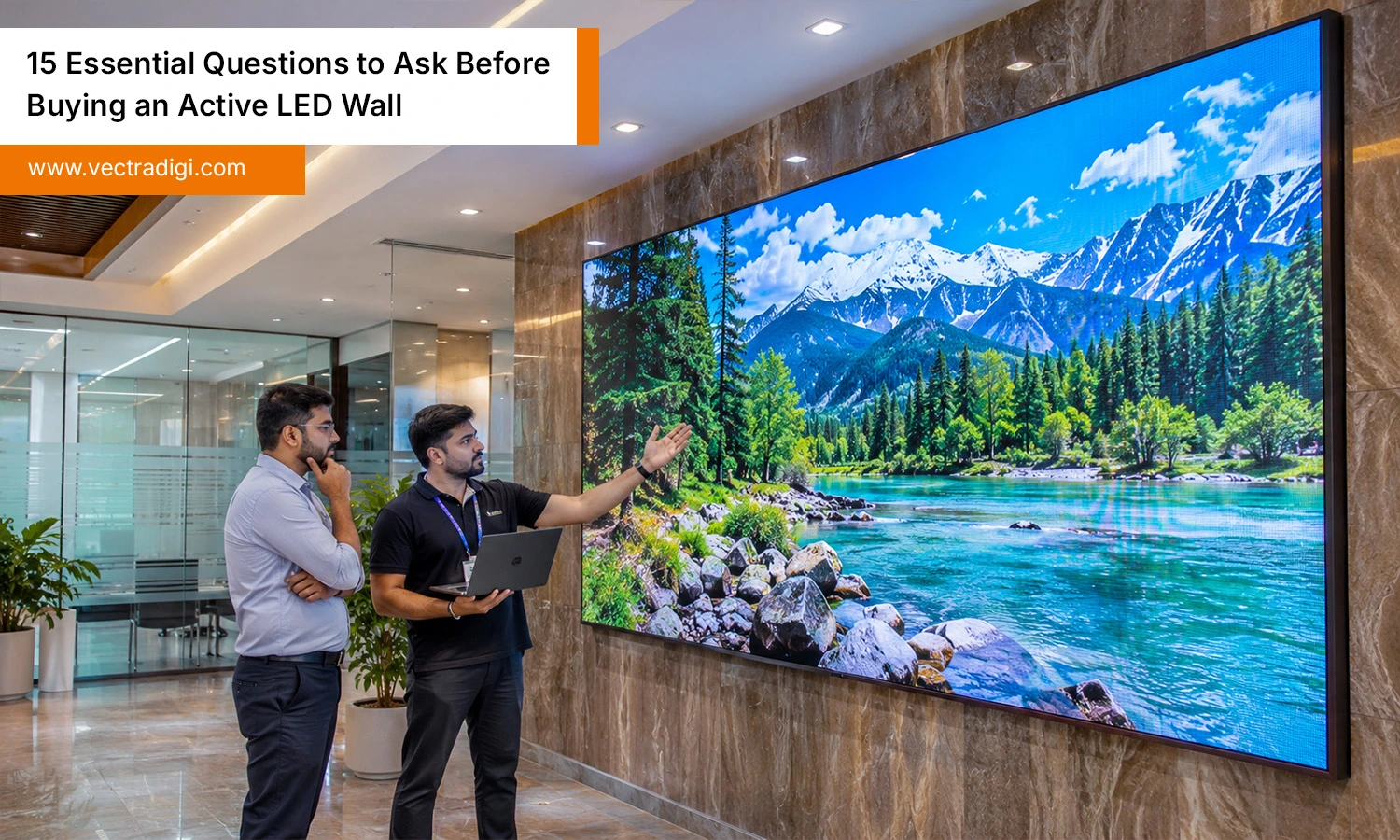
Buying a large digital screen is not like picking up a new TV for the living room. An active LED wall display is a long-term investment that shapes how customers, students, or visitors see your space every day. Get it right, and the screen pays for itself through attention and engagement. Get it wrong, and you are stuck with washed-out visuals, high power bills, or a panel that fails within a few years. Before you sign a purchase order, slow down and ask the right questions. Here are fifteen that will help you choose with confidence and avoid costly regret.
Also Read: Why Our Active LED Wall Is Among the Best LED Display Solutions in India
Start With Purpose and Placement
Before you look at a single spec sheet, get clear on why you need the screen and where it will live. These answers shape every choice that follows.
1. What Is the Main Purpose of the Screen?
Every other decision flows from this one. A screen built for advertising in a busy mall has very different needs from one used for data monitoring in a control room or presentations in a boardroom. Write down what you will show, how often content changes, and who is watching. Clear goals stop you from paying for features you will never use.
2. Will It Be Installed Indoors or Outdoors?
Outdoor screens face rain, dust, heat, and direct sunlight, so they need higher brightness and sealed protection, usually an IP65 rating or better. Indoor panels can run at lower brightness and often use finer pixel pitches for sharper close-up viewing. Choosing the wrong environment rating is one of the most expensive mistakes buyers make, so settle this question early.
3. How Far Away Will Most Viewers Stand?
Viewing distance decides how fine the resolution needs to be. People standing two or three metres from a lobby wall need a tight pixel pitch, while drivers passing a roadside billboard can comfortably read a much coarser one. A simple rule of thumb: the closer the audience, the smaller the pitch you should consider.
4. What Size and Shape Does the Space Allow?
Measure the wall, then check for pillars, ceiling height, and nearby windows. Because an active LED wall display is built from modular panels, it can be scaled to almost any size and even shaped into curves, cylinders, or cubes for creative installations. Confirm the final dimensions match the cabinet sizes so you do not end up with awkward gaps.
Understand the Technical Specs
Specs can feel overwhelming, but a handful of numbers tell you almost everything about how an active LED wall display will perform once it is switched on.
5. Which Pixel Pitch Is Right for My Budget?
Pixel pitch measures the millimetre spacing between individual LEDs on a display. Indoor options typically range from about P1.2 to P4, while outdoor screens often sit between P2.5 and P10. Smaller numbers mean sharper images but higher costs. Match the pitch to your viewing distance rather than simply chasing the finest option available.
6. How Bright Does the Display Need to Be?
Brightness is measured in nits. Indoor screens generally perform well at around 800 to 1,000 nits, while outdoor screens may need up to 6,000 nits to stay readable under the midday sun. Too bright indoors causes eye strain, and too dim outdoors makes content disappear. Check if brightness automatically adapts to surrounding light conditions.
7. What Refresh Rate Does It Offer?
A low refresh rate causes flicker, which looks especially bad on camera. If your active LED wall display will appear in live streams, event photography, or broadcast footage, look for a refresh rate of 3,840Hz or higher. This keeps motion smooth and prevents those distracting scan lines that show up in phone videos.
8. How Wide Is the Viewing Angle and Colour Range?
In a mall atrium or stadium, people watch from every direction. A viewing angle of around 160 degrees, both horizontally and vertically, keeps colours and contrast consistent for side viewers. Also ask about adjustable colour temperature, since warmer or cooler tones can make a big difference to how products, faces, and brand colours appear.
Check Durability, Installation, and Running Costs
A screen that looks stunning on day one means little if it struggles in year three. These questions reveal how well it will hold up over time.
9. What Is the Expected Lifespan?
Quality LED panels are typically rated for around 100,000 operating hours. That sounds huge, but brightness slowly declines over time, so ask how quickly it fades and whether spare modules will remain available years later. Cabinet material matters too. Die-cast cabinets are lighter and more precise, while steel cabinets are sturdy and budget friendly.
10. How Much Power Will It Consume?
Power draw varies with pitch, brightness, and content, usually somewhere between 130 and 300 watts per square metre. Operating the display twelve hours daily can quickly increase overall usage. Ask for typical and peak consumption figures, not just the maximum, and check whether the system supports energy-saving modes during quieter hours.
11. Who Handles the Installation?
Mounting an active LED wall display involves structural support, electrical wiring, calibration, and system setup. Even if it looks like a simple job, professional installation protects both the equipment and the people walking beneath it. Check if installation costs are covered in the quotation, and request a site inspection before confirming your purchase.
12. How Easy Is Maintenance and Repair?
Find out whether the screen supports front or rear service access. Front-access panels are ideal for walls with no space behind them. Ask how long a typical module swap takes and whether the supplier keeps spare parts in stock. A screen that takes days to repair is a screen that is losing you money.
Plan for Content, Support, and Long-Term Value
13. How Will I Manage the Content?
A beautiful screen is useless without fresh content. Ask whether it works with cloud-based signage software that lets you schedule playlists, push real-time updates, and control multiple screens from one dashboard. Remote management saves your team from walking up to the screen with a USB stick every time a promotion changes.
14. What Warranty and After-Sales Support Is Offered?
A one-year warranty is fairly standard, but many buyers extend coverage to three years for peace of mind. Read the fine print carefully. Does it cover modules, power supplies, and labour? Is there a dedicated service channel for troubleshooting? Responsive support often matters more than a slightly lower upfront price.
15. What Is the Total Cost of Ownership?
The initial quoted price represents only a portion of the total cost. Add installation, mounting structure, content software, electricity, maintenance, and possible upgrades over five to seven years. Comparing the total cost of ownership, not just the purchase price, gives you a far more honest picture of which active LED wall display offers genuine long-term value.
Conclusion
Choosing the right screen comes down to asking smart questions before you spend, not after. When you are clear about purpose, placement, pixel pitch, brightness, support, and long-term costs, the right option becomes easier to spot. Take your time, compare quotes carefully, and never let a low price hide weak specifications. If you want a partner that ticks every box on this list, Vectradigi Technologies is the brand many businesses are turning to for a dependable active LED wall display, backed by flexible configurations, professional installation, and reliable after-sales service. The right screen should serve you for years, not months.
Ready to upgrade your space? Share your requirements with our team or contact us today and get a free consultation and customised quote for your next LED wall project.
Frequently Asked Questions
Q1. How long does an active LED wall usually last before needing replacement?
Ans: Most quality panels are rated for about 100,000 operating hours. With regular cleaning, proper ventilation, and timely module replacement, a well-maintained screen can deliver reliable performance for over a decade.
Q2. Can I install an LED video wall on my own?
Ans: It is not recommended. Installation involves structural mounting, electrical wiring, and calibration. A trained team keeps the screen safe, properly aligned, and under warranty, which a self-installation could easily void.
Q3. Will an outdoor LED screen still be visible in direct sunlight?
Ans: Yes, if it has enough brightness. Outdoor screens rated between 5,000 and 6,000 nits stay clear and readable at midday, especially when paired with automatic brightness adjustment for changing light.
Q4. Can I update the content on my screen from a remote location?
Ans: Yes. Most modern screens work with cloud-based signage software, letting you schedule playlists, change promotions, and control multiple displays from a laptop or phone without ever visiting the installation site.

