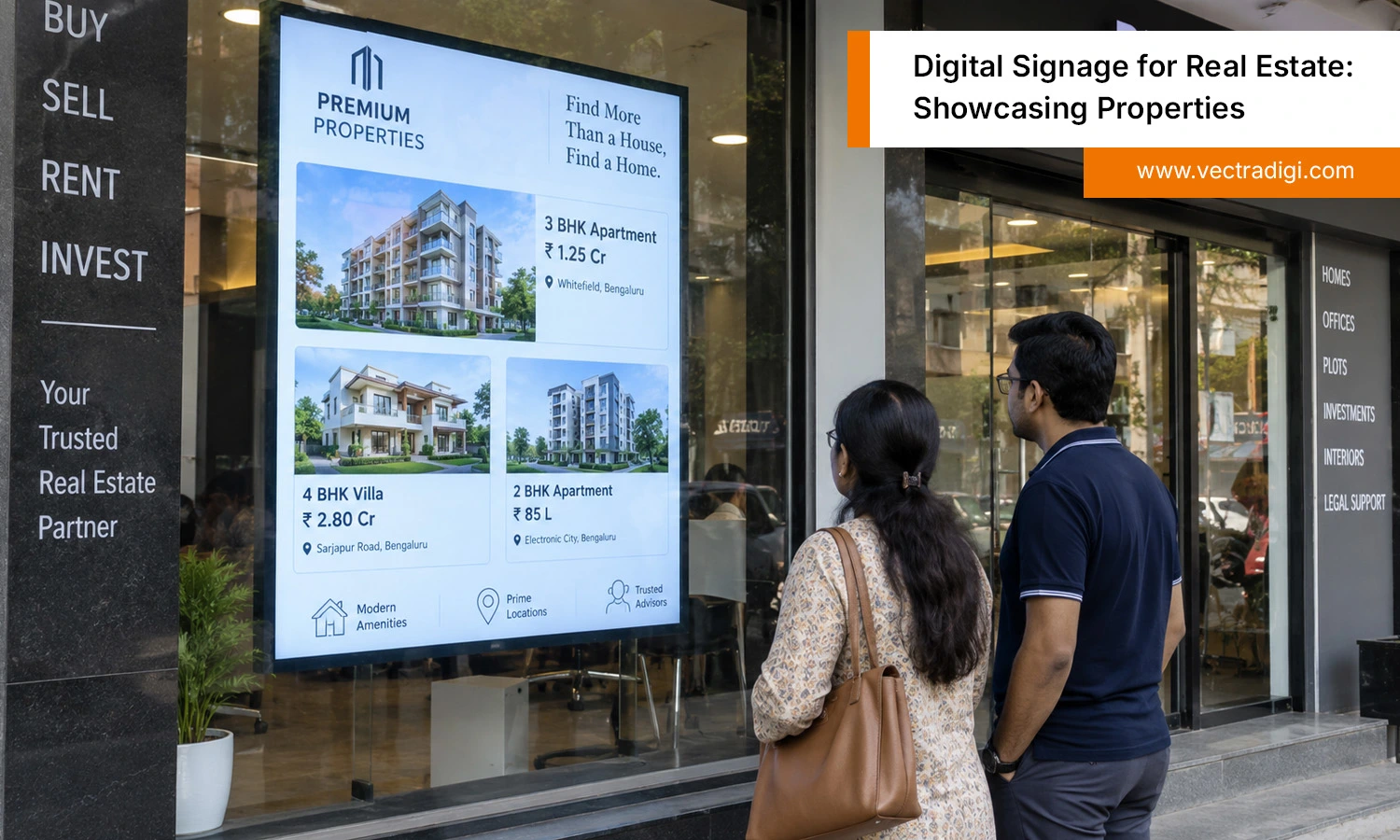
Walk past any real estate office today and you’ll probably notice something different from ten years ago. Instead of paper flyers curling at the edges behind dusty glass, you’ll see bright, moving screens showing homes for sale, complete with prices, photos, and sometimes even video walkthroughs. That’s digital signage for real estate in action, and it’s quickly becoming one of the smartest tools agents and agencies use to grab attention and close deals faster.
If you’re a real estate professional wondering whether this technology is worth the investment, you’re in the right place. This guide breaks down what digital signage actually is, why it works so well for property marketing, and how you can start using it to showcase listings in a way that genuinely gets results.
Table of Contents
- What Is Digital Signage for Real Estate?
- Why Traditional Marketing Falls Short
- Key Benefits of Digital Signage for Real Estate Agents
- Where and How to Use Digital Signage in Real Estate
- Features to Look For When Choosing a Digital Signage System
- A Real-World Look at the Impact
- Final Thoughts
- Frequently Asked Questions
Also Read: Digital Signage for Retail: Does It Really Increase Sales?
What Is Digital Signage for Real Estate?
Digital signage for real estate refers to screens, displays, or kiosks used to promote property listings electronically instead of relying on printed materials. Think of it as a digital version of your window display, except it can rotate through multiple listings, update in real time, and show far more information than a static photo ever could.
These displays are typically placed in office windows, lobbies, open houses, or even standalone kiosks in high-traffic areas. Some are simple screens that cycle through property photos and prices. Others are interactive touchscreens where potential buyers can scroll through listings, view floor plans, or even schedule a viewing on the spot.
Unlike a printed flyer, digital signage can be updated in minutes. If a property sells or the price changes, you’re not stuck reprinting materials or leaving outdated information on display. That flexibility alone makes it a smarter choice for busy agencies juggling dozens of listings at once.
Why Traditional Marketing Falls Short
Printed brochures and static window posters served the industry well for decades, but they come with real limitations. A flyer can only show one property at a time, and once it’s printed, you’re locked in until you make new ones. If a listing goes under contract, that outdated flyer sitting in your window is doing you no favors.
There’s also the attention problem. People walking past a real estate office are used to seeing static displays, so their eyes tend to glaze right over them. Movement and visual variety catch attention in a way that a still image simply can’t compete with. Add in the cost of constantly reprinting materials, and it becomes clear why so many agencies are rethinking their approach.
Digital signage solves these pain points directly. It’s dynamic, it’s cost-effective over time, and it’s built for an audience that’s used to scrolling, tapping, and engaging with screens throughout their day.
Key Benefits of Digital Signage for Real Estate Agents
It Grabs Attention Instantly
Bright, animated displays naturally draw the eye more than a printed page ever will. Whether someone’s walking by your office or waiting in your lobby, a well-designed screen can turn a passerby into a curious lead within seconds.
It Keeps Listings Fresh and Accurate
One of the biggest advantages of property digital signage is how easily it updates. New listing? Add it in minutes. Price drop? Change it instantly. Property sold? Remove it before it misleads a potential buyer. This kind of real-time accuracy builds trust with clients who are relying on your information to make major financial decisions.
It Showcases More Information Without Clutter
A single screen can rotate through dozens of properties, complete with high-resolution photos, pricing details, square footage, and even short video tours. Try fitting that much information onto a paper flyer without it looking like a cluttered mess.
It Works Around the Clock
Digital signage doesn’t clock out at 5 PM. Displays placed in office windows keep working even after hours, giving evening walkers and weekend browsers a chance to check out listings whenever they pass by.
It Enhances Your Brand Image
Agencies using modern technology are perceived as more professional and forward-thinking. A sleek digital display signals that you’re serious about your business and invested in giving clients the best experience possible, which matters more than people realize when choosing an agent to trust with a major purchase.
It Supports Interactive Engagement
Touchscreen kiosks take things a step further by letting potential buyers explore listings on their own terms. They can browse multiple properties, zoom into floor plans, or leave contact details for a follow-up call, all without needing an agent standing right beside them.
Where and How to Use Digital Signage in Real Estate
Office Window Displays
This is where most agencies typically begin. A window-facing screen replaces the old flyer board and works 24/7 to advertise your active listings to anyone walking or driving by. It’s especially effective in high-foot-traffic locations like downtown areas or busy shopping streets.
Open Houses
Instead of handing out paper listing sheets that often end up in the trash, set up a tablet or small screen at the entrance showing the property’s key details, floor plan, and nearby amenities. This gives visitors a self-guided reference point and frees you up to focus on answering questions instead of repeating basic facts.
Office Lobbies and Waiting Areas
Clients waiting for a meeting or consultation are essentially a captive audience. Use that time productively by displaying current listings, client testimonials, or even a short video about your agency’s track record.
Standalone Kiosks in Malls or Community Centers
Some agencies place interactive kiosks in shopping centers or community hubs to reach people who may not be actively searching for a home but could be persuaded by the right listing at the right price. This works particularly well in areas experiencing new development or population growth.
Digital Billboards and Outdoor Displays
For agencies wanting broader reach, larger outdoor digital displays can showcase featured listings to a wider audience driving through the neighborhood, especially useful for luxury properties or new developments.
Features to Look For When Choosing a Digital Signage System
Not all digital signage solutions are created equal, so it helps to know what actually matters before you invest.
- Ease of content updates: You shouldn’t need a tech expert on staff just to swap out a listing. Look for systems with a simple drag-and-drop interface.
- Remote management: The ability to update screens from your phone or laptop, without physically visiting each location, saves enormous time for agencies managing multiple offices.
- Scheduling tools: Good systems let you schedule content in advance, so open house promotions or price changes go live automatically at the right time.
- Screen quality and size: Higher resolution displays make property photos look sharper and more inviting, which directly affects how seriously people take your listings.
- Integration with your CRM or MLS: Some advanced systems can pull listing data automatically, cutting down on manual entry and reducing the chance of outdated information slipping through.
- Durability for outdoor use: If you’re placing a screen in a window or outdoors, make sure it’s built to handle sunlight glare and temperature changes without dimming or malfunctioning.
Taking time to compare these features before committing to a vendor can save you from costly mistakes down the road.
A Real-World Look at the Impact
Consider a mid-sized agency that swapped its paper window flyers for a single digital display showing rotating listings. Within a few months, the agents noticed something simple but telling: more people were stopping outside the window during evenings and weekends, times when the office was closed and no printed material could have changed. Walk-in inquiries about specific properties picked up too, since visitors could see current prices and details instead of relying on outdated flyers that hadn’t been swapped out in weeks.
It wasn’t a dramatic overnight transformation, but a steady, noticeable shift in how people engaged with the office before ever speaking to an agent. That’s the real value of digital signage: it works quietly in the background, doing the first round of selling before a client even walks through the door.
Final Thoughts
Digital signage for real estate isn’t just a flashy upgrade, it’s a practical response to how people consume information today. Buyers expect quick, visual, up-to-date content, and static paper displays simply can’t keep pace with that expectation anymore. Whether you start small with a single window display or go all in with interactive kiosks across multiple locations, the goal stays the same: make it easier for potential buyers to fall in love with a property before they even step inside. Agencies that adopt this technology early tend to stand out from competitors still relying on outdated flyers, building genuine trust with clients who notice the extra professionalism behind every listing shown, both online and in person.
Ready to bring your listings to life? Vectradigi builds smart, easy-to-manage digital signage solutions made specifically for real estate agencies. Reach out today and see how effortlessly you can showcase properties.
Frequently Asked Questions
Q1. How much does digital signage cost for real estate offices?
Ans: Costs vary based on screen size, quantity, and features like touchscreens or remote content management. Smaller setups, like a single window display, are far more affordable than most agencies expect, and many providers offer flexible packages so you only pay for what you actually need.
Q2. Does digital signage really help sell properties faster?
Ans: It doesn’t sell homes on its own, but it does speed up the process by keeping listings visible around the clock and giving buyers instant access to accurate details. That extra visibility often leads to more inquiries and quicker walk-ins, which naturally shortens the overall sales timeline.
Q3. Can digital signage work for small real estate agencies?
Ans: Absolutely. Small agencies often benefit the most since a single well-placed screen can replace an entire wall of printed flyers, saving on reprinting costs while still looking professional and up to date.
Q4. Do I need technical skills to manage digital signage content?
Ans: Not with the right system. Most modern platforms use simple drag-and-drop tools, so any agent can update listings, swap photos, or change pricing in just a few clicks, no IT background required.