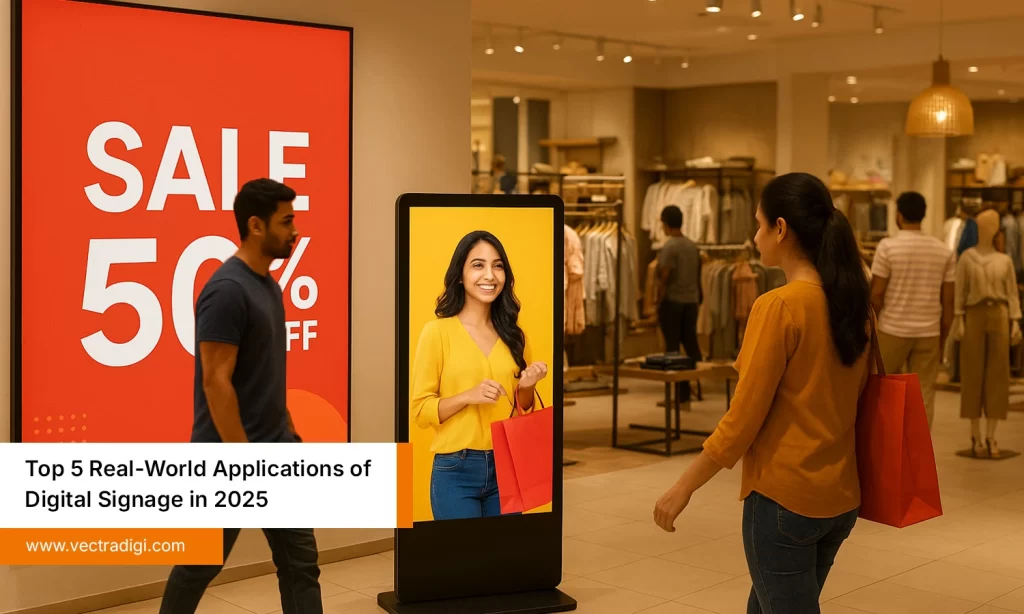
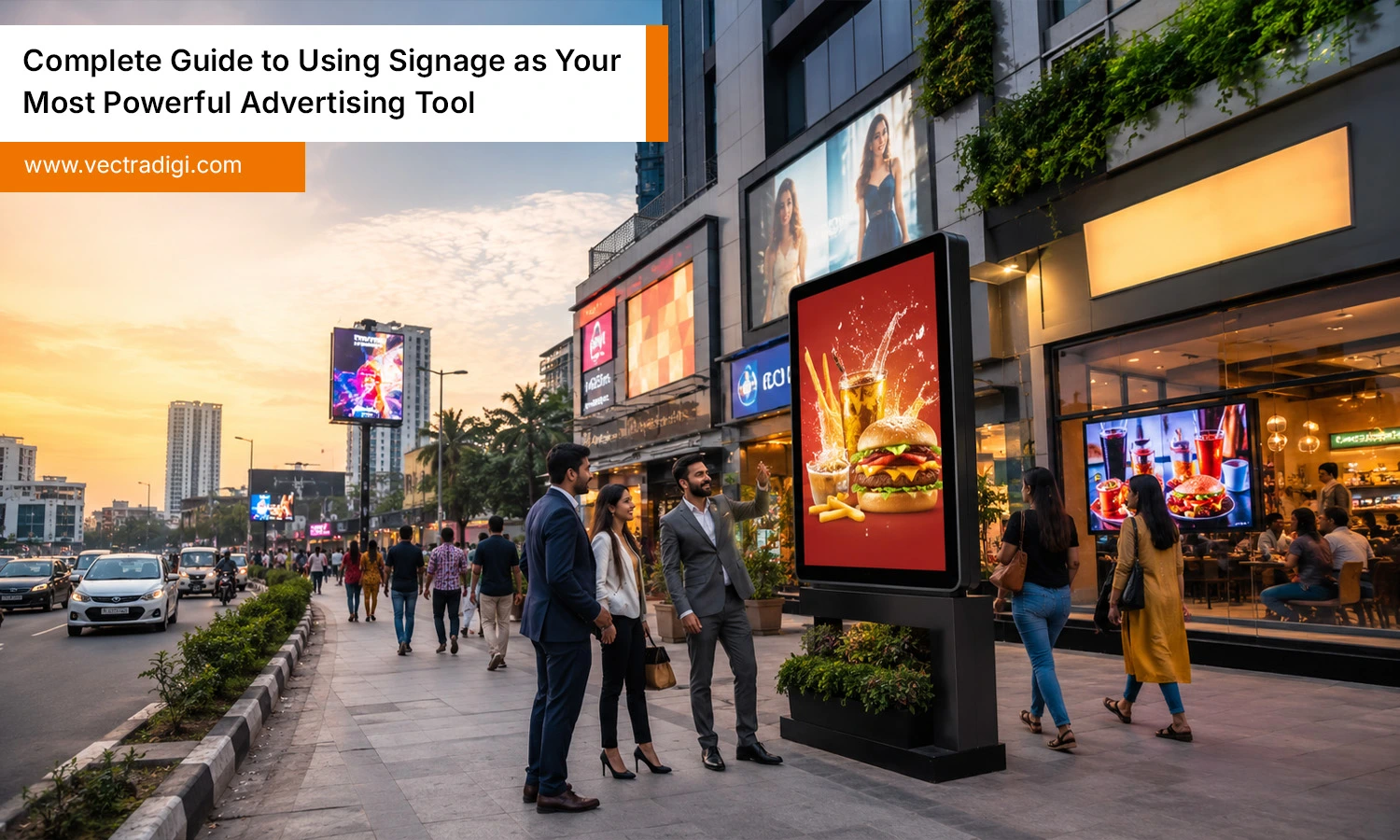
In today’s competitive market, businesses constantly fight for customer attention. Online users now move through content very fast, often overlooking advertisements and promotional messages without much attention. Even today, one advertising method continues delivering steady visibility and impact, and that is signage. From retail stores and restaurants to malls and corporate offices, smart signage helps businesses attract customers, improve visibility, and create stronger brand recognition. Good signage does not simply display information; it influences customer behavior and builds trust instantly. In this blog, we will explore different types of signage, their benefits, effective design strategies, common mistakes businesses make, and why digital signage is transforming modern advertising.
Table of Contents
Different Types of Signage Used for Advertising
Not all signage works the same way. Choosing the best option mainly depends on your business objectives, target audience, and installation location. Understanding different options helps businesses choose smarter advertising solutions instead of wasting money on ineffective displays.
Outdoor Signage
Outdoor signage is created to attract viewers and remain visible even from far away. These signs are usually installed outside buildings, roads, shopping centers, or commercial spaces where footfall and vehicle traffic remain high.
Popular examples include:
- Billboards
- Pole signs
- LED advertising screens
- Storefront branding
- Building-mounted displays
Outdoor signs work best for increasing visibility and attracting first-time customers. A bright, well-placed sign can turn passing traffic into walk-in visitors surprisingly fast. For businesses located in crowded commercial areas, outdoor signage for advertising becomes almost necessary because competition for attention is extremely high.
Indoor Signage
Indoor signage focuses more on customer experience and promotions inside the premises. These displays allow businesses to share promotions, navigation details, product information, and brand messages in a clearer way.
Common indoor signage includes:
- Digital menu boards
- Promotional displays
- Directional signs
- Lobby branding
- Product showcase screens
Retail stores often use indoor displays to influence purchase decisions. Restaurants use them to promote combo meals and seasonal offers. Even corporate offices use indoor digital signage for announcements and visitor communication.
Digital Signage
Digital signage has changed the advertising industry dramatically over the last few years. Instead of static visuals, businesses can now display videos, animations, real-time offers, and interactive content.
Digital signage includes:
- LED video walls
- Interactive kiosks
- Smart display boards
- Touch-enabled advertising screens
- Real-time promotional displays
One of the biggest strengths of digital signage for advertising is flexibility. Businesses can update content instantly without replacing printed materials. That saves both time and long-term operational costs.
Benefits of Using Signage for Advertising
Strong signage helps businesses grab attention, bring customers inside, and stay memorable in places where competition keeps increasing every single day.
- Improves Brand Visibility: People usually remember businesses they keep seeing regularly. Good signage makes brands feel familiar, even before customers actually purchase anything from them.
- Increases Walk-In Customers: Sometimes a bright and well-designed sign is enough to make someone stop, look around, and finally decide to enter the store casually.
- Supports Local Marketing: Signage for advertising works best for nearby visibility because it reaches people already passing through the area during shopping, travelling, or daily routines.
- Cost-Effective Long-Term Advertising: Once businesses install quality signage, it continues attracting attention for years without the repeated costs usually connected with paid advertisements online.
- Enhances Customer Experience: Helpful signs reduce confusion, guide visitors properly, and make business spaces feel more organized, comfortable, and easier for customers to explore independently.
Common Mistakes Businesses Make With Signage
A lot of businesses spend money on signage but still miss small details that quietly reduce visibility and customer attention over time.
- Too Much Information: When signs contain too many words together, people usually do not stop to read everything carefully and simply walk past without noticing.
- Poor Placement: Sometimes the sign itself looks good, but trees, poles, shadows, or poor positioning make it difficult for people to notice properly outside.
- Ignoring Maintenance: Old boards, fading colors, or damaged screens make businesses look careless. Customers notice these things faster than many owners actually expect sometimes.
- Weak Branding: Different fonts, changing colors, or mismatched logos across signs make businesses harder to recognize and weaken overall branding consistency for customers.
- Choosing the Wrong Display Size: Tiny signs often disappear in crowded areas, while very large displays can feel uncomfortable indoors and affect visibility balance inside commercial spaces.
Why Digital Signage Is Changing Modern Advertising
Digital transformation has influenced every industry, and advertising is no exception. Businesses now prefer dynamic displays because they attract more attention than static posters.
Digital signage allows businesses to:
- Update promotions instantly
- Display videos and animations
- Schedule content automatically
- Personalize advertising
- Run multiple campaigns on one screen
Retail stores use digital displays to showcase offers in real time. Airports use them for information and branding. Restaurants use digital menu boards to improve ordering experiences.
Another reason digital signage for advertising is growing rapidly is engagement. Moving visuals naturally attract more attention than printed materials. Interactive displays also create stronger customer involvement. Modern smart displays even allow businesses to track performance metrics and customer interactions. That level of flexibility makes digital advertising more efficient and measurable.
Conclusion
Signage remains one of the most effective advertising tools for businesses trying to improve visibility, customer engagement, and brand recognition. Whether it is a traditional storefront sign or a modern digital display, the right signage creates stronger connections with customers and influences buying decisions quickly. Businesses today operate in highly competitive environments where grabbing attention matters more than ever. Smartly designed signage helps brands stand out without relying entirely on expensive advertising campaigns. From improving customer experience to increasing walk-in traffic, signage continues to deliver long-term marketing value across industries. Businesses that invest in strategic signage solutions often build stronger and more memorable brand presence.
Looking for high-quality digital signage solutions for your business? Explore innovative advertising displays from Vectradigi to improve visibility, customer engagement, and brand impact with smarter signage technology.
Frequently Asked Questions
Q1. What is signage for advertising?
Ans: Signage for advertising uses visual displays to promote businesses, attract customers, improve visibility, and communicate marketing messages effectively.
Q2. Why is digital signage popular today?
Ans: Digital signage attracts more attention through videos, animations, real-time updates, and interactive content compared to traditional static displays.
Q3. Which businesses benefit most from signage?
Ans: Retail stores, restaurants, malls, hospitals, schools, gyms, and corporate offices benefit greatly from professional advertising signage solutions.
Q4. How long does advertising signage last?
Ans: High-quality signage can last several years with proper maintenance, making it a cost-effective long-term advertising investment for businesses.