
If you’re looking for a clearer, faster way to share information or keep your customers updated, digital signage is often the tool behind it. These screens do much more than replace posters, they update themselves, switch messages instantly, and keep everything looking fresh without any extra effort. Have you noticed how a café menu can change right as you’re looking at it—or how a shop display updates with a new deal just as you walk past? Or maybe you’ve spotted screens in offices or hospitals quietly guiding people without anyone having to ask for help. In this guide, we’ll break down what digital signage really is, how it works, the benefits it brings, and why so many businesses have made it a part of their everyday communication.
Table of Contents
What Is Digital Signage?
Digital signage is a modern screen used to display visuals that businesses want people to notice at the right time. It can appear as an LED display, a self-service kiosk, or a large video wall showing menus, offers, directions, or short announcements. These screens are now common in malls, offices, airports, restaurants, hospitals, and schools because they are easier to manage than printed boards. Content can be updated almost instantly, without printing new material or changing the display itself. This helps businesses keep information correct as the day unfolds. Digital signage also allows messages to be scheduled, repeated, or adjusted for different locations from one system. Because people are often moving, glancing, and deciding quickly, these screens fit naturally into busy environments. Over time, consistent visuals create familiarity and trust. In simple terms, digital signage gives businesses a faster, clearer, and more flexible way to communicate.
How Digital Signage Works
Digital signage may look advanced at first, but the setup behind it is surprisingly simple. Everything starts with the display of a small kiosk, a slim LED panel, or a large outdoor screen. Behind it sits a media player that quietly controls what appears, how long it stays, and what comes next. The rest depends on the content a business creates, such as menus, updates, or short promotions. Once the visuals are uploaded, the screen refreshes almost instantly. No printing, no delays, no manual replacements. What once took days can now be updated in minutes with just a few clicks.
Key Features of Digital Signage
Real-Time Content Updates
Updates can be pushed out the moment something changes, like menus, offers, announcements whatever needs to be swapped out. No printing and waiting around.
High-Quality Visuals
Digital signage usually supports pretty sharp visuals, HD or even 4K, so whatever you show tends to look cleaner and noticeably brighter.
Remote Control & Management
Instead of someone physically checking every screen, most systems let you control everything from one place. It’s simply easier and avoids a lot of running around.
Scheduled Playback
You can set different content to appear at different times. Morning info, afternoon promos, evening reminders, whatever fits the flow of the day.
Interactive Capabilities
Some setups allow touch, letting customers explore menus, maps, product details, or quick self-service options on their own.
Brand Consistency Tools
There are templates and layout settings that help keep the brand’s look steady colors, fonts, and style so nothing feels out of place across locations.
Uses of Digital Signage
Digital signage works well in many places because it adjusts to how people move, pause, and make choices. Its flexibility helps businesses share information clearly across different settings.
Retail Stores
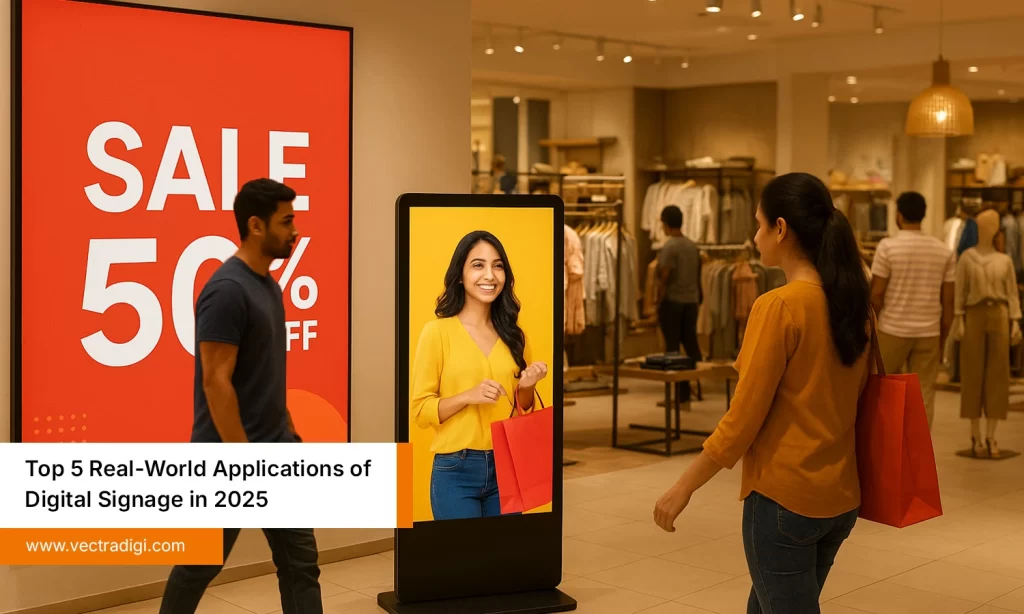
In retail stores, digital signage helps display offers and pricing without adding clutter. Moving visuals are noticed quickly, and simple messages make choices easier. Promotions can be updated anytime, which keeps screens fresh and avoids repeated poster changes.
Corporate Offices
Many offices rely on digital signage to show updates, schedules, and notices. It reduces the need for constant emails. When information is placed in shared spaces, employees can stay informed without breaking focus during work hours.
Hospitality Spaces
In hotels and restaurants, digital signage helps guests find their way, check menus, or see event information. People get what they need at the moment they need it. As a result, fewer questions reach staff, and the overall experience feels easier.
Educational Institutions
Schools and colleges use digital signage for notices, schedules, and safety updates. Information stays current and visible across campuses. Students and staff stay informed without relying on paper notices that are easily missed.
Healthcare Facilities
Hospitals and clinics use digital signage to share instructions, waiting information, and awareness notices with patients and visitors. Clear visuals reduce uncertainty and waiting stress. Patients receive guidance quietly while staff focus on care delivery.
Also Read: Top 5 Real-World Applications of Digital Signage in 2025
Benefits of Digital Signage
1. Instant Updates & Flexibility
One thing about digital signage is how fast it lets you switch things up. A store can decide on a flash sale and have it show almost immediately. A restaurant can tweak a menu item in the middle of a busy afternoon, and the update simply appears, no printing, no waiting, none of the usual back-and-forth. It saves a surprising amount of time and avoids the mess of outdated posters hanging around longer than they should. In fast-moving places, this quick turnaround matters more than people think.
2. Better Customer Engagement
People tend to look at screens without thinking about it, and that tiny habit works in favor of digital signage. Moving visuals, bursts of color, and short clips catch the eye in ways a printed poster simply can’t. A quick animation of a dish, a small promo video, or even a slow scrolling line of text is often enough to make someone pause. When that happens, they wander a little more, ask something, or end up buying sooner than planned. It feels almost like the business is gently nudging them along.
3. Cost Saving Compared to Printing
Many businesses don’t realise just how quickly printing expenses pile up, new designs, seasonal posters, reprints for small errors, plus the cost of delivering and installing everything. It’s a long chain of tiny charges that grows faster than expected. Digital signage removes almost all of those repeating costs. After the initial setup, most updates cost nothing at all. No paper to buy, no ink, no waiting for a courier. And there’s no chance of old posters staying up months longer than they should. Over time, the savings both money and hours of work start to show.
4. Attention-Grabbing Visuals
The world is full of noise and distractions, and getting someone to actually notice something has become tougher than it used to be. Digital signage works well because moving visuals and color naturally draw people’s eyes. A slow-motion food clip, a bright discount tag, or a rotating product shot can change the whole feel of a space. It adds a sense of energy and makes the environment feel more alive. Even a small animation can spark curiosity. That’s the effect many businesses look for today.
5. Stronger and More Consistent Branding
Branding is most effective when all the elements align, colors, tone, style, and even the small details people rarely notice. Digital signage helps keep that consistency steady across every location. Whether a brand runs a couple of stores or a whole chain, the screens can show the same fresh content everywhere. No faded posters slipping through, no designs that don’t match, no old offers forgotten on a wall. When a brand keeps its look consistent, it just feels more trustworthy. Customers look at the entire environment, not just the logos displayed on the screen.
6. Reduced Manual Effort
Anyone who has ever handled posters or old-school signage knows how tiring the whole process can get. Lugging materials around, climbing up and down ladders, checking if each branch updated things on time, it becomes far more work than it should be. Digital signage removes most of that back-and-forth. Updates happen from a desk, not on the shop floor, and teams aren’t stuck fixing the same problems over and over. A quick upload is usually all it takes. It cuts down stress, frees up time, and keeps spaces looking current without all the hassle.
Also Read: Top 6 Benefits of Digital Signage for Modern Businesses
Business Impact of Digital Signage
Digital signage does far more than give a space a modern touch. It slowly changes how a business runs on a daily basis. People notice information quicker, stay engaged without much effort, and make decisions with a little more confidence. In many places, these screens almost behave like an extra staff member, one that doesn’t take breaks, nudging customers, drawing attention to offers, and lifting the atmosphere in a quiet but steady way.
Its value becomes clearer over time. A retail manager once mentioned that weekend footfall went up after they added digital displays, simply because their promotions were finally visible at the right moment. Small changes like these may seem minor at first, but they contribute to stronger branding, better communication, and ultimately, better revenue. Digital signage isn’t just a screen on the wall, it’s a long-term tool that helps a business stay organised, noticeable, and connected with the people who walk in.
How to Choose the Right Digital Signage
Viewing distance and resolution: Begin with how close people will stand to the screen. Menu boards or reception displays need sharper detail. Larger displays viewed from farther away can work well without very high resolution, which also helps control cost.
Indoor or outdoor use: Where the screen sits matters a lot. Outdoor digital signage must stay visible in daylight and handle weather. Indoor screens usually need less brightness and simpler protection.
Refresh rate: For moving visuals, a higher refresh rate makes a difference. It keeps videos smooth and avoids the slight flicker people notice without realising why.
Control system and software: Content updates should feel simple. A good system lets teams change messages remotely, schedule playlists, and manage screens without technical effort.
Power and cooling: Power needs are often overlooked. Proper ventilation and cooling help screens run longer without performance drops.
Warranty and support: Check how service works locally. A solid warranty saves time and frustration later.
Budget and long-term value: Look beyond the initial price. Durability, maintenance, and lifespan matter more over time.
Also Read: How to Choose the Right Digital Signage for Your Business
Conclusion
Digital signage has quietly become one of those tools that just makes everyday communication easier. It helps businesses keep messages clear, up to date, and noticeable without creating extra work in the background. Customers pick things up faster, teams spend less time fixing old displays, and the overall experience simply feels more organised. In a world where people move quickly and expect information just as fast, having something that adapts on the spot makes a real difference. Whether it’s pointing someone in the right direction or giving a brand a cleaner presence, digital signage ends up supporting far more than it seems at first glance.
If you’re thinking about refreshing how your business communicates, Vectradigi can help. Their digital signage solutions keep content current, simple to manage, and genuinely useful. A small upgrade can change the whole feel of your space.
Frequently Asked Questions
Is digital signage suitable for small businesses?
Yes. Small businesses use digital signage to stay visible, update offers easily, and maintain professional communication without constant printing costs.
How often should content be updated?
Updates depend on the message. Many businesses refresh content daily or weekly to keep information timely and relevant.
Does digital signage require daily management?
No. Once scheduled, content runs automatically. Updates are needed only when information changes.
What business impact can digital signage deliver?
It improves visibility, supports decisions, and builds consistent brand presence over time.