
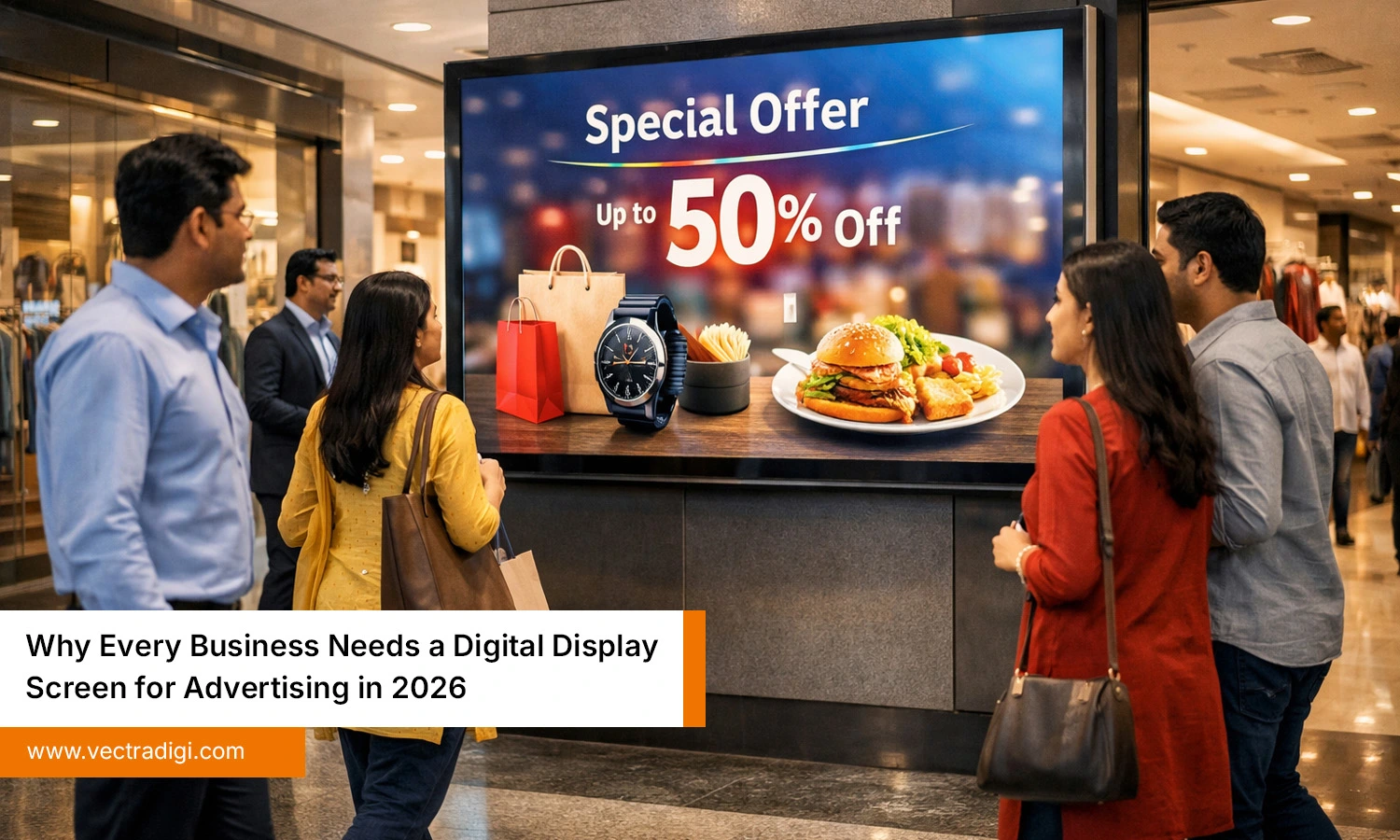
Advertising has been changing for a while, and in 2026, the shift is impossible to ignore. Customers move quickly through physical spaces, take in information at a glance, and make decisions without slowing down. Traditional advertising often struggles in this environment because it competes for attention instead of working with natural movement. Many messages still exist, but fewer are truly noticed. This change has pushed businesses to rethink how they stay visible offline. A Digital Display Screen for Advertising blends into this reality effortlessly. It keeps messages clear, updated, and easy to notice throughout the day without interrupting people. Instead of demanding attention, it supports how customers already move and observe, making modern advertising feel more natural and effective. This blog looks at why digital display advertising has become essential for modern businesses.
Table of Contents
- Customer Attention Has Changed Permanently
- Why Static Advertising No Longer Delivers Results
- Consistent Visual Quality Builds Trust Automatically
- Digital Screens Reduce Long-Term Advertising Costs
- Digital Display Advertising Works Across Multiple Industries
- Matches Modern Customer Expectations
- Why 2026 Is the Right Time to Adopt Digital Display Advertising
- Conclusion
Key Reasons Businesses Are Choosing Digital Display Advertising in 2026
1. Customer Attention Has Changed Permanently
Attention spans have shortened, but visual signals still matter in physical spaces. People no longer stop to read signs; they scan, glance, and move on. Static posters struggle because they demand focus, while moving visuals blend into natural movement. This is where a Digital Advertising Screen aligns smoothly with this reality. Even small movements or shifting messages can be noticed without causing disruption. In busy markets, malls, offices, and shops, this impact really matters. Businesses relying only on print slowly fade into the background as visual noise increases.
“When attention isn’t captured early, it tends to fade.”
2. Why Static Advertising No Longer Delivers Results
Static advertising often struggles because it cannot adjust to daily business changes. Prices, offers, and schedules shift, but printed posters remain fixed until they are replaced. This creates small gaps that customers notice quickly. A Digital Display Screen for Advertising removes this friction by allowing messages to update instantly. Promotions can change with time of day, stock levels, or seasonal needs without manual effort. This keeps communication accurate and reduces confusion. In 2026, customers expect information to feel current and reliable. When it doesn’t, trust fades faster than many businesses realise.
“Outdated information quietly erodes confidence.”
3. Consistent Visual Quality Builds Trust Automatically
Customers may not always mention it, but they notice how a place looks. Faded posters, uneven signage, or cluttered displays create small doubts that add up over time. Clean and consistent visuals create the opposite feeling. A Digital Display Screen for Advertising helps maintain the same visual quality throughout the day. Messages remain sharp in the morning, during busy hours, and late in the evening. Nothing fades or looks neglected. This steady presentation creates a sense of order and professionalism. Gradually, customers begin to link that visual reliability with the business itself. Trust builds naturally, without pressure or noise.
“Consistency makes a business feel dependable.”
4. Digital Screens Reduce Long-Term Advertising Costs
Many businesses hesitate at the initial investment, and that hesitation is understandable. Advertising costs make more sense when viewed over time, not as a one-time expense. Printed materials demand repeated spending because every change requires reprinting, redesigning, and replacement. A Digital Screen for Advertising reduces this cycle significantly. Content can be reused, edited, or rotated without extra production costs. Updates happen digitally, not physically, saving money. In 2026, businesses focus on sustainable spending that supports visibility without constant reinvestment. Over time, digital screens prove their value by lowering recurring costs while keeping messaging effective.
“Smart advertising pays off gradually.”
5. Digital Display Advertising Works Across Multiple Industries
Digital display advertising is no longer limited to retail spaces alone. Offices use it for daily announcements and internal updates. Restaurants rely on it to change menus instantly. Hospitals use it to guide visitors clearly, while schools display schedules and notices without confusion. What makes a Display Screen for Advertising especially practical is its flexibility. The same screen can serve different purposes at different times of the day. It adapts to the environment instead of being fixed to one message. In 2026, businesses prefer solutions that work across teams and situations without added complexity.
“Versatility makes communication easier everywhere.”
6. Matches Modern Customer Expectations
Customers today are used to speed. Online platforms update information instantly, and people expect the same clarity everywhere. When offline communication feels outdated, the gap becomes obvious and uncomfortable. A Digital Screen for Advertising brings that responsiveness into physical spaces without effort. Updated offers, clear directions, and relevant messages appear when needed, without staff intervention. This clarity improves the overall experience. Customers feel informed rather than confused, which reduces hesitation and shortens decision time. In many cases, this directly influences conversions without adding sales pressure or extra explanation.
“Clear details help customers feel confident and decide faster.”
Also Read: Top 6 Benefits of Using an LED Display Screen for Shop Advertising
Why 2026 Is the Right Time to Adopt Digital Display Advertising
In 2026, digital display advertising has become a standard practice. Screens are reliable, energy-efficient, and simple to manage, even for non-technical teams. At the same time, customer behaviour has already adjusted to faster, more responsive communication. People expect information to be clear and current wherever they go. When businesses delay adoption, they don’t lose customers immediately, but they do lose visibility. Competitors with clearer messaging start to feel more present, even when offerings are similar. Choosing a Digital Display for Advertising today is not about innovation or trends. It is about matching how people already move, notice, and decide inside physical spaces.
Why adoption makes sense now:
- Technology is stable and proven.
- Content updates are easy and quick.
- Customers expect real-time clarity.
- Visibility improves without added effort.
- One screen supports multiple uses.
- Communication feels organised and modern.
Conclusion
In 2026, advertising success depends less on how loud a message is and more on how naturally it fits into everyday movement. Businesses that rely only on static formats often struggle to stay visible as customer behaviour continues to shift. A Digital Display Screen for Advertising responds to this change by keeping communication clear, current, and visually consistent throughout the day. It supports better decisions, builds trust quietly, and reduces long-term costs without adding complexity. As expectations rise across industries, digital display advertising has moved from a nice addition to a practical necessity for businesses that want to remain relevant, organised, and noticeable in physical spaces.
Upgrade your advertising approach with Vectradigi and bring clarity, flexibility, and consistency to your business communication. Discover digital display solutions designed for modern spaces and real customer behaviour today.

