
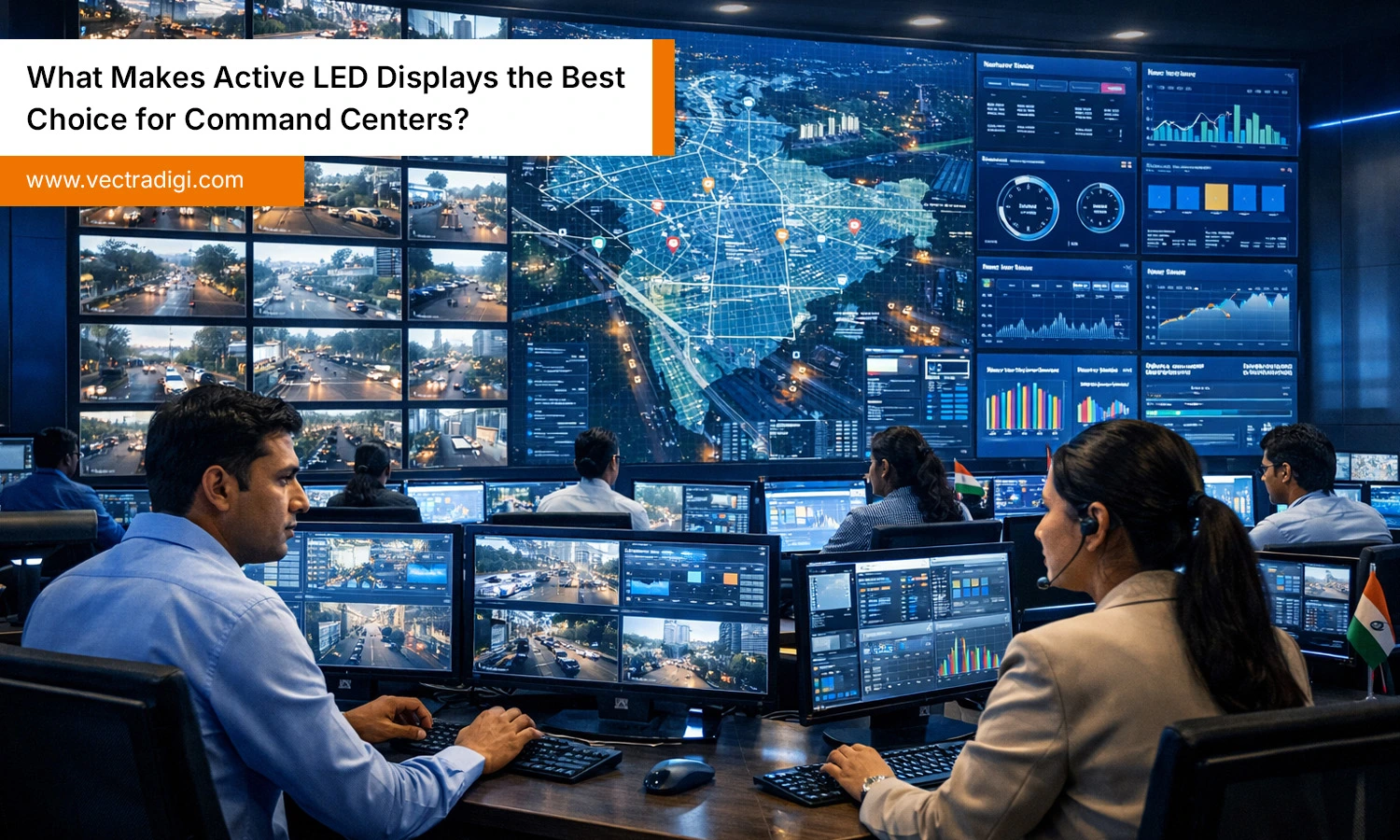
Walk into any modern command center and you will notice one thing very quickly: everything runs on real-time information. Security teams, traffic operators, emergency staff, and monitoring units depend on large screens to track data without delay, because even a small mistake or unclear display can affect important decisions. Earlier, many control rooms used LCD displays or multiple monitors together, but these setups often had problems like visible bezels, low brightness, and frequent maintenance. That is why many organizations now prefer an active LED display. In this blog, we will explain what active LED displays are, why command centers need them, and why they are better than traditional displays.
Table of Contents
Also Read: How Indoor LED Displays Improve Visual Communication in Businesses
Why Command Centers Need Advanced Display Technology
Command centers usually work in very high-pressure situations where teams have to watch many things at the same time. It can be security cameras, live maps, alert messages, system data, or communication screens. Because so much information is running together, the display system becomes one of the most important parts of the room. If the screen is not clear or reliable, decision making can slow down, and in some cases even a small delay can create serious problems.
Older display setups often don’t work well in these environments. When multiple LCD screens are connected, the lines between panels break the image, which makes monitoring uncomfortable. Brightness is another issue, especially in bigger control rooms, and maintaining many screens also takes extra effort. That is why many organizations now prefer LED walls.
Common problems with old display systems:
- Visible borders between screens.
- Low brightness in large rooms.
- Difficult maintenance.
- Hard to read from distance.
- Not ideal for 24/7 use.
Top Reasons Active LED Displays Are Best for Command Centers
1. Crystal Clear Visibility
One of the biggest reasons why many control rooms prefer an active LED display is the level of clarity it provides. In a command center, operators need to read small details on maps, camera feeds, and dashboards, so the screen cannot afford to look dull or blurry. LED technology produces sharper images with better contrast, which makes information easier to understand even from a distance. Another advantage is that the brightness stays consistent across the whole screen. This helps teams monitor data from different angles without missing anything, which is very important in situations where quick decisions have to be made.
2. Works 24/7 Without Problems
Command centers don’t really stop working, not even at night, so the display system also has to keep running without creating trouble. In many older setups, screens start heating up or losing brightness after long hours, and that can affect monitoring. This is one reason why many control rooms now prefer active LED displays. They are built for continuous use and can run for long shifts without performance dropping. In places like security rooms or emergency centers, even a small screen issue can cause confusion. Because of their stronger build and longer life, LED displays feel more dependable, especially where monitoring needs to happen all day.
3. Seamless Large Screen Experience
One problem many operators faced with older displays was the visible borders between screens. When several LCD panels were connected together, the lines in the middle would break the image, and after some time it became uncomfortable to watch. In an LED wall this problem is mostly gone. The panels fit together in a much smoother way, so the screen looks like one single display instead of many parts. Because of this, teams can monitor large amounts of data without distraction. A seamless screen makes it easier to focus, especially in command centers where every small detail matters.
4. Better Brightness for Monitoring Environments
Lighting conditions inside command centers are not always the same. Sometimes the room is bright, and sometimes lights are kept low so operators can focus on the screens. In both situations, the display should remain clear and easy to see. An active LED display works well in different lighting environments because it can produce higher brightness compared to many traditional displays. This makes a big difference in large rooms where people need to view the screen from far away. Whether the team is watching surveillance footage, maps, or live data, a large LED display for monitoring keeps everything visible without straining the eyes.
5. Flexible Screen Size
Every command center is designed differently, so the display system should also be flexible enough to fit the space. Some control rooms need a small display wall, while others require a very large screen that covers most of the front wall. Active LED panels make this easier because they can be arranged in different sizes and shapes. This means the display can be customized according to the room layout and viewing distance. Whether it is a compact monitoring station or a large operations center, the screen can be built accordingly. This flexibility is one of the reasons LED displays are widely used in modern command centers.
6. Low Maintenance and Long-Term Value
In a command center, the display is not something that runs only for a few hours. It stays on most of the day, sometimes all the time, so it needs to be strong enough to handle that kind of use. With older displays, teams often faced small issues again and again, like panel problems or brightness going down after some time. These things may look small, but during monitoring they become frustrating. Active LED displays are usually easier to manage and don’t need frequent servicing. Even when repair is needed, it can be done faster. That’s why many people prefer them when comparing active LED wall with LCD wall options.
How to Select the Right Active LED Display for Command Centers
Choosing the right active LED display for a command center is not only about buying a big screen. A few things should be checked before finalizing the setup.
- Check resolution and pixel pitch – The viewing distance decides how sharp the display should be.
- Decide the screen size carefully – It should fit the wall space and be visible to all operators.
- Choose a reliable brand or provider – Installation support and service matter a lot later.
- Look at warranty and maintenance – A command center display should work without frequent trouble.
- Think about future expansion – The system should allow upgrades without changing everything.
Conclusion
Active LED displays have become a reliable choice for modern command centers where clear visibility and continuous monitoring are very important. As we discussed, these displays provide better brightness, seamless large screens, long working life, and smooth 24/7 performance, which makes them more suitable than traditional displays. Command centers need technology that can handle pressure without slowing down operations, and active LED display systems are built for that purpose. From better clarity to lower maintenance, they help teams work with more confidence. Choosing the right display setup can improve efficiency, reduce problems, and make the entire command center environment more dependable.
Upgrade your command center with a reliable active LED display solution from Vectradigi. Get seamless visuals, long-lasting performance, and professional installation support designed for modern monitoring and control room environments.
Frequently Asked Questions
Q1: How can command centers prevent operators from missing critical information?
Ans: Active LED displays present multiple data feeds, alerts, and dashboards on one large visual surface. Clear visibility helps operators identify important changes quickly, improving coordination and reducing delays during critical situations.
Q2: What helps command centers maintain clear visibility during continuous monitoring?
Ans: High-brightness LED displays provide consistent clarity across different viewing positions and lighting conditions. Their seamless display area makes dashboards, maps, alerts, and operational information easier for teams to monitor throughout extended shifts.
Q3: How can control rooms manage multiple information sources more efficiently?
Ans: LED display systems can organize several information sources across one centralized screen. Operators can monitor dashboards, surveillance feeds, system updates, and alerts simultaneously, reducing screen switching and supporting faster operational decisions.

