
Managing content across multiple screens can feel impossible sometimes. One mistake and some screens show old promotions while others don’t show anything at all. For many businesses, keeping digital signage up-to-date and consistent across locations is a constant headache.
This is where CMS or Content Management System, comes into play. It puts everything in one place, makes updates automatic, and shows you what’s happening in real time. Stores, hospitals, and offices are realizing that a good CMS doesn’t just make life easier, but it can also engage customers, save time, and even drive more revenue. In this blog, we’ll go over five ways businesses are using CMS for digital signage and take a look at what the future might hold.
Table of Contents
What is a CMS for Digital Signage?
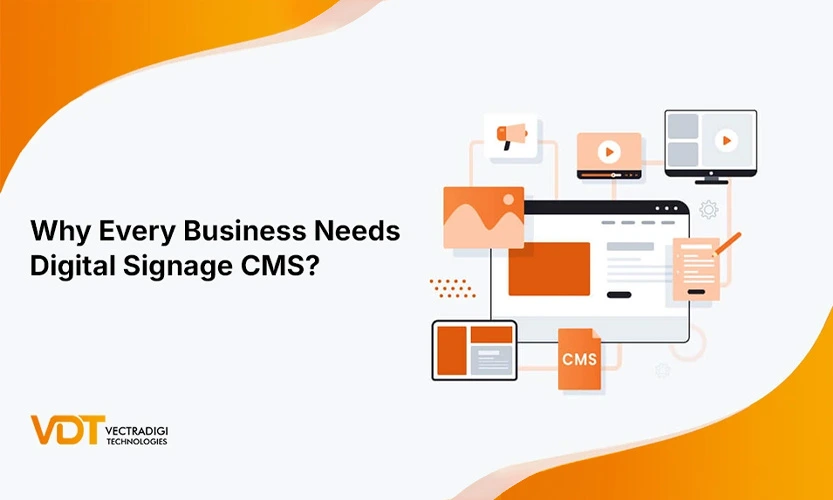
A CMS, or Content Management System, is what makes digital screens work smoothly. Instead of going to each screen to update it, businesses can handle everything from one place. Imagine controlling hundreds or even thousands of screens with a few clicks.
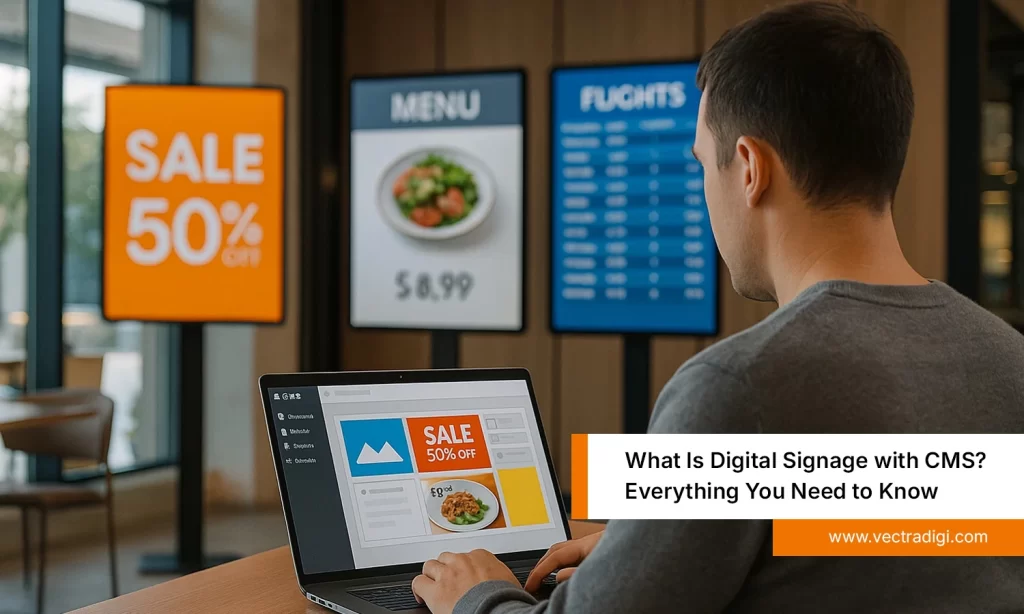
With a CMS, you can plan what shows up and when, arrange how it looks, and push updates immediately. For example, if a café wants to change its menu across all its locations, the CMS makes it happen fast. That way, everyone sees the right information at the same time. In order to help businesses make better decisions, it also demonstrates what information customers are truly interested in.
By linking directly to the screens, a CMS turns ideas into action, making plain displays more lively and engaging.
Also Read: What Is Digital Signage with CMS? Everything You Need to Know
Why Businesses Need a CMS for Digital Signage
Think about an office with screens everywhere, a bunch of stores, or a hospital trying to keep people updated. Without a CMS, keeping all those screens up to date is a real pain. People spend forever changing each screen, and sometimes the info is already old by the time it’s done.
Here’s how a CMS actually helps:
- Saves time – you don’t have to run around updating each screen.
- Keeps everything the same – no more confusing or outdated messages.
- Updates instantly – if something urgent comes up, it shows right away.
- Makes people notice – the stuff on screen actually gets seen.
Walk into a place and every screen is right. Messages, announcements, and schedules are all current and easy to read. A CMS makes it simple, takes away stress, and just makes the place feel like it works.
Real-World Applications of CMS for Digital Signage
Digital signage works best when it’s fast, consistent, and engaging. A CMS makes that possible. Here are five practical ways it’s used in the real world.
1. Retail Promotions and Advertising
In retail, it can be costly to miss the appropriate moment. A flash sale or special promotion doesn’t work if customers don’t see it. Updating screens manually in multiple stores is slow, frustrating, and just plain inefficient.
A CMS changes that. You can make sure the message appears consistently across all screens and refresh them promptly. Consider a weekend sale for a national apparel company. Every store, from the busiest city outlet to the smallest town branch, shows the same bright, eye-catching offer at the right time. Sales teams don’t have to send instructions or print new posters.
The payoff? More eyes on your promotions, better customer engagement, and usually higher sales. A simple system that makes a big difference.
2. Corporate Communication & Internal Updates
Making individuals feel involved is just as important to employee engagement as offering rewards. And frankly, most companies aren’t good at this. Emails get ignored, bulletin boards are dusty, and meetings never cover everything.
That’s where a CMS for digital signage comes in handy. Suddenly, you can put announcements, updates, or even little shout-outs on screens around the office in real time.
The best part? It doesn’t add more work to HR or managers. Updates happen from one place, everyone’s on the same page, and morale goes up a bit every day. It’s simple, but it works.
3. Healthcare & Patient Information Displays
Hospitals and clinics are places where timing really matters, and clarity can make a big difference. Anyone who has ever waited in a lobby knows how it feels when you’re unsure about your appointment, and sometimes you don’t even know what services are available.
A CMS for digital signage can change all that. Screens in waiting areas can show schedules in real time, share helpful health tips, and post department updates. For instance, if an appointment runs late, the screens can update right away, so people aren’t sitting there wondering what’s going on. And while they wait, the displays might show simple health tips or reminders, things that actually help, not just fill the space.
The change is noticeable. Staff isn’t answering the same questions over and over, patients actually know what’s happening, and the waiting room feels a little calmer.
4. Educational Institutions & Campus Messaging
Getting messages out on a busy campus is harder than it sounds. Posters come down late, bulletin boards get ignored, and half the time, students don’t see the update until it’s too late.
CMS allows schools to push out schedules, event notices, or even last-minute changes to every screen at once. So whether you’re in the cafeteria or lecture hall, you see the same update instantly.
And beyond reminders, screens can be used in more creative ways, such as welcoming new students, sharing quick polls, or spotlighting achievements. It makes the campus feel more alive, and students feel a little more connected to what’s happening around them.
5. Transportation Hubs & Public Information
Airports, train stations, and bus stops never stand still. Flights get delayed, gates change, trains run late, it’s constant movement. And when screens don’t keep up, passengers are left confused, frustrated, and often asking staff the same questions over and over.
With a CMS, those updates can roll out everywhere at once. A flight delay shows up on the departure board, in the waiting area, and even on the app, almost instantly. Travelers know what’s happening, staff aren’t tied up repeating announcements, and the whole place just runs a little smoother.
It’s not just about information, but reducing stress in an already busy environment. A small change in how updates are managed makes a big difference in how people experience travel.
Future Trends in CMS for Digital Signage
Digital signage is changing faster than ever, and the systems behind it are trying to keep up. It’s hard to know exactly what’s around the corner, but a few things seem likely.
- AI-powered content – Screens are starting to shift what they show on their own. Depending on who’s looking, the time of day, or even the weather, the display changes. It makes things feel more alive.
- Interactive screens – People can tap or swipe to find stuff instead of just staring at the screen. Kind of feels like it’s actually doing something instead of just sitting there.
- Cloud-based management – Companies with a bunch of locations can update all the screens from one spot. Makes life easier and stops anyone from forgetting to update something somewhere.
- Analytics – Shows what people notice and what they ignore. Weirdly enough, the stuff you think will grab attention sometimes doesn’t, and the little things get noticed more.
- Integration with smart systems – Screens connect to other devices or apps. Sensors, building systems apps, when they all work together, things just run smoother.
Someday soon, signage might almost run itself, showing the right thing at the right time without anyone touching it. It’s exciting to think about, and it’s going to make digital screens feel smarter, more useful, and a little more alive.
Conclusion
Screens might look simple, just showing messages, but behind the scenes, a CMS is doing a lot. Keeps everything consistent, updates stuff right away, and makes sure the right message reaches people at the right time. Stores, hospitals, schools, airports, anywhere with screens show it’s not just a tool, it actually solves problems.
It saves time, cuts down on stress, and makes sure people notice things instead of missing them. And looking forward, with AI interactive screens, and all the smart connections, digital signage is only going to get more alive and useful.
Ultimately, a CMS turns screens into more than just displays. They become something dynamic, helpful, and kind of alive. Businesses using it well don’t just show info, they make every screen actually matter.
Upgrade your digital signage today with a powerful CMS. Save time, increase engagement, and keep every screen updated instantly. Start making your screens smarter, transform the way your business communicates now.