Walk into any shop, clinic, or office and you will read dozens of signs without noticing. Yet each one is quietly doing a job. One tells you the opening hours, another points you to the lift, and a third pulls your eye toward a seasonal offer. So, what are the three main types of signage? They are informational, directional, and promotional. Together they decide whether a visitor feels welcome or lost. This guide explains how each type works, where it fits, and how to combine them so your space feels easy, professional, and persuasive.
Also Read: What Are the 7 Key Elements of Digital Signage?
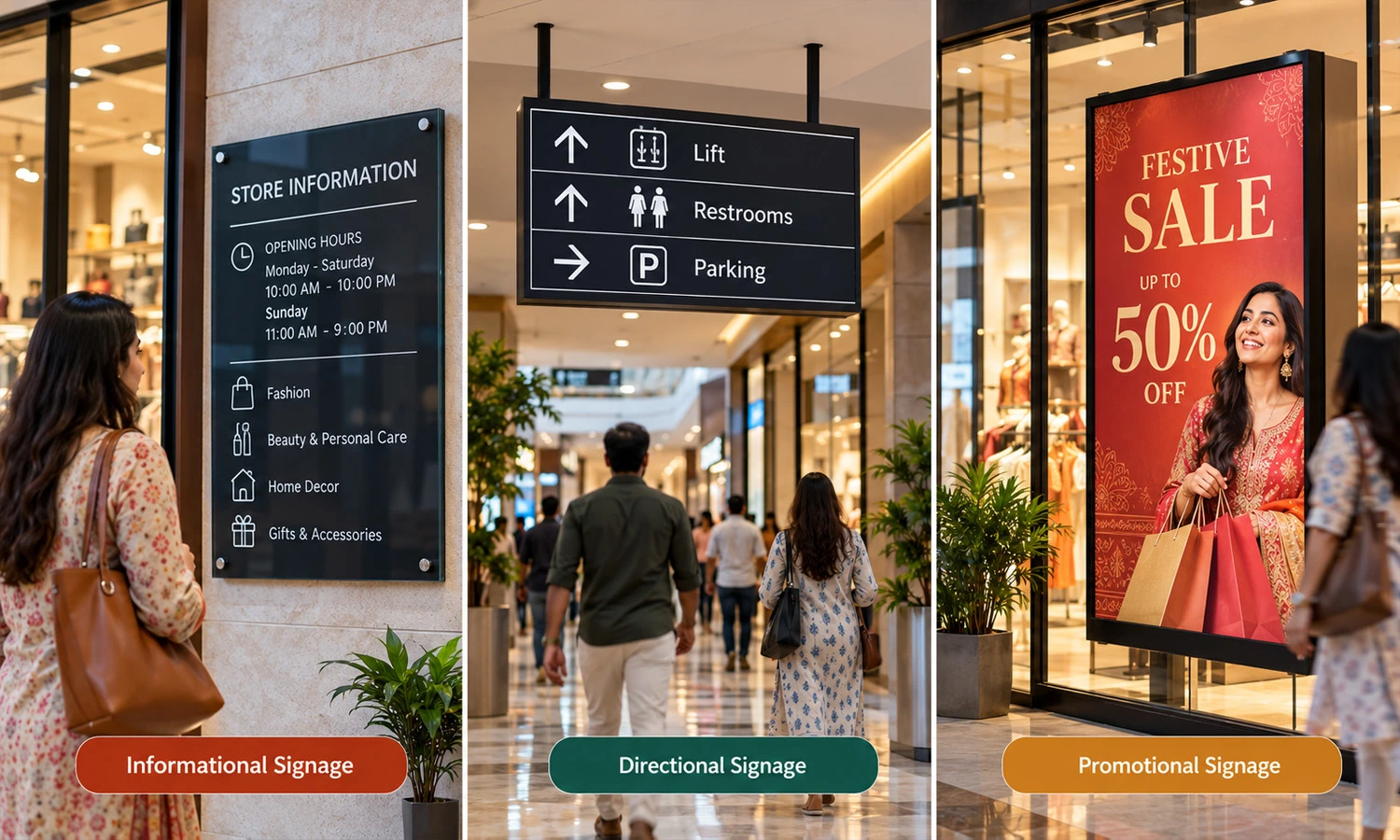
Three Main Types of Signage
Signage is usually grouped by the problem it solves. Informational signs answer questions, directional signs guide movement, and promotional signs encourage action. Every business needs all three, though in varying amounts. A hospital leans heavily on wayfinding. A boutique cares more about promotion. A restaurant needs a bit of everything.
Knowing what the three main types of signage helps you stop buying signs one at a time and start planning your space as one connected experience.
Informational Signage: Answering Questions Before They Are Asked
Informational signs deliver facts. It covers everyday essentials like business hours, pricing, food menus, safety warnings, room labels, internet access, and store directories.. Their job is to remove doubt. When a customer can find what they need without asking, they feel respected, and they trust you more.
Good informational signage is plain and honest. Keep the wording short, use a typeface that reads well from a distance, and make sure the contrast between text and background is strong. A pale grey font on a white board might look elegant in a mockup, but it fails the moment someone squints at it in poor light.
Placement matters just as much as design. Opening hours belong at the entrance, at eye level. Pricing belongs where the buying decision happens. Safety information belongs where the risk exists. If a sign is correct but sits in the wrong place, it might as well not exist.
Materials also send a message. Acrylic and vinyl work well indoors and in sheltered entrances because they look clean and are easy to update.In busy, high-footfall spaces, tough, long-lasting finishes help signs stay clean, bright, and professional for many years. A faded or peeling notice suggests a business that has stopped paying attention.
Directional Signage: Making Movement Effortless
Directional signs, often called wayfinding, guide people from one point to another. It includes pointers, emergency exit labels, building layouts, toilet markers, and car park guidance for visitors. Nobody thanks a business for good wayfinding, but everybody remembers bad wayfinding.
Confusion creates stress, and stressed customers rarely spend happily. In a large retail store, a shopper who cannot find the right aisle may simply leave. In a medical building, a patient who is late because they got lost arrives anxious before they have even met the doctor. Clear directional signs protect the customer’s mood.
The best systems follow a few simple habits:
- Use consistent symbols and colours so people learn the language quickly.
- Place signs at decision points, such as corridor junctions, staircases, and entrances.
- Repeat guidance at regular intervals so people never feel they have been left on their own.
- Avoid overloading any single sign with too many destinations.
Ask yourself what are the three main types of signage doing for a first-time visitor, and you will find directional signs carry the heaviest load. The person has no map in their head, so your signs must provide one.
Promotional Signage: Turning Attention Into Action
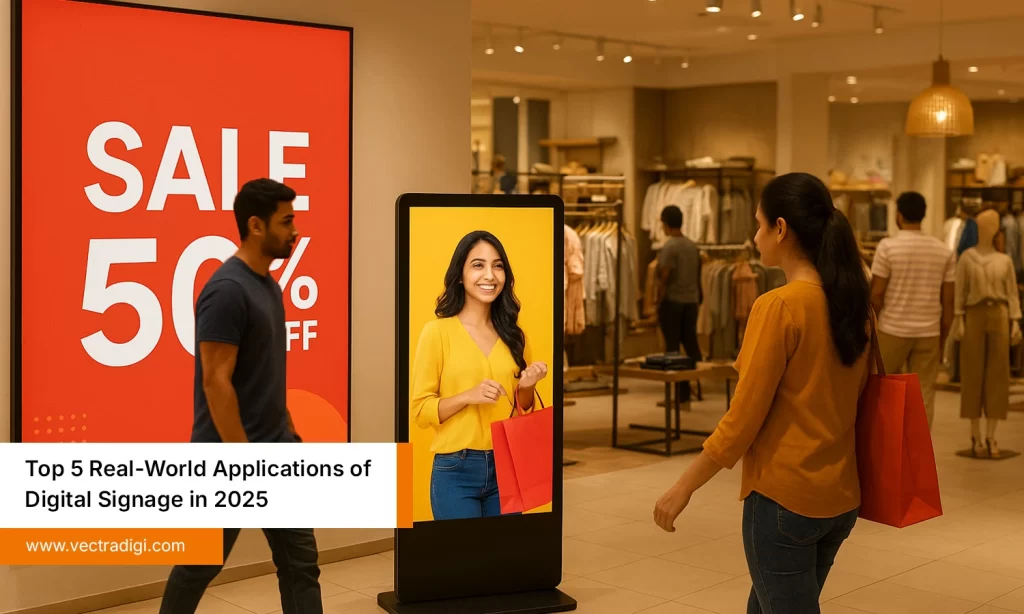
Promotional signage exist to sell. Window decals, sale banners, storefront lettering, illuminated boards, and end-cap displays all aim to catch attention and prompt a decision. Promotional signs act as your brand’s loudest voice, so colour, logo, and tone all matter.
Effective promotional signage keeps to one message at a time. A sign shouting about five different offers usually sells none of them. Pick the strongest idea, state it clearly, and give people one next step, such as “Visit today” or “Ask inside.”
Think about readable distance, lighting conditions, and how quickly passersby move. A roadside sign has about three seconds to be understood, so every extra word costs you. Illuminated or high-contrast designs help after dark, which is when many shoppers are deciding where to go.
Promotional signs should feel like a core part of your brand identity. If the colours and fonts match your shopfront, packaging, and website, customers recognise you instantly. That recognition builds familiarity, and familiarity builds trust long before anyone steps inside.
How the Three Types Work Together
Here is where the real value sits. Understanding what are the three main types of signage is useful, but seeing how they connect is what improves customer experience.
Picture a customer approaching a café. A promotional sign draws them in from the pavement. A directional sign tells customers where to line up and collect orders. An informational menu board explains choices and prices. Take away any one of these, and the experience suffers. Without the first, fewer people walk in. Without the second, the counter becomes chaotic. Without the third, the queue slows down while people ask questions.
The three types also need visual harmony. Use the same fonts, a shared colour palette, and a similar level of finish across all of them. When signs look like they came from different businesses, customers sense a lack of care, even if they cannot explain why.
Planning Your Signage the Practical Way
Before ordering anything, walk through your space as a stranger would. Start at the street or car park and follow the path a new customer takes. Note every moment where you would hesitate, then place a sign to solve it.
Next, think about the environment. Outdoor signs face sun, rain, and dust, so choose weather-rated materials. Indoor signs deal with fingerprints and constant footfall, so cleanability counts. Finally, plan for change. Prices, offers, and layouts shift over time, so modular or easily updated signs save money.
If you remember what are the three main types of signage and assign each one a clear role, planning becomes much simpler.
Conclusion
Signage is more than decoration. It is a quiet form of customer service that works every hour you are open. Informational signs build confidence, directional signs reduce stress, and promotional signs bring people through the door. When they share a consistent look and sit in the right places, the whole space feels organised and trustworthy. Next time someone asks what are the three main types of signage? you will know the answer and, more importantly, how to use each type to make every visit smoother and more rewarding.
Explore smart signage solutions to inform, guide, engage, and strengthen your brand. Contact us today for expert solutions.
Frequently Asked Questions
Q1. How do I know which type of signage my small shop needs?
Ans: Start with your biggest customer problem. If customers can’t locate you, go for directional signs. If they lack details, add informational ones. If footfall is low, invest in promotional signage.
Q2. Does good directional signage really improve customer experience inside a store?
Ans: Yes. Clear wayfinding reduces stress, saves staff from repeating directions, and helps shoppers reach products faster. Customers who navigate easily tend to stay longer, browse more, and often spend more.
Q3. Which signage material lasts longest for outdoor use in harsh weather?
Ans: Alluminium, acrylic with UV protection, and weather-rated vinyl perform best outdoors. Alluminium usually lasts longest, resisting rust, fading, and warping for many years with only occasional, basic cleaning and care.
Q4. Can one sign serve informational and promotional purposes at the same time?
Ans: Absolutely. A menu board informs while highlighting a special offer, for example. Just keep the message focused, because crowded signs confuse readers and weaken both the information and the promotion.