
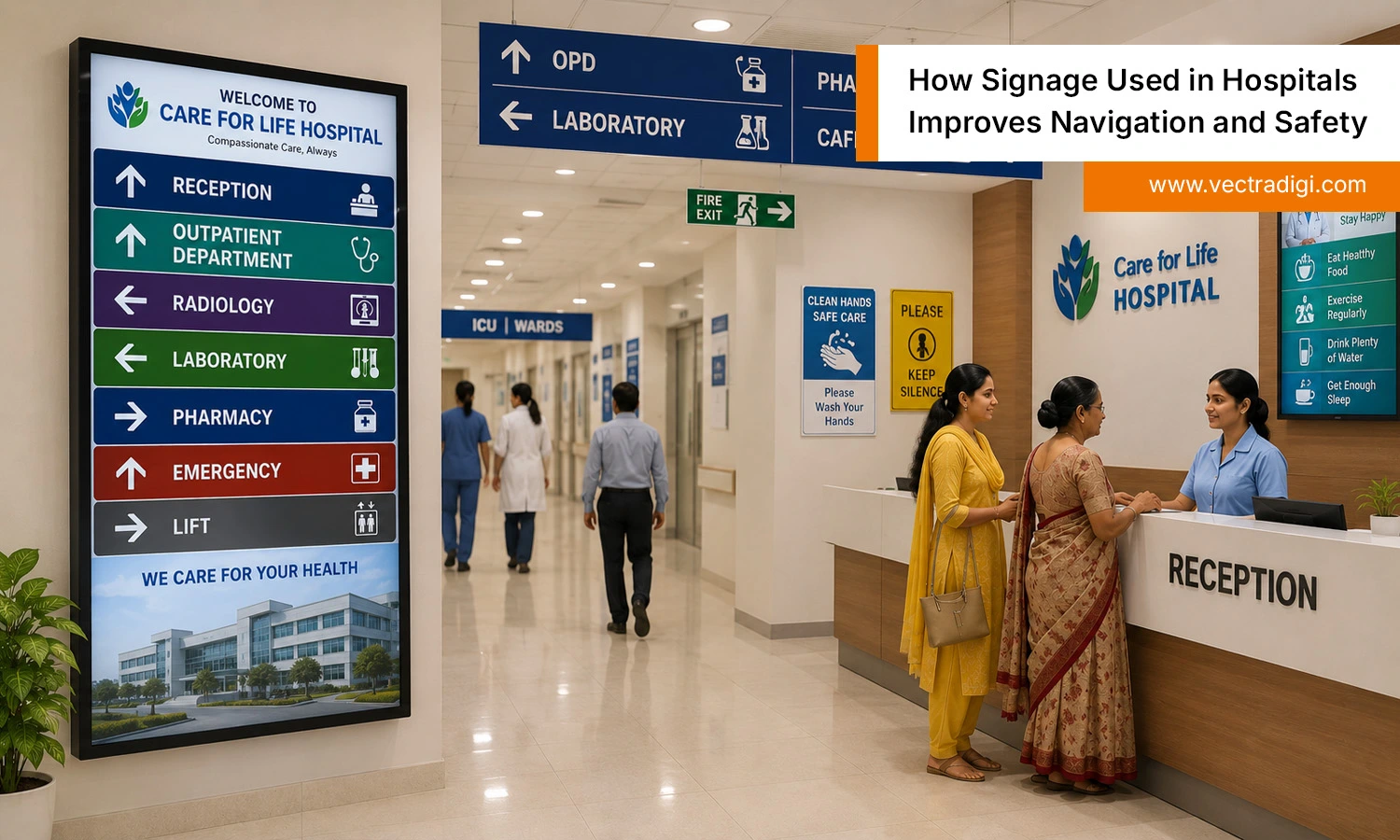
Hospitals are designed to save lives, but finding the right department inside a large healthcare facility is not always easy. Patients, visitors, and even new staff members can feel confused when navigating multiple floors, wards, and specialty units. During emergencies, every second matters, making clear communication more important than ever. This is where signage used in hospitals becomes an essential part of daily operations. It helps people move confidently, improves efficiency, and supports a safer environment for everyone. In this blog, we’ll explore why hospital signage matters, how it improves navigation and safety, and what to consider when choosing the right signage partner.
Also Read: Why Signage Used in Hospitals Is Critical for Patient Experience
Why Hospital Signage Is More Important Than Ever
Modern hospitals are becoming larger and more advanced, offering specialized departments, diagnostic centers, emergency units, and outpatient services under one roof. Without a well-planned signage system, patients and visitors may struggle to find their destination, leading to unnecessary stress and delays. Effective signage improves communication, supports smooth hospital operations, and creates a more organized healthcare environment. It also allows doctors, nurses, and reception staff to spend more time caring for patients instead of repeatedly giving directions.
Hospital signage helps by:
- Reducing confusion for patients and visitors.
- Improving navigation across large healthcare facilities.
- Supporting faster emergency response.
- Enhancing the overall patient experience.
- Saving valuable time for healthcare professionals.
How Signage Used in Hospitals Improves Navigation
1. Helps Patients Find Departments Quickly
Clear signage used in hospitals directs patients and visitors to departments, wards, laboratories, pharmacies, and emergency rooms without confusion, reducing delays and ensuring appointments are reached on time with less stress.
2. Reduces Stress During Hospital Visits
Easy-to-read signs provide clear directions throughout the hospital, helping patients and visitors navigate unfamiliar surroundings confidently while reducing anxiety during medical appointments, treatments, or emergency situations.
3. Saves Time for Patients and Staff
Well-placed signage minimizes the need to ask for directions, allowing patients to reach destinations faster while enabling healthcare staff to focus more on patient care than navigation assistance.
4. Supports Emergency Navigation
Clearly marked emergency departments, exits, staircases, and evacuation routes help people respond quickly during emergencies, improving movement throughout the facility and supporting faster emergency response when every second matters.
5. Improves Accessibility for Everyone
Hospital signage featuring universal symbols, Braille, large fonts, and accessibility indicators helps elderly individuals and people with disabilities navigate independently, creating a more inclusive healthcare environment.
6. Creates a Better Overall Patient Experience
A well-designed navigation system makes hospital visits smoother by reducing confusion, improving convenience, and helping patients and visitors feel more comfortable, confident, and satisfied throughout their healthcare journey.
Benefits of Investing in Quality Hospital Signage
- Better Patient Satisfaction: Clear hospital signage helps patients and visitors find departments quickly, reducing confusion, minimizing waiting time, and creating a smoother healthcare experience that improves overall satisfaction and confidence in the facility.
- Improved Operational Efficiency: Effective signage reduces the number of direction-related questions, allowing doctors, nurses, receptionists, and support staff to focus more on patient care and daily hospital operations.
- Stronger Hospital Branding: Professionally designed signage used in hospitals creates a consistent visual identity throughout the facility, reinforces the hospital’s brand image, builds trust among patients, and presents a modern, organized, and welcoming healthcare environment.
- Regulatory Compliance: Quality hospital signage displays essential safety instructions, accessibility information, emergency exits, and hazard warnings, helping healthcare facilities comply with industry regulations while maintaining a safer environment for everyone.
- Long-Term Cost Savings: Durable hospital signage requires minimal maintenance and fewer replacements, while digital signage reduces printing expenses by allowing quick updates, making it a cost-effective investment for healthcare facilities over time.
How Hospital Signage Enhances Safety
1. Guides People During Emergencies
Emergency exit signs, evacuation maps, and assembly point indicators help patients, visitors, and staff respond quickly during emergencies, reducing confusion and supporting safe, organized evacuation throughout the healthcare facility.
2. Prevents Unauthorized Access
Warning signs outside operating theatres, ICUs, laboratories, and medicine storage areas restrict unauthorized entry, protecting sensitive equipment, maintaining patient privacy, and reducing safety risks within the hospital.
3. Supports Infection Control Measures
Safety signage reminds patients, visitors, and healthcare professionals to follow hand hygiene, mask requirements, and isolation protocols, helping reduce infection transmission and maintain a healthier hospital environment.
4. Highlights Potential Hazards
Hazard signs used as part of the signage used in hospitals identify areas containing radiation equipment, medical gases, chemicals, and biohazard materials, encouraging people to take necessary precautions and reducing the risk of accidents or accidental exposure.
5. Protects Both Patients and Staff
Signs indicating wet floors, maintenance work, emergency equipment, and restricted areas help prevent accidents, improve workplace safety, and create a secure environment for patients, visitors, and healthcare professionals.
Best Practices for Designing Effective Hospital Signage
Well-designed signage should communicate information quickly, clearly, and consistently. Following a few essential design principles helps hospitals create an effective wayfinding system that benefits every visitor.
- Use large, easy-to-read fonts that remain visible from a distance.
- Choose high-contrast colors for better readability.
- Include universal symbols that are easy to understand.
- Provide multilingual signage where necessary.
- Maintain consistent branding across all signs.
- Install signs at decision-making points such as entrances, corridors, and elevators.
- Use durable, easy-to-clean materials suitable for healthcare environments.
- Review and update signage regularly to reflect changes within the facility.
Choosing the Right Hospital Signage Partner
Selecting the right provider for signage used in hospitals is essential for creating a reliable and effective wayfinding system. Choose a company with proven experience in healthcare projects, as hospitals have unique safety, accessibility, and communication requirements. A trusted partner should offer customized designs, durable materials, professional installation, and ongoing support. It is also important to work with a provider that understands regulatory standards and follows high-quality manufacturing practices to ensure long-lasting performance. Reviewing previous healthcare projects and client feedback can help assess expertise. The right signage partner will deliver solutions that improve navigation, safety, and the overall hospital experience.
Conclusion
Clear hospital signage does far more than direct people from one place to another. It improves navigation, supports patient safety, enhances accessibility, and contributes to the smooth operation of healthcare facilities. Whether guiding visitors to the correct department or displaying emergency information, every sign plays an important role in creating a positive healthcare experience. Investing in a professionally designed signage system helps reduce confusion, save valuable time, and strengthen the hospital’s image. As hospitals continue to expand and modernize, quality signage remains an essential investment that benefits patients, visitors, healthcare professionals, and the organization as a whole.
Upgrade your healthcare facility with Vectradigi hospital signage solutions that improve navigation, enhance safety, and create a better patient experience through durable, high-quality, and professionally designed signage systems.
Frequently Asked Questions
Q1: Why is signage used in hospitals important?
Ans: Hospital signage helps patients, visitors, and staff navigate the facility easily. It improves safety, reduces confusion, supports emergency response, and enhances the overall healthcare experience.
Q2: What types of signage are commonly used in hospitals?
Ans: Hospitals typically use directional signage, safety signs, informational boards, accessibility signs, department identification signs, emergency exit signs, and digital displays for communication and wayfinding.
Q3: How does hospital signage improve patient safety?
Ans: Hospital signage identifies emergency exits, restricted areas, hazardous zones, and infection control measures. It provides clear instructions that help people respond quickly and safely during emergencies.
Q4: What materials are best for hospital signage?
Ans: Common materials include acrylic, aluminum, stainless steel, high-pressure laminate, vinyl, and LED digital displays. These materials are durable, easy to maintain, and suitable for healthcare environments.
Q5: Can digital signage be used in hospitals?
Ans: Yes, digital signage is widely used in hospitals for queue management, appointment schedules, health awareness messages, emergency announcements, visitor information, and real-time communication.