
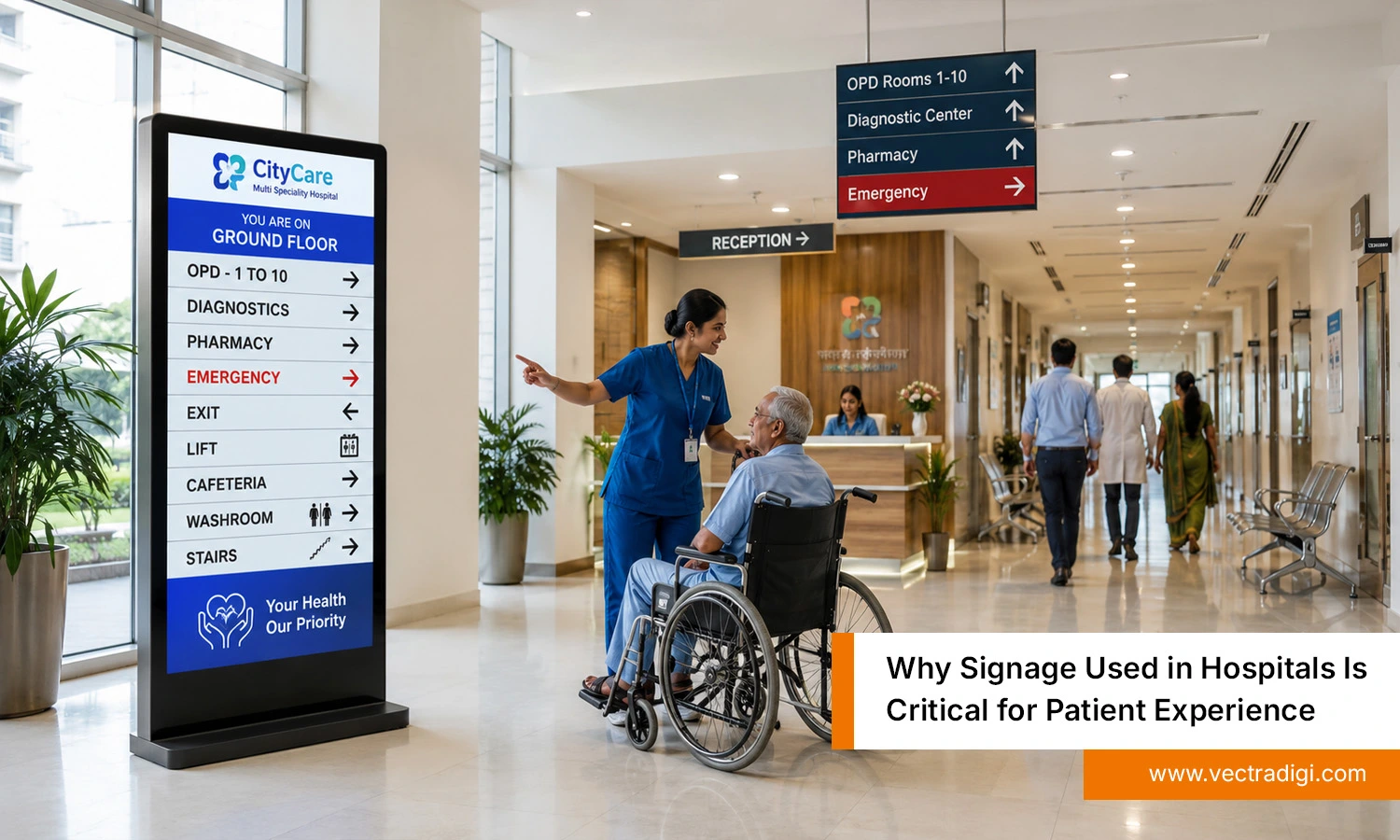
Visiting a hospital can be stressful, especially when patients and visitors struggle to find the right department. Clear and well-planned signage helps people move around easily, reduces confusion, and creates a more comfortable healthcare experience. Modern digital displays powered by a signage led module make communication faster, clearer, and more flexible than traditional signs. They improve navigation, display important updates, and support hospital staff by reducing repetitive queries. As healthcare facilities continue to modernize, investing in effective signage has become essential. In this blog, we will explore why hospital signage matters, its benefits, where it should be installed, and how to choose the right solution.
Also Read: Top Applications of a LED Display Unit Across Different Industries
Why Hospital Signage Matters More Than Ever
Modern hospitals are large, busy, and often difficult to navigate. Patients arrive with different medical needs, while visitors may be unfamiliar with the layout. Clear signage helps everyone reach the correct destination without unnecessary delays or stress. It also reduces the number of direction-related questions staff receive, allowing them to focus on patient care. Digital signage offers an added advantage by providing real-time updates, announcements, and emergency information. A well-designed signage led module creates a safer, more organized, and patient-friendly environment that improves the overall healthcare experience.
Key reasons include:
- Improves patient navigation
- Reduces stress and confusion
- Saves valuable time
- Supports hospital staff
- Enhances patient satisfaction
Common Challenges Patients Face Without Proper Hospital Signage
- Difficulty finding departments: Patients and visitors often waste valuable time searching for consultation rooms, laboratories, pharmacies, or emergency departments, leading to unnecessary frustration and delayed medical care.
- Higher stress and anxiety: Visiting a hospital is already emotionally challenging. Poor signage increases uncertainty, making patients and their families feel overwhelmed while trying to locate important services.
- Missed appointments: Confusing directions can cause patients to arrive late or miss scheduled consultations, diagnostic tests, or treatments, affecting both healthcare efficiency and patient satisfaction.
- More interruptions for staff: Nurses, doctors, and reception teams frequently stop their work to provide directions, reducing productivity and taking attention away from patient care.
- Longer waiting times: Patients who struggle to find the correct department often join the wrong queues, creating unnecessary delays and increasing waiting times for everyone.
- Negative hospital experience: Poor navigation leaves visitors with a frustrating first impression, which can impact how they perceive the quality and professionalism of the healthcare facility.
How Signage LED Module Solutions Improve Hospital Navigation
- Provides clear directions: A signage led module displays bright and easy-to-read directional information, helping patients and visitors quickly locate departments, clinics, emergency rooms, and essential hospital services.
- Supports real-time updates: Hospitals can instantly update doctor schedules, room changes, visiting hours, and emergency notices without replacing printed signs, ensuring everyone receives accurate information.
- Improves emergency communication: During emergencies, digital signage quickly displays evacuation routes, safety instructions, and temporary directions, helping people respond faster and move safely throughout the hospital.
- Enhances accessibility: Bright displays with large fonts, high contrast, and multilingual support make hospital information easier to understand for elderly visitors and people with different language preferences.
- Reduces dependency on staff: Clear digital guidance enables visitors to navigate independently, allowing healthcare professionals to spend more time delivering quality medical care instead of giving directions.
- Creates a better visitor experience: Smooth navigation reduces stress, shortens travel time inside the hospital, and helps patients feel more confident throughout their healthcare journey.
Benefits of Modern LED Signage in Hospitals
- Improves patient communication: Digital displays provide instant updates about appointments, queue numbers, health announcements, and important notices, ensuring patients always receive accurate and timely information.
- Reduces waiting room frustration: Showing estimated waiting times and service progress keeps patients informed, reducing uncertainty and creating a more comfortable waiting experience.
- Increases operational efficiency: Staff spend less time answering navigation questions, allowing doctors, nurses, and reception teams to focus on delivering better healthcare services.
- Offers energy-efficient performance: Modern signage led module technology consumes less electricity while delivering bright, high-quality visuals, making it a cost-effective solution for hospitals operating around the clock.
- Strengthens hospital branding: Professional digital displays create a modern environment while promoting hospital achievements, healthcare campaigns, doctor profiles, and wellness initiatives that build patient trust.
- Allows flexible content management: Hospitals can update information across multiple displays from one central system, saving time and eliminating the need to replace printed signage regularly.
Essential Areas Where Hospitals Should Install LED Signage
- Reception area: Display hospital directories, registration instructions, doctor availability, and visitor guidance to help patients begin their journey without confusion or unnecessary delays.
- Emergency department: Bright LED displays direct patients to emergency services immediately while showing critical announcements that improve response time during urgent situations.
- Waiting areas: Display queue numbers, estimated waiting times, health awareness messages, and hospital announcements to keep patients informed throughout their visit.
- Pharmacy and billing counters: Digital screens simplify token management, payment instructions, and medicine collection updates, improving efficiency while reducing crowding.
- Corridors and elevators: Directional displays help visitors move confidently between departments, minimizing confusion and reducing the number of navigation-related questions.
- Parking and cafeteria: LED signage guides visitors to parking spaces, dining facilities, and other essential amenities, creating a smoother and more convenient hospital experience.
Choosing the Right Signage LED Module for Healthcare Facilities
- Choose the right brightness: Displays should remain clear and readable in different lighting conditions while ensuring comfortable viewing for patients, visitors, and hospital staff throughout the day.
- Prioritize high resolution: Sharp visuals and readable text improve communication by ensuring directions, announcements, and medical information remain easy to understand from different viewing distances.
- Look for durable construction: Hospitals operate continuously, so investing in reliable displays ensures consistent performance with minimal maintenance and reduced long-term operating costs.
- Select an easy content management system: A centralized platform allows hospital staff to update schedules, announcements, emergency alerts, and health campaigns within minutes.
- Consider accessibility features: Displays with multilingual support, large fonts, and high contrast improve communication for elderly visitors and people with different language backgrounds.
- Work with a trusted supplier: Choose an experienced provider offering installation, technical support, warranty, and maintenance services to ensure long-lasting performance from your signage led module.
Conclusion
Hospital signage does much more than display directions. It improves patient confidence, reduces confusion, supports hospital staff, and creates a smoother healthcare experience from the moment visitors enter the facility. Digital signage has become an essential part of modern hospitals because it delivers real-time communication, enhances navigation, and simplifies daily operations. Investing in a high-quality signage led module helps hospitals provide accurate information while improving efficiency and patient satisfaction. As healthcare facilities continue embracing digital technology, smart LED signage will remain an important solution for creating safer, more organized, and patient-friendly environments.
Upgrade your healthcare communication with Vectradigi. Our premium signage led module solutions improve navigation, patient experience, and hospital efficiency. Contact our experts today to find the perfect solution.
FAQs
Q1: What is a signage LED module?
Ans: A signage led module is the main display component used in digital signage. It delivers bright, clear visuals for directions, announcements, emergency alerts, and hospital information, improving communication and navigation.
Q2: Why is hospital signage important for patient experience?
Ans: Hospital signage helps patients and visitors find departments quickly, reduces confusion and stress, improves accessibility, and supports smooth movement throughout the hospital, creating a more comfortable and efficient healthcare experience.
Q3: Where should LED signage be installed in hospitals?
Ans: LED signage should be installed at reception areas, emergency departments, waiting rooms, pharmacies, billing counters, corridors, elevators, parking areas, cafeterias, and outpatient departments for effective communication and navigation.
Q4: How does digital signage improve hospital operations?
Ans: Digital signage provides real-time updates, displays queue information, shares emergency announcements, reduces staff interruptions, and improves communication, helping hospitals operate more efficiently while enhancing the patient experience.
Q5: What features should hospitals consider before buying a signage LED module?
Ans: Hospitals should consider brightness, display resolution, durability, energy efficiency, easy content management, accessibility features, maintenance support, and reliability to ensure the signage led module performs effectively for years.