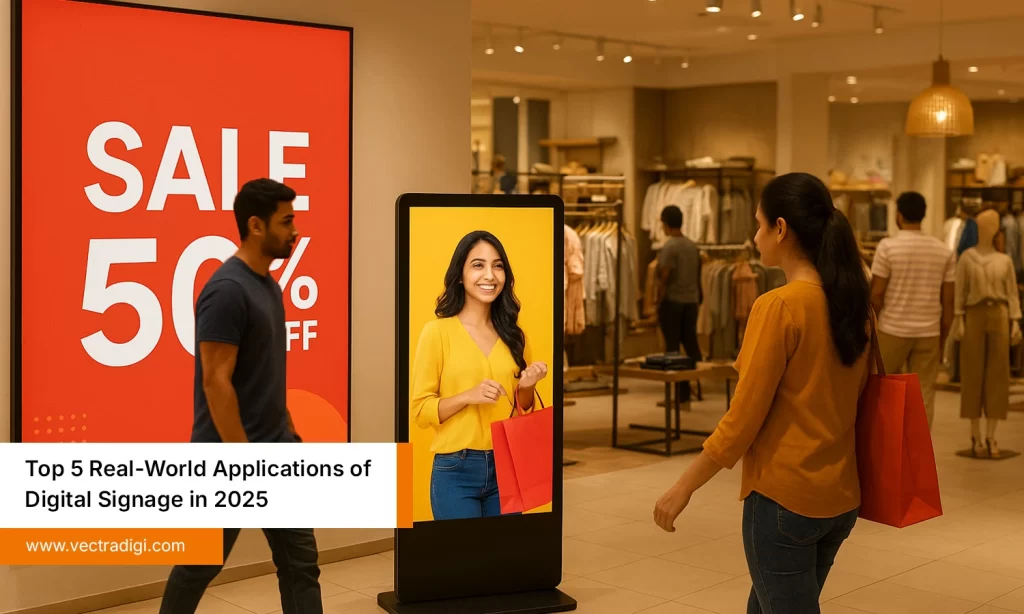

It’s a tough sight to see people walking right past a store without even glancing inside. Happens more often than anyone likes to admit. Owners stand there wondering what went wrong, feeling that quiet sting of opportunities slipping away. Attention today is ridiculously short, competition is everywhere, and printed posters just don’t cut it anymore. They fade into the background like wallpaper. With so much noise around us, getting someone to actually look up is becoming a real challenge. That’s where digital signage changes the game, turning empty walls into something that actually stops people. But choosing the right one matters. The wrong choice does nothing.
Table of Contents
Also Read: What is Digital Signage? Benefits, Uses, and Business Impact
Why Choosing the Right Digital Signage Really Matters
Choosing digital signage is not just about grabbing the biggest or brightest screen in sight. Rushing into a purchase without a real plan often leads to disappointment. Screens end up tucked away where hardly anyone notices them, the content feels off-track, or the display turns into nothing more than a costly decoration glowing in the corner. Poor decisions mean lost money, weak visibility, and minimal impact, almost like yelling through a megaphone that never turned on.
“When the message is right, the audience listens.”
But when digital signage is selected with real thought behind it, the shift is noticeable. People stop for a second. They look and interact. A menu board can spark appetites, a directional screen can ease confusion in a crowd, and a promo display can gently influence buying moments that might never happen otherwise. At that point, signage becomes more than hardware, it becomes a living voice for the brand.
Key Factors to Consider Before Buying Digital Signage
Buying digital signage isn’t just picking any screen. Real impact comes from planning your message, your audience, and where the display truly gets noticed. Now, let’s look at what matters.
1. Screen Size & Placement
Screen size has a huge effect on how clearly a message is noticed. A screen that’s too small just blends into the background, and one that’s too large can look out of place or even distracting. Before picking any digital signage, think about where people naturally pause, walk, and look around. Placement can completely change the impact. Even the best display won’t work if it’s tucked into a corner or facing the wrong direction, then it’s just another glowing box that people walk past without noticing.
Things to think about before installing:
- Distance between viewers and the screen.
- Eye-level positioning and viewing angle.
- Direction of foot traffic.
- Lighting and glare.
- Spots where decisions happen (entrances, waiting areas, checkout zones)
2. Resolution & Brightness
Resolution and brightness are two of the biggest factors that decide whether people actually notice and understand what’s on a screen. If a display looks blurry, washed out, or overly dim, most people won’t even try to read it. Indoor and outdoor screens need different brightness levels, and things like sunlight, reflections, and viewing angle can completely change how clear the content appears. Choosing the wrong display can make even beautiful visuals look dull or cheap, turning a powerful tool into a wasted investment with little to no impact.
“Clarity isn’t a luxury, it’s the difference between being seen and being ignored.”
3. Indoor vs Outdoor Durability
Indoor and outdoor digital signage might look the same at a glance, but they’re built for totally different situations. Outdoor screens have a tough life, sun beating down all day, dust blowing around, rain, heat, and sometimes people bumping into them. They need serious brightness and anti-glare so the content doesn’t disappear in daylight. Indoor commercial displays are the opposite: it’s more about clean visuals, clarity, and running for long hours without issues. And trying to use a normal home TV for signage? That usually ends badly. They aren’t built for that kind of workload.
Before choosing, think about:
- Weather resistance and durability.
- Brightness for outdoor viewing.
- Protective casing and safety.
- Long-hour performance for indoor use.
4. Power & Connectivity
Power and connectivity really decide whether digital signage works smoothly or turns into a constant headache. It feels like such an obvious thing, but people skip it all the time, and then the problems start piling up. Without steady power and a solid network, even a top-tier screen won’t behave, it’ll flicker, freeze for no reason, or suddenly flash that embarrassing “No Signal” screen right when someone’s watching. Nobody wants that. So it’s worth figuring out power points, cable paths, and network strength before anything gets mounted on a wall. It saves a lot of stress afterward.
“If the basics fail, everything else falls apart.”
5. Ease of Content Control
Digital signage only really works if the content keeps changing. Once it gets stuck showing the same thing forever, people just stop noticing. Happens all the time when updating the screen is complicated or takes way too long. Then it ends up sitting there with old info that nobody cares about anymore. And the whole point is lost if you need a tech expert every time you want to tweak something. It should be easy and quick. Something anyone can update without stress. When the content flows smoothly, the screen actually matters.
Look for things like:
- Easy scheduling / swapping content.
- Remote updates.
- Ready templates.
- Simple controls anyone can use.
6. Budget vs Quality Balance
Going for the cheapest digital signage might look smart at first, but it usually turns into the costliest mistake later. Those low-priced screens can seem perfectly fine in the beginning, and then problems start creeping in flickering, overheating, slowing down, or just dying out way too soon. Then comes the mess: repairs, replacements, downtime, installation again, and then the total amount spent is way more than what a solid commercial display would have cost from the start. Good signage lasts, performs steadily, and actually makes the business look reliable. Sometimes paying a bit more upfront saves a lot more later.
“Good signage doesn’t cost more, it saves more.”
7. Scalability
Scalability gets ignored a lot when people pick digital signage, and it shows later. Something that works fine for one screen can become a disaster the moment there are more than ten, twenty, whatever. And then everything feels messy. The real win is being able to control all screens from one place, not jumping between systems or running around trying to fix stuff manually. If there’s even a tiny chance the business will grow, it’s better to prepare now than rebuild everything from scratch later. Future-proofing saves chaos.
Consider scalability features like:
- Central control for many screens.
- Easy expansion to new locations.
- Software that can grow with needs.
- Support for bigger content networks.
When you carefully evaluate these factors, then you’re not just picking a display, you’re choosing a communication partner. That’s how smart businesses win.
Conclusion
Choosing the right digital signage isn’t just picking a screen. It’s a bigger decision than that. When the screen, the placement, and the content actually work together, something shifts. It stops being a display and becomes a way to really talk to people. It pulls attention and helps customers move, decide, understand. The businesses that plan it well see the difference in better visibility, smoother experiences, results they can feel, not just measure. And with all the noise around, attention is hard to earn. The right signage helps you win it. It’s a connection, not decoration, and that’s the real point.
If you’re ready to stand out instead of blending in, start exploring digital signage with Vectradigi. The right screen can genuinely change how your business speaks and connects.