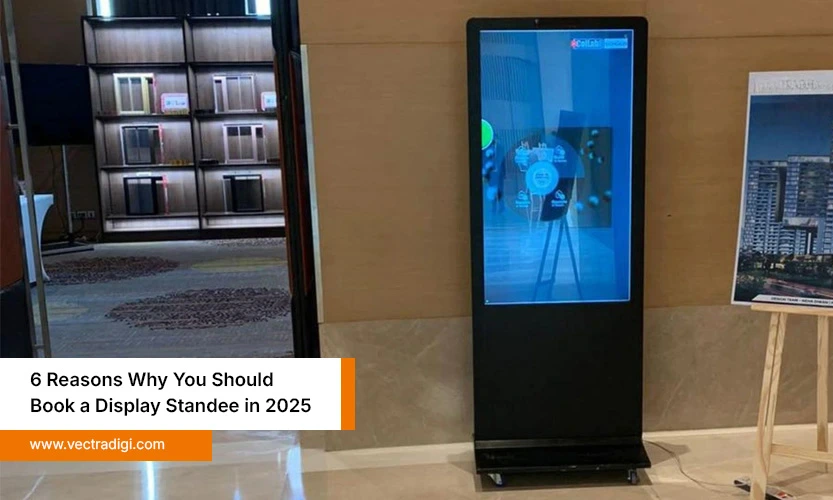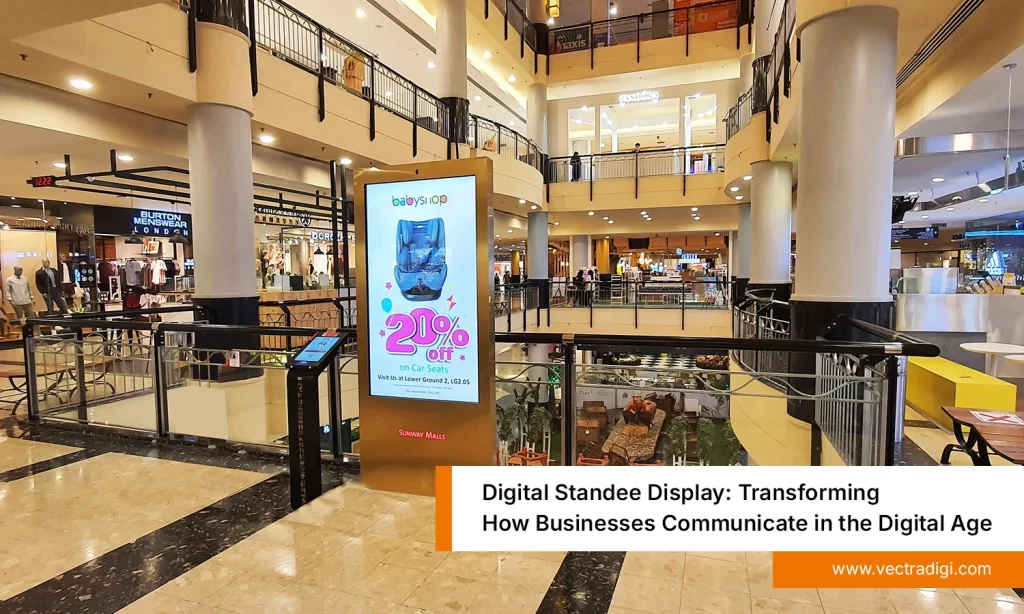

I was walking into a crowded mall last month. I was exhausted, starving, and trying to find the new food court. Suddenly, before I could look at my phone, a bright digital standee caught my attention. It wasn’t just showing an ad but a clear animated map with an arrow pointing me exactly where to go. In less than a minute, I was walking in the right direction.
That’s the thing about digital standees in 2025. They’ve moved far beyond the traditional static ads. They’ve become instant problem-solvers, guides, and even mood-lifters. Whether it’s a busy hospital, a massive retail store, or a college campus, these displays are quietly changing how people find information and make decisions.
Here are six ways they’re being used right now, each solving a problem we’ve all faced at some point.
Table of Contents
Also Read: What is a Digital Standee? A Complete Guide
Real-World Applications of Digital Standees
1. Guiding Visitors in Public Spaces
Stepping into a new place can sometimes feel overwhelming. Big places like airports, museums, or large shopping centers can easily leave people feeling lost. Paper maps can help a little, but they quickly become outdated. Digital standees can fix that with ease as they display interactive maps, live directions, and even multiple language options. If a store makes any change, the update can go live within seconds. This doesn’t just save time but also reduces frustration. Tourists, shoppers, and travelers all get the right information, exactly when they need it. And, due to high visual clarity, even someone unfamiliar with the local language can follow along easily.
People often get lost in large, unfamiliar places and waste time searching for directions.
2. Boosting Retail Sales with Real-Time Promotions
In retail, attention is everything, and paper posters mostly fade into the background, especially in busy marketplaces. But digital standee has a way of cutting through the noise. Imagine this, you’re walking past a shop, and suddenly a bright screen flashes a “Two Hours Only” deal. And the best part? The offer doesn’t have to be the same throughout the day, you can change it whenever needed. You can shift every few hours depending on stock levels, time of day, or even the weather. That flexibility keeps promotions feeling fresh, and shoppers feel like they’re getting something timely, maybe even just for them.
Printed promotions are static, get outdated quickly, and fail to create urgency.
3. Enhancing the Event Experience
Events always look smooth from the outside, but behind the scenes are different, things are constantly shifting. A speaker shows up late, a breakout session is shifted to a different room, or an additional panel is scheduled at the last moment. In the old days, that meant reprinting signs or sending volunteers to tell people in person.
But now with the digital standee, these headaches have disappeared. At a conference, it can show the day’s agenda, speaker profiles, sponsor shoutouts, or even live tweets from the event. If something changes, a single update pushes the new info to every standee in the building.
Schedule changes confuse attendees and cause delays during events.
4. Improving Patient Communication in Hospitals
Hospitals are high-pressure environments where confusion can make stress worse. Patients often ask the same questions over and over, such as How long will the wait be? Which doctor is available? Where is the lab? And the reception desk can’t handle so much at a time. Digital standees in waiting areas solve this by showing live queue numbers, department directions, and even short health tips. While this technology saves staff time, for patients it gives them a feeling of acceptance and information. A waiting room with no updates feels endless, and a standee showing progress gives a sense of movement and care.
Patients feel anxious and unfamiliar while waiting, which leads them to repeatedly question the staff.
5. Strengthening Brand Presence in Corporate Offices
People decide what they think about a place within seconds of walking in. If a client walks into a lobby that feels bare or old-fashioned, that first impression can really stick. Digital standees change the whole atmosphere, in place of a plain wall or dull poster, visitors can see a welcome message with their name, highlights of recent company accomplishments, or previews of upcoming projects.
Some offices even keep live dashboards running showing sales milestones, community initiatives, or industry awards. It’s a subtle way of saying, This is who we are, and we’re proud of it. That personal, moving display makes reception a part of the brand story before anyone even shakes hands.
Cold, impersonal first impressions that fail to reflect a company’s brand.
6. Making Education More Engaging
Walk into almost any school or college and you’ll see a notice board somewhere half-covered in old papers, some curling at the edges, most of it weeks out of date. Students barely glance at it. By the time someone bothers to pin up new info, chances are the moment has already passed.
But with digital standees they don’t wait for someone with a thumbtack and an A4 printout; they push updates instantly. A cancelled class? It’s on the screen before students even pull out their phones. A cultural fest tonight? Flash it in the cafeteria and people will show up. Some campuses even sneak in motivational quotes or shoutouts for student achievements, which makes the place feel warmer, more connected.
Notice boards are outdated, ignored, and can’t deliver urgent updates quickly.
Why Digital Standees Work So Well in 2025
The way we perceive and remember information has completely changed in today’s time. People scroll, swipe, and move on in seconds, which means anything static is fighting a losing battle. Traditional posters fade into the background, almost invisible in busy spaces. Digital standees do the opposite. They stand out, pull the eye in, and deliver a message before someone even decides to stop. They can change content, morning offers, afternoon updates and evening alerts instantly, without any additional printing or manpower. This adaptability works in retail, hospitals, offices, campuses, and even public spaces. They aren’t just signs; they’re like living notice boards, tuned in to the moment. And in a world where attention is currency, that relevance is what makes people actually stop and look.
The Emotional Side
Think about the last time you got lost in a new place and someone or something helped you find your way. Or the time you stumbled on a deal that just popped up at the right moment. Maybe you waited in a hospital and finally saw a board tell you what was happening, relief, right? That’s what digital standees do. They quietly step in, at exactly the right moment, without shouting. Little things like that stick with people. It’s not flashy; it’s just… thoughtful. And somehow, that makes a place feel a lot more human.
Conclusion
Little things often have the biggest impact. A digital standee in a crowded space can quietly guide someone, give an update, or make a visitor feel seen. They’re not flashy; they’re practical, often unnoticed, but their effect is real. Over time, those little moments really start to matter. A person might not notice it right away, but suddenly there’s less confusion, moving around feels easier, and you get this quiet sense that someone or something is looking out for you. That’s what makes these standees so useful in 2025. They’re not just showing messages. Sometimes it’s these tiny little things that make a lobby or a hallway feel… I don’t know, just more human. You barely notice it, but somehow it changes the way you move through the space, makes it feel a bit easier, a bit friendlier.
Want to see how a digital standee could actually make your space easier and more welcoming? Reach out to us today and find out how a simple screen can quietly change the way people experience your place.