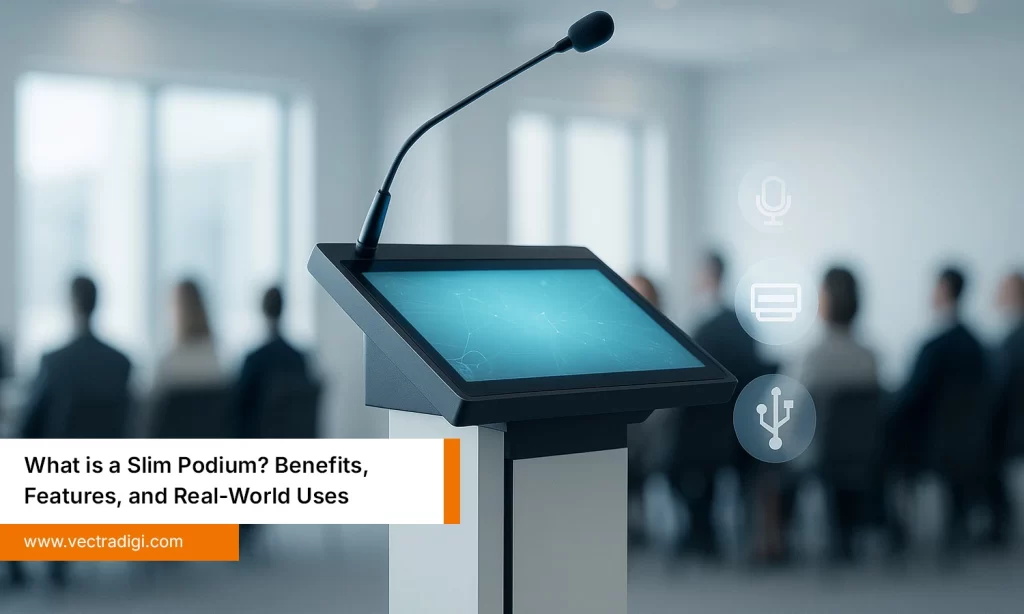
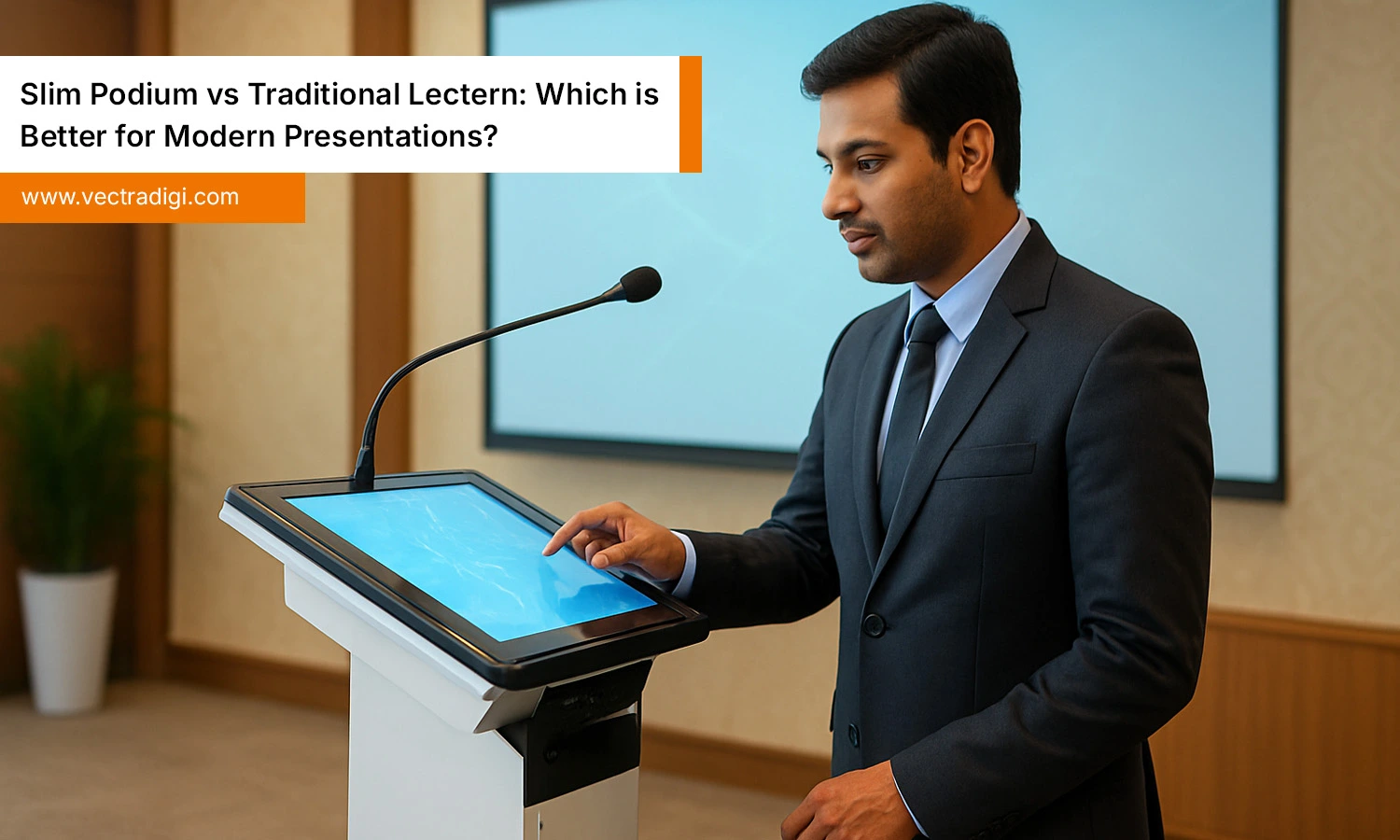
Every presenter learns this sooner or later. It’s not only about what you say but also how you stand, how your voice sounds, and how your message reaches people. The tools you use on stage play a quiet but powerful role in shaping that moment. For years, the traditional lectern was trusted by teachers, speakers, and leaders everywhere. It was steady and familiar. But the world has changed. Modern presentations now ask for movement, visuals, and connection. That is where the slim podium comes in. Sleek, digital, and easy to use, it helps you connect with your audience in a way that feels more alive.
Table of Contents
The Evolution of Presentation Technology
There was a time when a wooden lectern, a stack of notes, and a single microphone were all a speaker really needed. And things felt simpler then, steady and familiar, and that was enough. But as classrooms started getting smarter and meetings turned hybrid, expectations began to shift. People wanted tools that could do a bit more than just hold papers. They wanted something that could pull in slides, videos, and real interaction all in one place. That’s what gave rise to the slim podium, with its digital screens and smart controls. Over time, formal lectures slowly turned into shared experiences. The stage became a digital canvas where gestures, visuals, and voices worked together. It was never about turning away from tradition; it was about finding a way to make communication feel natural, engaging, and alive again for a modern audience.
Also Read: What is a Slim Podium? Benefits, Features, and Real-World Uses
Slim Podium vs Traditional Lectern: Key Differences
1. Design and Aesthetics
A traditional lectern gives off a kind of authority that people have trusted for years. It’s tall, sturdy, mostly wooden, and somehow always fits those formal rooms like auditoriums or conference halls. But when you look at the slim podium, the energy shifts a bit. It feels lighter, cleaner, more modern. It blends right in with screens and cables, and everything digital. Instead of standing between the speaker and the people, it almost disappears, letting you move, talk, and make eye contact. That small difference changes a lot. It’s not just about how it looks, it changes how you stand and how you speak. A slim podium feels like a connection.
2. Technology Integration
Traditional lecterns are pretty simple: a stand, a mic, and a flat surface to keep your notes on. They work fine, but there’s only so much they can do. Slim podiums, though, are built for how we present today. With touchscreens, HDMI ports, and wireless options, they turn a plain talk into something interactive. You can move through slides, draw quick sketches, or play a video all from one place. No tangled cables or juggling devices. For teachers, trainers, and speakers, such a system means fewer distractions and more focus on the message. The podium stops being a barrier and starts feeling like part of the story.
3. Mobility and Space Efficiency
Traditional lecterns are heavy and remain fixed in one place. They do the job but don’t really move with the moment. Slim podiums are light, easy to shift around, and fit just about anywhere. You can move them between rooms or turn them slightly so everyone gets a better view. That kind of flexibility really helps when spaces are shared or events keep rotating. The clean design makes the room feel open, with no clutter getting in the way. It’s just about making it easier for the speaker to move, find their flow, and talk the way they want to.
4. Audience Engagement
When a speaker stands behind a big lectern, there’s a kind of wall there. People hear you, but they don’t always feel you. A slim podium changes that completely. It opens up the space, lets you move a little, look people in the eye, and actually connect. You can switch visuals, ask a quick question, or even write something on the screen without breaking your flow. It feels easy, not staged. The talk turns into a moment of sharing instead of just speaking. That’s what good communication really does: it pulls people in instead of keeping them apart.
5. Maintenance and Durability
Traditional lecterns are built to last, they are solid wood, sturdy metal. They can sit in a hall for years and still look the same. The problem is, they don’t really change with the times. But slim podiums do, they have screens and tech inside, but they’re made for easy updates. If something feels outdated, you can usually fix it with a quick upgrade instead of a full replacement. Most of them use strong frames and tempered glass that don’t wear easily. Maintenance is mostly about checking software or cleaning up the surface once in a while. In the long run, flexibility like that counts more than old-school toughness.
| Feature | Slim Podium | Traditional Lectern |
|---|---|---|
| Design | Modern, compact, and lightweight design that fits any setup | Traditional build that’s solid, large, and more formal |
| Technology | Equipped with digital displays and easy device connections | Basic model with very limited tech features |
| Mobility | Easy to move and adjust for different spaces | Heavy and usually fixed in one position |
| Engagement | Promotes open interaction and better audience connection | Creates a more distant and static experience |
| Maintenance | Simple to maintain and update when needed | Strong and durable, but hard to upgrade |
Why Slim Podiums Win in Modern Presentations
Modern presentations demand flexibility, clarity, and speed. Slim podiums deliver all three. They don’t just look good; they simplify the presenter’s presentation. With built-in digital tools, switching from slides to videos or interacting with the audience happens effortlessly. This flow keeps attention intact and allows genuine storytelling. In workplaces, educators and leaders value anything that helps them save time and appear confident. The slim podium represents that confidence, simple yet smart, elegant yet efficient. While tradition still holds its charm, the new generation of presenters prefers tools that evolve with their style, not limit it.
Here’s why professionals prefer slim podiums:
- Quick access to digital controls and media.
- Sleek design that matches modern environments.
- Easy setup with minimal technical hassle.
- Encourages natural movement and better connection with the audience.
The Future
Technology keeps changing the way we talk, teach, and share ideas. The tools we use to present are no exception. In the coming years, podiums won’t just hold our notes, they’ll help us think, move, and connect. Some already respond to gestures or suggest what comes next. Others can adjust the lighting or record feedback while you speak. It’s a big step from the old wooden stands that stayed in one place. The slim podium shows where things are heading: smarter, simpler, and built to support the person, not replace them. The focus stays where it should, on the story being told.
Conclusion
The debate between slim podiums and traditional lecterns isn’t really about right or wrong, it’s about what fits today. Traditional lecterns carry a sense of history, but slim podiums carry new possibilities. The world now moves fast, and people expect agility, interaction, and smooth technology that keeps communication alive. A podium should support the speaker, not stand in the way. That’s what slim podiums manage so well. They remove barriers, boost confidence, and make messages easier to connect with. Whether you’re teaching, pitching, or trying to inspire a crowd, the right setup changes everything. The real question isn’t which one wins, it’s which one helps you tell your story better.
Upgrade your stage presence with Vectradigi’s slim podium. See how slim podiums make every presentation feel smoother, smarter, and more human, where ideas actually come alive