
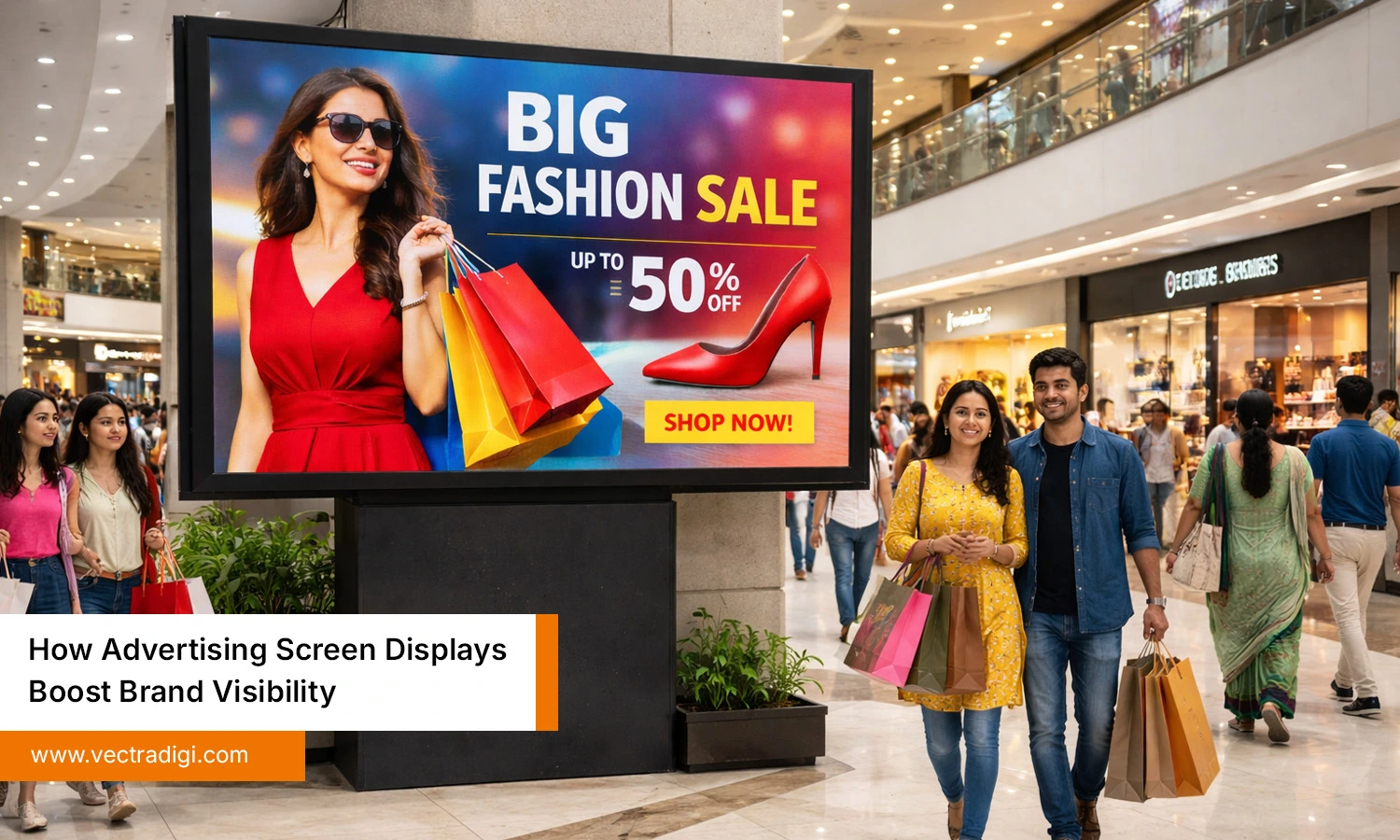
Walk through any busy market, shopping street, or mall today, and you’ll instantly notice bright, moving screens capturing attention. This shift isn’t random. Businesses are replacing static banners with the modern advertising screen display because it works. As customer attention spans shrink and competition grows fiercer, blending in is no longer an option. Traditional posters often fade over time, and flex boards can start looking dull, while digital screens remain bright, dynamic, and visually engaging. If you’re a business owner wondering whether investing in an advertising screen display is just hype or a smart visibility strategy, you’re not alone. Let’s explore why this shift matters today.
Table of Contents
Also Read: Why Choosing a Trusted LED Wall Manufacturer Is Crucial for Your Business in Delhi
Why Brand Visibility Matters More Than Ever
Brand visibility is more important than ever because customers are surrounded by constant distractions. Every day, they encounter countless ads, signs, videos, and notifications competing for attention. In such a crowded environment, businesses have only a few seconds to make a strong impression. If your brand fails to stand out instantly, it can easily be ignored. Strong visibility helps create recognition, builds credibility, and keeps your business memorable in the minds of potential customers. It also plays a key role in influencing buying decisions and driving foot traffic.
Effective brand visibility helps you:
- Capture attention quickly.
- Build customer trust.
- Stay memorable.
- Outshine competitors.
How Advertising Screen Displays Improve Brand Visibility
1. High Brightness Advantage
One of the strongest advantages of an advertising screen display is its exceptional brightness. Whether installed outdoors under direct sunlight or indoors in a well-lit showroom, high-quality LED advertising displays remain sharp, vivid, and impossible to miss. Traditional printed banners often fade, reflect glare, or appear dull over time, reducing their effectiveness. Bright digital screens, on the other hand, maintain consistent visibility throughout the day. This matters because human eyes are naturally drawn to illuminated visuals. A brighter display doesn’t just improve clarity, it commands attention, enhances readability from a distance, and ensures your brand message stands out even in crowded, visually noisy environments.
2. Power of Motion
People don’t always realise it, but movement pulls attention. That’s why an advertising screen display often gets noticed faster than a static poster. A printed banner stays the same every second of the day. A digital screen keeps changing. Even small things like a shifting image, a quick animation, or a looping video can make someone glance at it without planning to. In busy areas, this difference becomes very obvious. Place a normal food poster next to a screen showing steam rising from a dish or a drink being poured. Most people will look at the screen first. Motion feels active, harder to ignore, and easier to remember later.
3. Flexible Content Control
One of the biggest advantages of using an advertising screen display is how easy it is to change your content. With traditional banners, even a small update means redesigning and printing again. That takes time and money. Digital screens work differently. You can switch promotions, highlight new products, add festive messages, play videos, or even show customer feedback whenever you want. No delays, no reprints. This kind of flexibility keeps your branding fresh instead of repetitive. It also gives businesses room to try new ideas and visuals without extra cost. When content keeps evolving, customers are more likely to notice it rather than walk past something they’ve already seen many times.
4. Smart Screen Placement
Where you install an advertising screen display can make a bigger difference than many businesses expect. A great screen in the wrong spot won’t deliver the results you’re hoping for. Digital screens work best when placed where people naturally look, such as storefront windows, entrances, reception areas, malls, exhibitions, or busy roadside locations. When positioned thoughtfully, even one display can attract steady attention throughout the day. Unlike traditional signage that easily blends into its surroundings, a digital screen tends to stand out. Good placement improves viewing angles, increases the chances of people actually noticing your content, and strengthens message impact. In many ways, a well-placed screen works like a quiet salesperson for your brand.
5. Repetition & Recall
Brand recognition rarely happens in a single glance. People usually need to see something a few times before it truly sticks. This is where an advertising screen display becomes surprisingly effective. Digital screens can run the same brand messages, visuals, or offers repeatedly during the day without adding extra cost. Not every viewer reacts instantly, and that’s normal. But repeated exposure quietly builds familiarity. Over time, that familiarity turns into comfort and trust. It’s basic consumer behavior: we tend to remember, and often prefer, brands we’ve seen before. Unlike printed ads that fade into the background after a while, a dynamic screen keeps reinforcing the message, helping your business stay fresh in the customer’s mind.
Common Mistakes Businesses Should Avoid
Poor Placement – Installing a screen where visibility is limited drastically reduces its impact. A display hidden behind obstacles, placed too high, or positioned outside natural sightlines may go unnoticed. Always evaluate foot traffic flow, viewing angles, and customer attention zones before installation.
Overcrowded Content – Trying to communicate too much at once often backfires. Excessive text, multiple offers, or cluttered visuals overwhelm viewers. Digital screens work best with clean layouts, bold elements, and messages that can be understood within seconds.
Ignoring Brightness Requirements – Using an indoor screen in outdoor environments leads to dull, washed-out visuals. Brightness levels must match lighting conditions. Outdoor displays require higher nits to remain visible under sunlight.
Low-Quality Creatives – Poor graphics, pixelated images, or stretched videos damage brand perception. A premium screen showing low-quality content creates a negative impression. Investing in professional visuals significantly improves engagement and credibility.
Conclusion
Brand visibility today is directly tied to how effectively a business captures and holds attention. In crowded marketplaces filled with distractions, traditional signage often struggles to compete. An advertising screen display changes that dynamic by combining brightness, motion, flexibility, and strategic placement. These elements work together to create a stronger visual impact, better engagement, and improved brand recall. When used correctly, digital displays do more than advertise, they shape perception, attract foot traffic, and keep your business memorable. For brands looking to stand out and stay relevant, investing in a well-planned advertising screen display is no longer optional, it is a smart, future-ready visibility strategy.
Discover smart, high-impact advertising screen display solutions with Vectradigi. Let your business stand out, attract attention, and leave a lasting impression.
FAQs
Q. Are advertising screen displays expensive?
Initial investment may seem higher than print signage, but long-term savings on reprints, flexibility, and performance often make it cost-effective.
Q. Can small businesses benefit from digital advertising screens?
Absolutely. Even a small storefront screen can dramatically improve visibility and walk-in enquiries.
Q. What type of content works best?
Short videos, bold offers, product highlights, animations, and high-contrast visuals perform exceptionally well.

