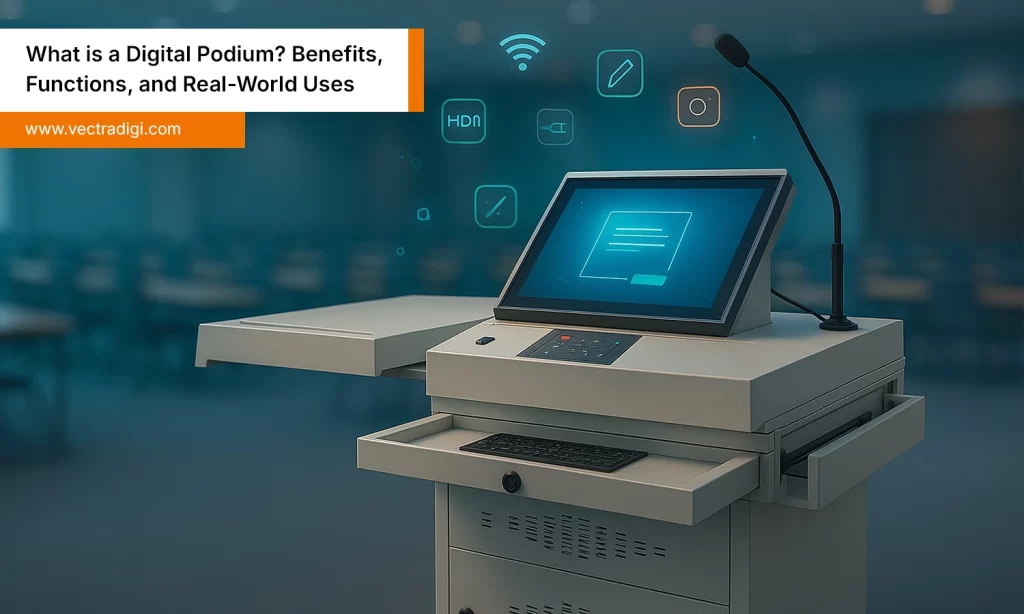
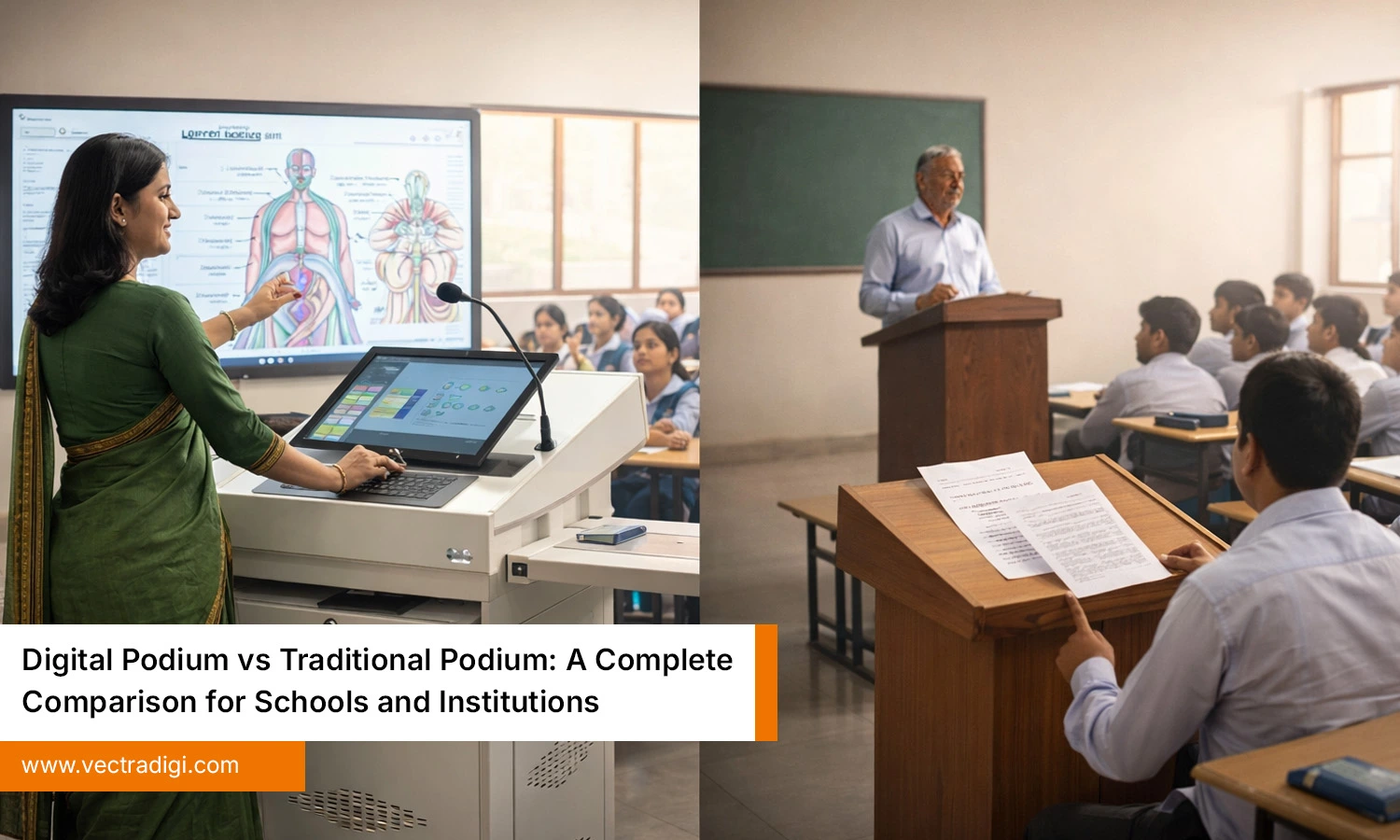
Schools and institutions today stand at a turning point in how they deliver lectures, presentations, and learning experiences. For years, teachers relied on a simple wooden podium, a stable place to speak and hold notes. Now, digital podiums are changing the scene, bringing screens, audio systems, and smart tools into the classroom. Choosing between a digital podium and a traditional podium is no longer just about style, it affects teaching quality, student engagement, and long-term value. This blog helps decision-makers understand the differences clearly so they can choose the podium that truly supports modern education goals in a practical way.
Table of Contents
Also Read: 7 Key Benefits of Digital Podiums in Classrooms and Events
The Evolution in Education
Podiums in education have evolved slowly but meaningfully over the years. The earliest podiums were simple physical structures made from wood or metal, mainly used to hold books, papers, and a microphone. Their role was straightforward, they supported one-way communication where the teacher spoke, and students listened quietly. As classrooms began introducing projectors, computers, and audio systems, the need for better presentation control gradually increased. Schools and institutions started looking for a setup that could manage visuals, sound, and digital content from a single, convenient point.
This shift paved the way for digital podiums, which combine hardware and software to support interactive lessons, multimedia explanations, and even recorded sessions. Today, a podium is no longer just a stand for speaking, it has become an active teaching companion that helps educators display resources, explain concepts visually, and engage students more effectively. The evolution also reflects changing expectations from parents, administrators, and learners who value clarity, flexibility, and meaningful classroom interaction in modern learning environments.
Digital Podium vs Traditional Podium: A Real Comparison
Here’s a practical comparison between digital podiums and traditional podiums, focusing on how each option influences teaching style, classroom experience, maintenance needs, and long-term value for schools and institutions today.
1. Functionality & Teaching Experience
With a digital podium, teachers can control presentations, videos, annotations, and audio from a single integrated system, which makes lessons smoother and more dynamic. They can switch between slides, documents, and live explanations without moving across the room, helping them stay connected with students while teaching. Interactive screens and writing tools allow teachers to highlight key points instantly, making complex topics easier to understand and visually relatable during classroom discussions.
A traditional podium, on the other hand, mainly supports speech and reading from printed notes. It works well for lectures, ceremonies, and formal speeches, but it does not naturally support multimedia or interactive elements. The difference in functionality becomes clearer when lessons require visuals, demonstrations, or recorded content, and in such situations, a digital podium delivers a much richer and more engaging teaching experience for both teachers and students.
2. Ease of Use & Learning Curve
Traditional podiums are straightforward because they involve almost no technology, which makes them comfortable for teachers who prefer simple and familiar setups. They require little adjustment or training, so educators can start using them immediately. A digital podium, however, introduces more features and tools, which naturally creates a learning curve in the beginning, especially for teachers who are new to digital systems. Fortunately, most modern digital podiums come with user-friendly interfaces, touch controls, and intuitive shortcuts that gradually reduce effort and confusion over time.
Once teachers become familiar with the controls, many realize that a digital podium actually saves time during lessons and helps them manage content more smoothly. Institutions may still need to provide short training sessions or demonstrations to build confidence and comfort. When comparing both options, the traditional podium clearly wins in simplicity, but the digital podium becomes easier and more efficient in daily teaching after some basic training and regular practice, making it a practical long-term solution for educators at different experience levels.
3. Student Engagement & Learning Outcomes
Student engagement changes noticeably when a digital podium is used in the classroom. Teachers can display videos, diagrams, and real-time annotations, which keep students curious and involved instead of only listening to long lectures. Interactive content encourages participation, questions, and collaborative discussions, making lessons feel more lively and connected to real situations. With these tools, teachers can explain concepts visually and demonstrate ideas in a way that captures attention and supports different learning preferences.
In contrast, a traditional podium supports a more lecture-centric style where students mostly receive information passively. While this method still works well for storytelling, speeches, or theoretical subjects, it may not always support visual or practical learning needs. A digital podium allows teachers to adapt lessons for different learners, making explanations clearer and more relatable. Over time, this leads to better understanding, improved recall, and stronger learning outcomes, especially in classrooms that encourage activity-based learning, confidence, and curiosity among students.
4. Maintenance, Durability & Reliability
Traditional podiums are usually very durable because they have fewer components and require little maintenance beyond basic cleaning and occasional repairs. Since they do not rely on electronics, they can last for many years without major expenses or technical support. This makes them a dependable option for institutions that want stability with minimal upkeep.
A digital podium, however, includes electronic parts such as displays, cables, microphones, and internal computers, which means schools must plan for periodic servicing, software updates, and technical checks. When maintained properly, a digital podium remains reliable and efficient, but it needs a more structured support system. The advantage is that upgrades and replacements can extend its usefulness over time. In simple terms, a traditional podium needs minimal attention, while a digital podium requires planned care to ensure smooth performance during classes, events, and academic activities throughout the year.
5. Cost, Investment & Long-Term Value
A traditional podium is generally more affordable because it is made from simple materials and uses very little or no technology, which makes it suitable for institutions managing tight budgets. It is easy to purchase, install, and maintain, so schools do not need to worry about additional costs or technical support. This makes it a practical choice for basic presentations, speeches, and environments where teaching remains mostly lecture-based and minimal digital support is required.
A digital podium, however, comes with a higher initial cost because it includes advanced features, multimedia tools, and built-in technology. Over time, these features can reduce printing expenses, save setup time, and support interactive teaching, which adds long-term value beyond the purchase price. Schools must still consider maintenance, software updates, and teacher training when planning their budgets. Ultimately, the decision depends on priorities: if simplicity and affordability matter most, a traditional podium works well, but if innovation, flexibility, and future-ready learning are key goals, a digital podium offers stronger returns and greater classroom impact.
Comparison Table
| Feature | Digital Podium | Traditional Podium |
|---|---|---|
| Technology | Touch display, computer, multimedia tools | No digital components |
| Teaching Style | Interactive, visual, hybrid-ready | Speech-focused, lecture-centric |
| Engagement | Higher student participation | Limited interaction |
| Maintenance | Requires technical servicing | Minimal physical upkeep |
| Costs & ROI | Higher initial, stronger long-term value | Lower cost, limited capability |
A Real-Life Comparison
Imagine two classrooms teaching the same topic on the same day. In the first room, the teacher uses a traditional podium, speaks from printed notes, and occasionally refers to a whiteboard. The lesson flows smoothly, but students mostly listen passively, with limited visual support or interactive elements to keep them engaged throughout the session.
In the second room, the teacher uses a digital podium, displays diagrams, highlights key concepts on the screen, and plays a short explanatory video to support the explanation. Students begin asking questions, interacting with the lesson, and connecting more deeply with the topic because the visuals and real-time annotations make the content easier to understand and remember.
Both lessons cover the same subject, yet the classroom experience and learning impact feel completely different. This simple scenario shows how the choice of podium can reshape classroom energy, communication style, and overall learning outcomes for both teachers and students across schools, colleges, and training environments today.
Which One Works Better?
Both podiums serve a purpose, and the better choice depends on the goals of the institution. A traditional podium works well in auditoriums, ceremonies, and speeches where technology use is minimal, and communication remains mostly one-way. It is reliable, affordable, and easy to manage. A digital podium, on the other hand, is better suited for modern classrooms, blended learning, and multimedia teaching environments that require flexibility, interaction, and smart presentation control. It supports digital learning initiatives and prepares institutions for future teaching needs.
Why digital podiums tend to work better
- Interactive Learning: They support visuals, videos, and live annotations that make lessons more engaging.
- Better Concept Clarity: On-screen explanations help students understand complex topics more easily.
- Centralized Control: Teachers can manage presentations, audio, and content from one integrated system.
- Hybrid & Smart Class Support: They work well in technology-enabled and blended learning environments.
- Higher Student Participation: Interactive tools encourage questions, discussion, and collaboration.
- Long-Term Value: They improve teaching quality and deliver stronger learning outcomes over time.
Conclusion
Choosing between a digital podium and a traditional podium ultimately depends on the teaching style, infrastructure, and long-term goals of the institution. Traditional podiums still serve well in formal and speech-based environments, but digital podiums create more engaging, interactive, and future-ready learning experiences. They support multimedia lessons, flexible teaching formats, and improved student participation, making them better suited for modern classrooms. As education continues moving toward smart learning environments, institutions benefit most when they invest in solutions that enhance clarity, collaboration, and learning outcomes. The right podium choice should align with academic vision, technology readiness, and real classroom needs.
Upgrade your classrooms with smarter teaching solutions. Explore modern digital podiums that enhance engagement and learning efficiency. Connect with Vectradigi to choose the right podium for your institution today.